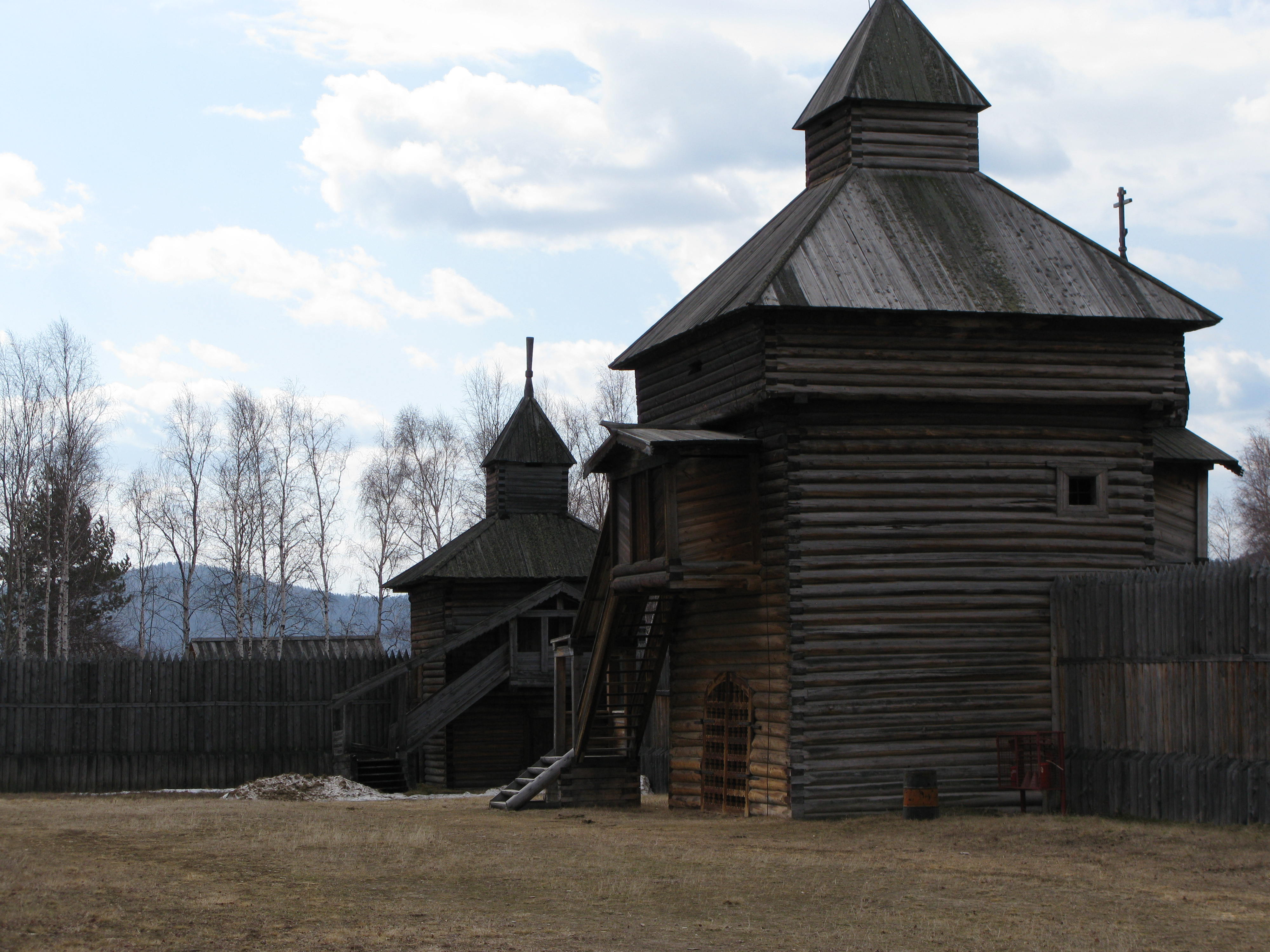
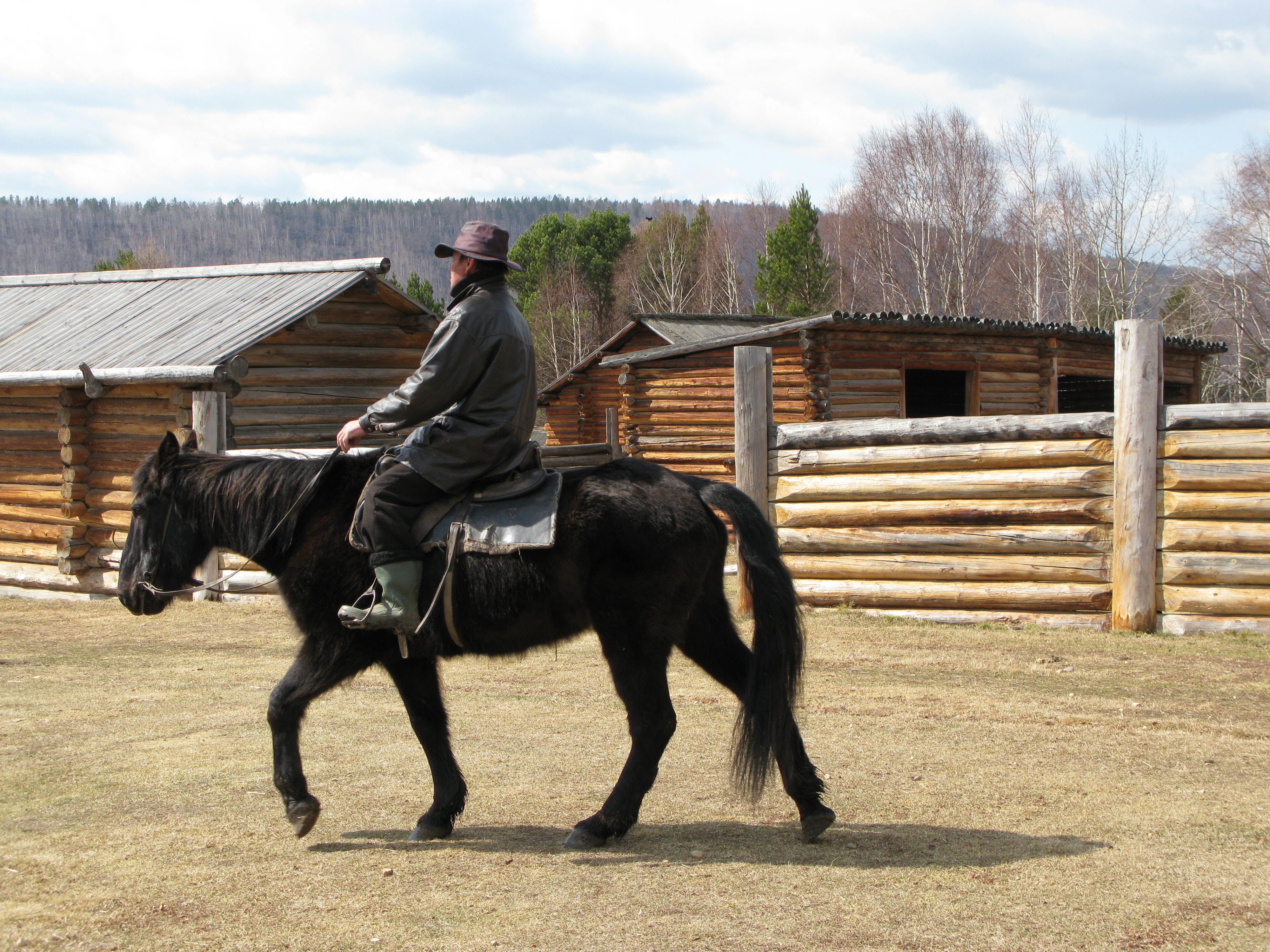
 Kasia and I were up and off to Baikal by 11 o’clock after walking round to the cash point. Alena picked up her brother-in-law, Alexander, on the outskirts of Irkutsk and after about 40 minutes we reached the museum of Russian life and architecture, set on the bank of the River Argana after it flows out of Lake Baikal. The outdoor museum houses many different traditional wooden structures which have been transported to this site from various places in the region. There are fortifications, wooden homesteads, churches and a Baryat Yurta amongst many others. And a lone horseman riding by!
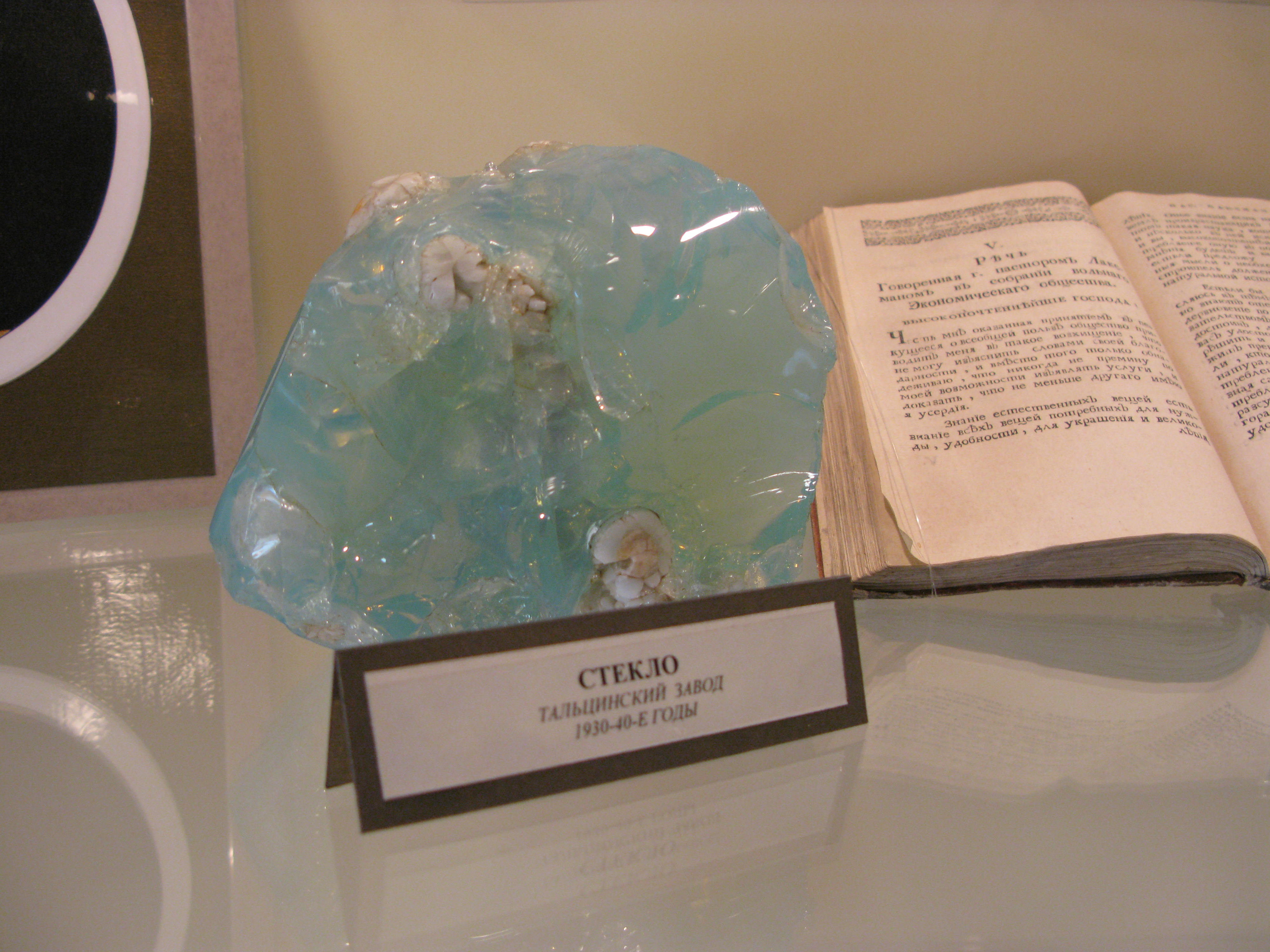
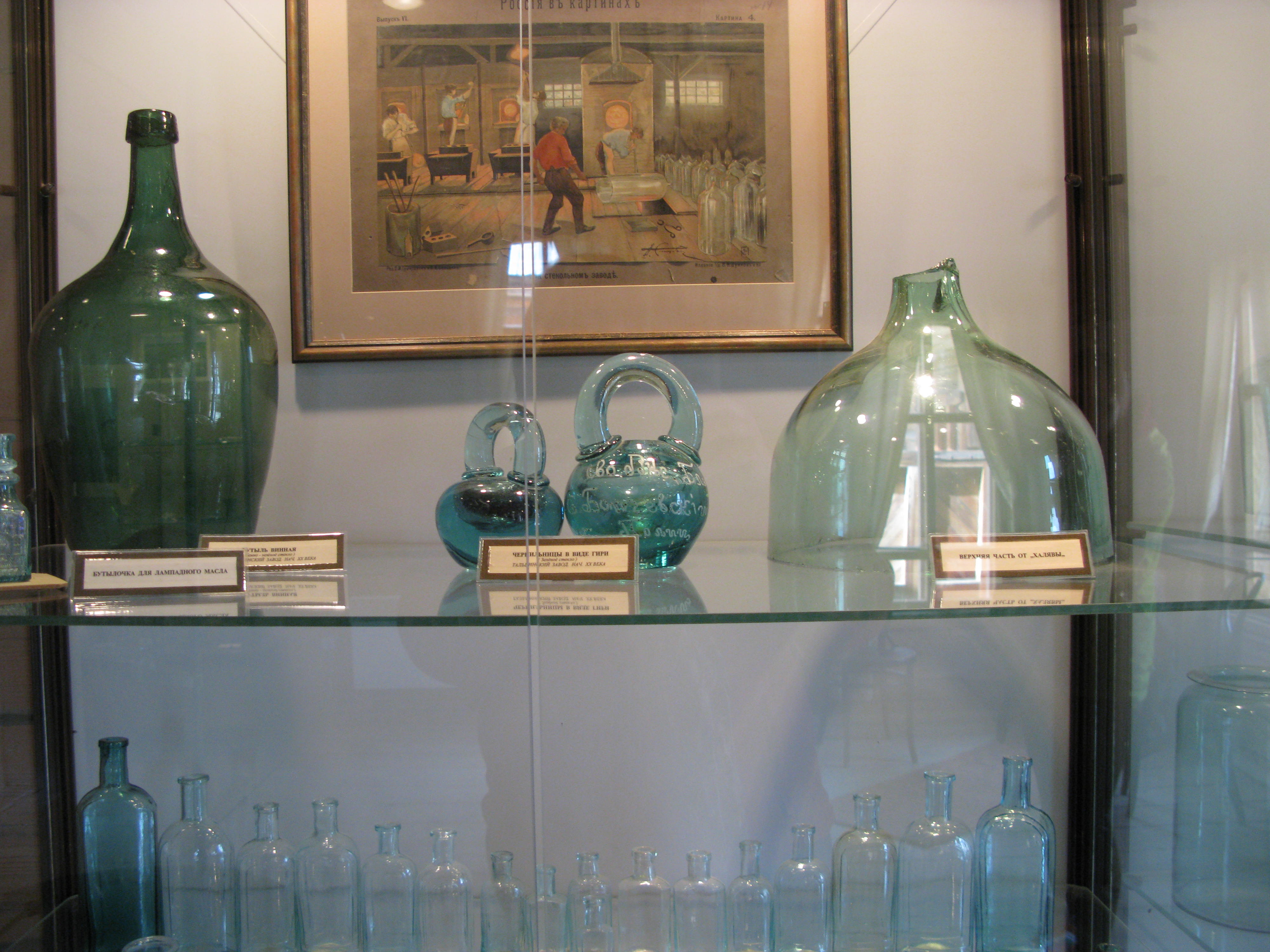 What I found most interesting is that all this has been assembled on the site of an old glassworks – and the first thing we saw was a museum dedicated to this! I was taken by a large lump of beautiful blue glass which had been found in the ground – it just shone! And then the history of the glassworks and cabinets full of pieces which had been either produced there recently (until it went bankrupt and closed) or had been found in the ground, some dating from a couple of hundred years ago.
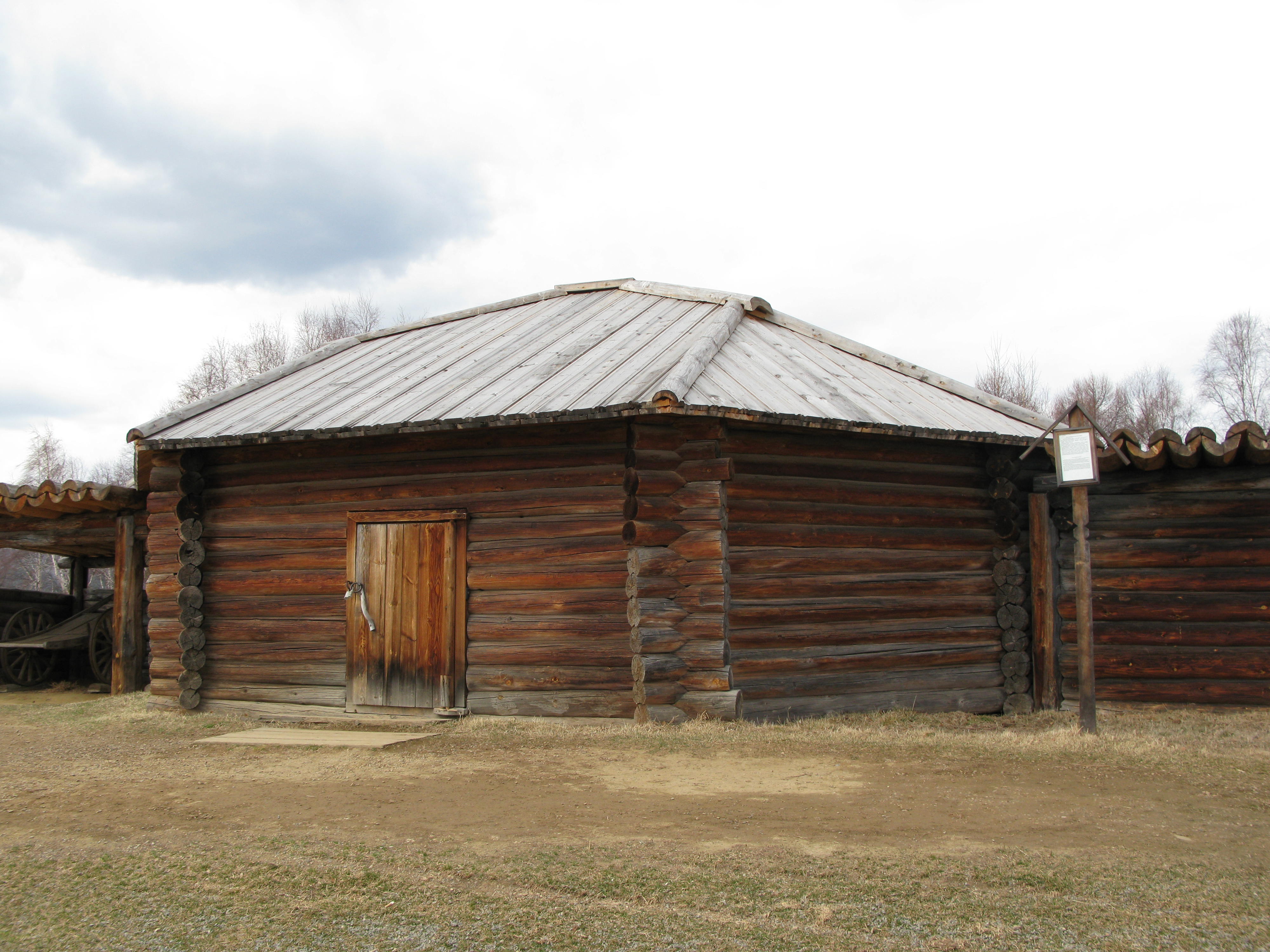
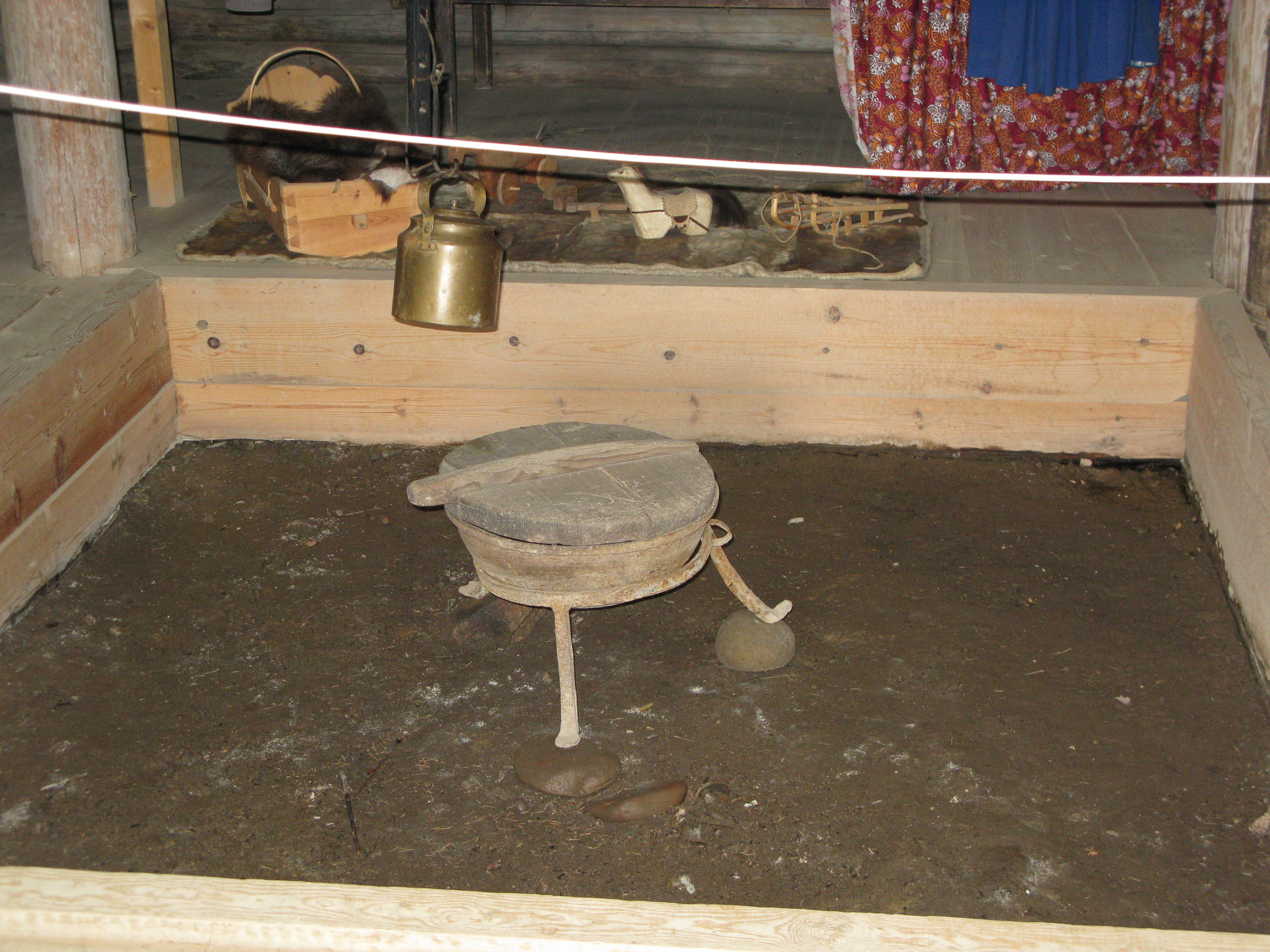
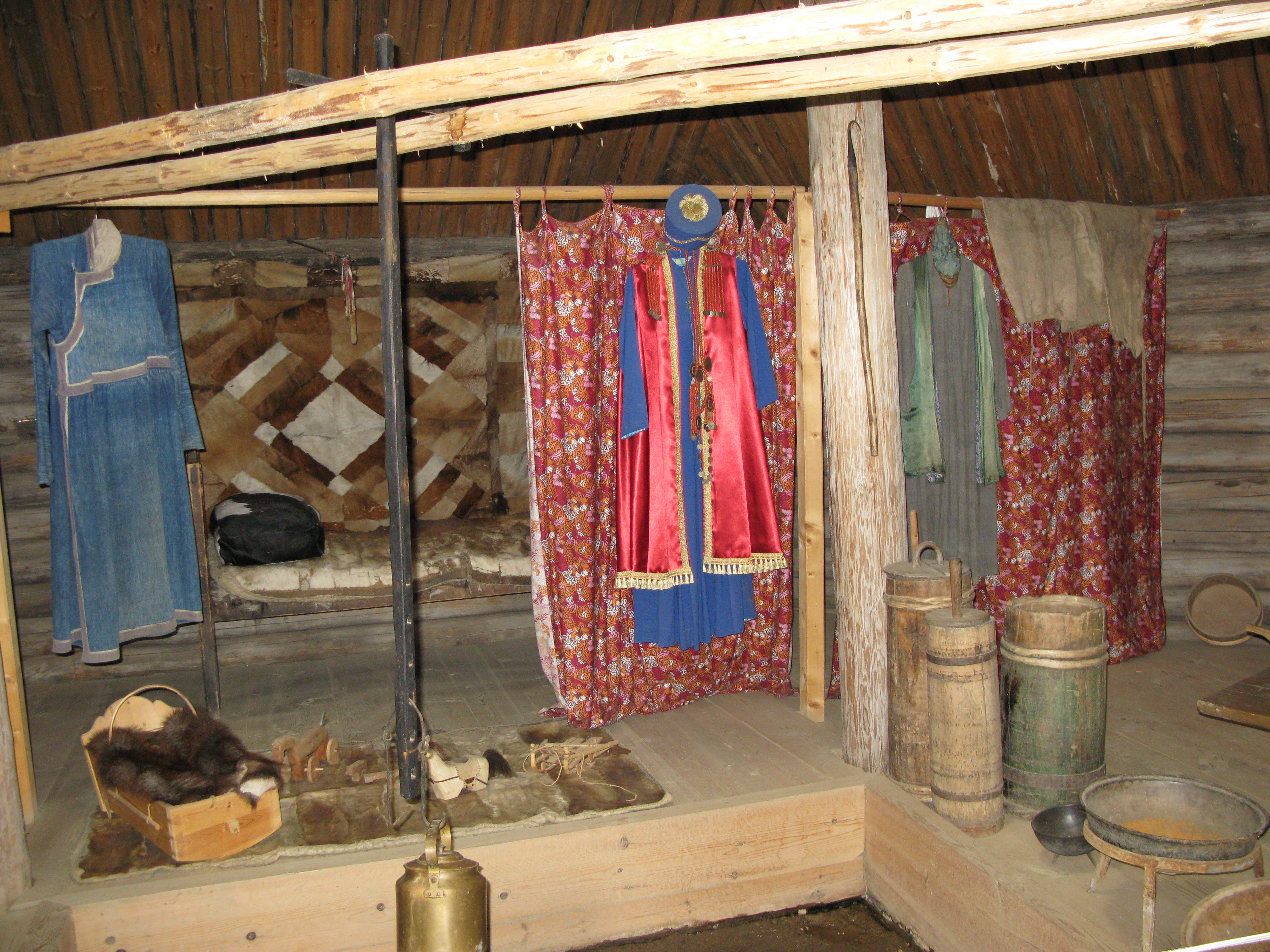 One of the buildings we saw was the Buryat Yurta, and Alexander, whose grandmother was Buryat, explained the layout: the yurta, (or yurt or ger) is round to reflect the skies above us, according to shaman direction. Inside, in the centre is a dugout square pit, with a fire in the centre. This is the spiritual and holy heart of the home. The pit is large enough for people to sit on the edge, perhaps 3-4 on each side. At each corner there is a large pole which supports the structure (in some tented yurtas these are absent, but there in spirit) and these four poles divide the inside space into organised areas. The first pole on the left as you enter is the hunting pole, and all items connected with hunting, fishing are kept here. The second pole denotes the men’s area; the third denotes everything to do with dairy – milking, churns etc. and the final fourth pole, to the right of the entrance, is the women’s area, also the cooking area. Between poles 2 and 3 is the sleeping area, with females on the right, towards the female area, and males on the left, by the men’s area. A wonderful practical arrangement.
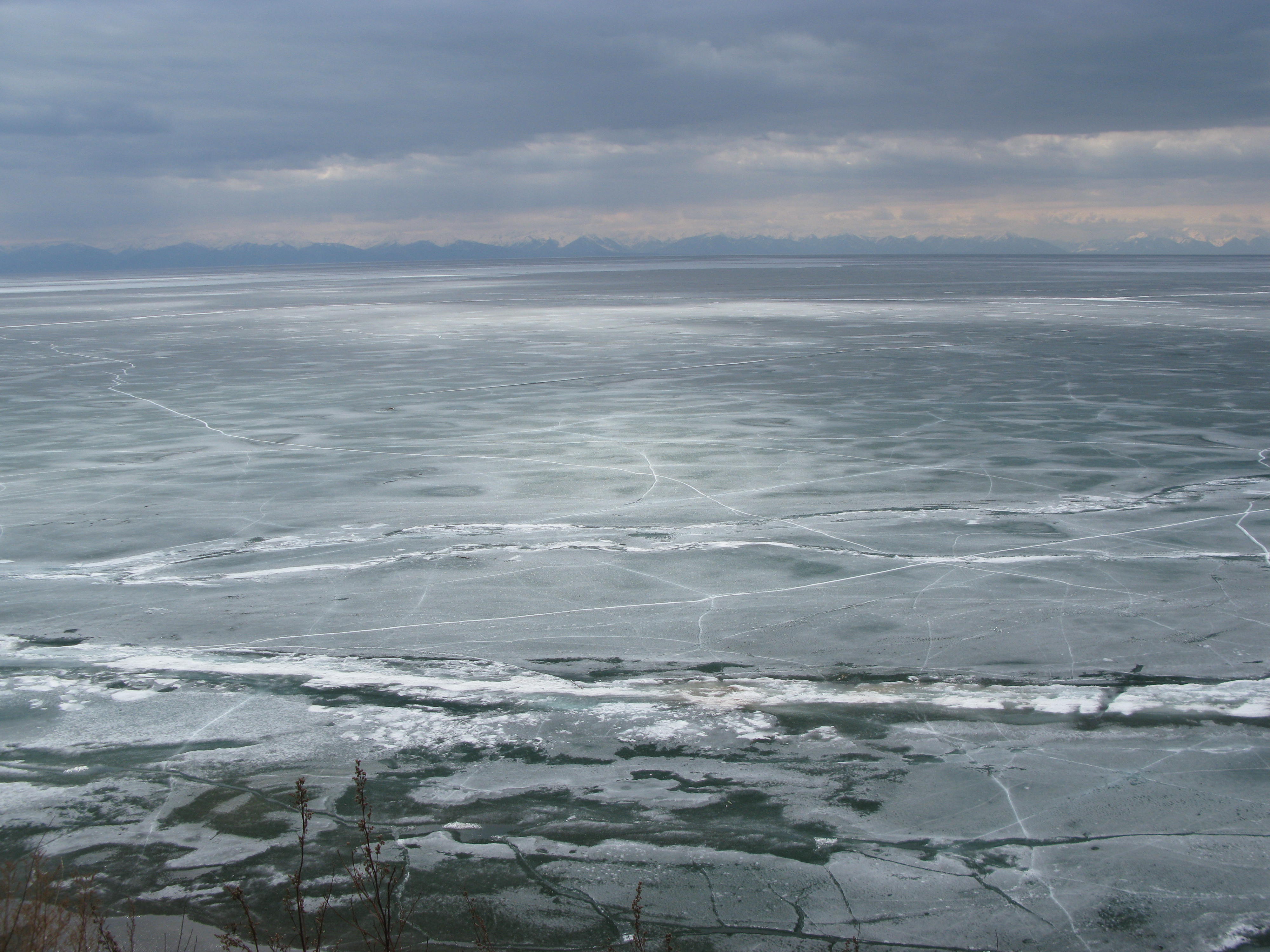
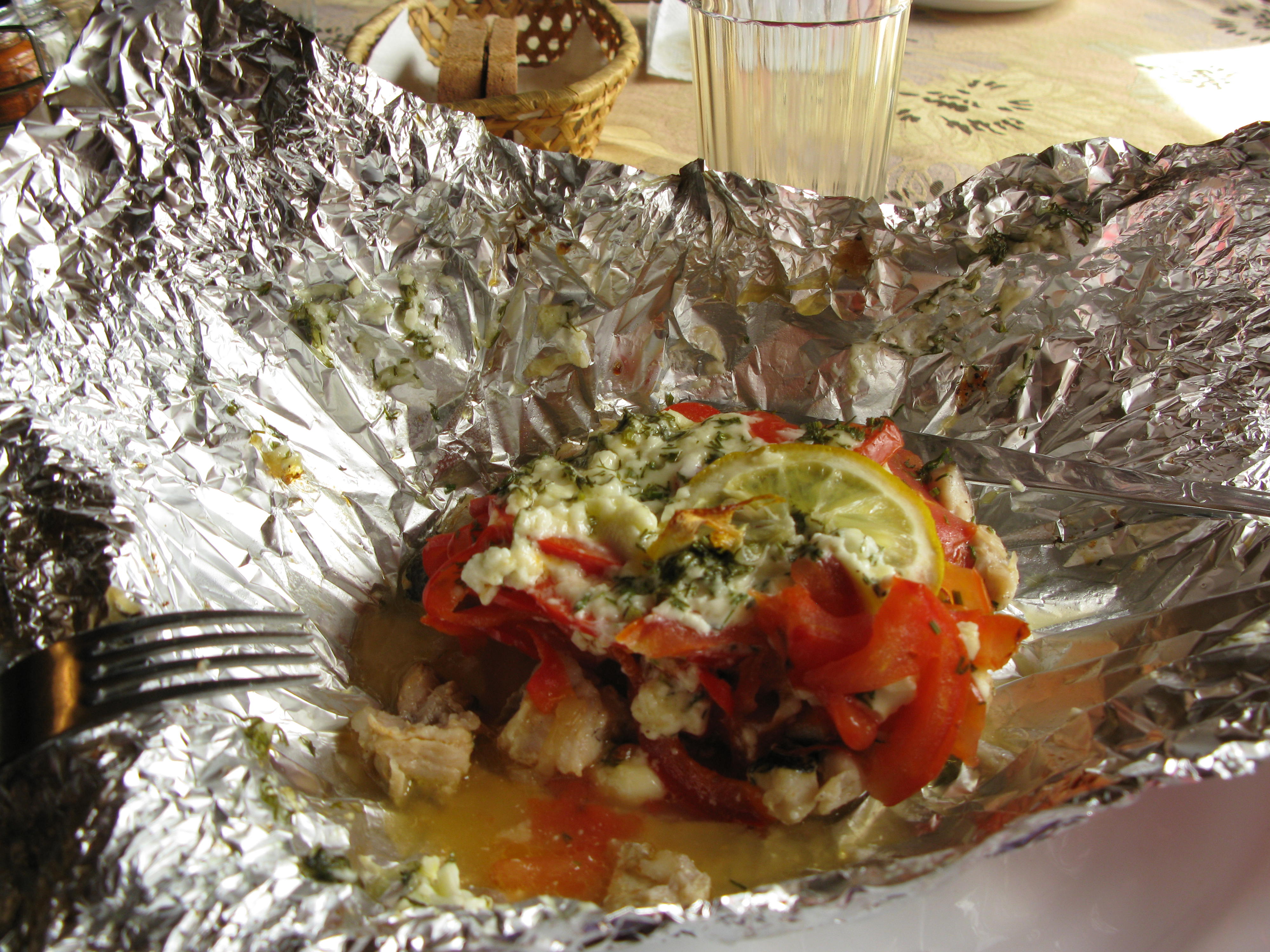
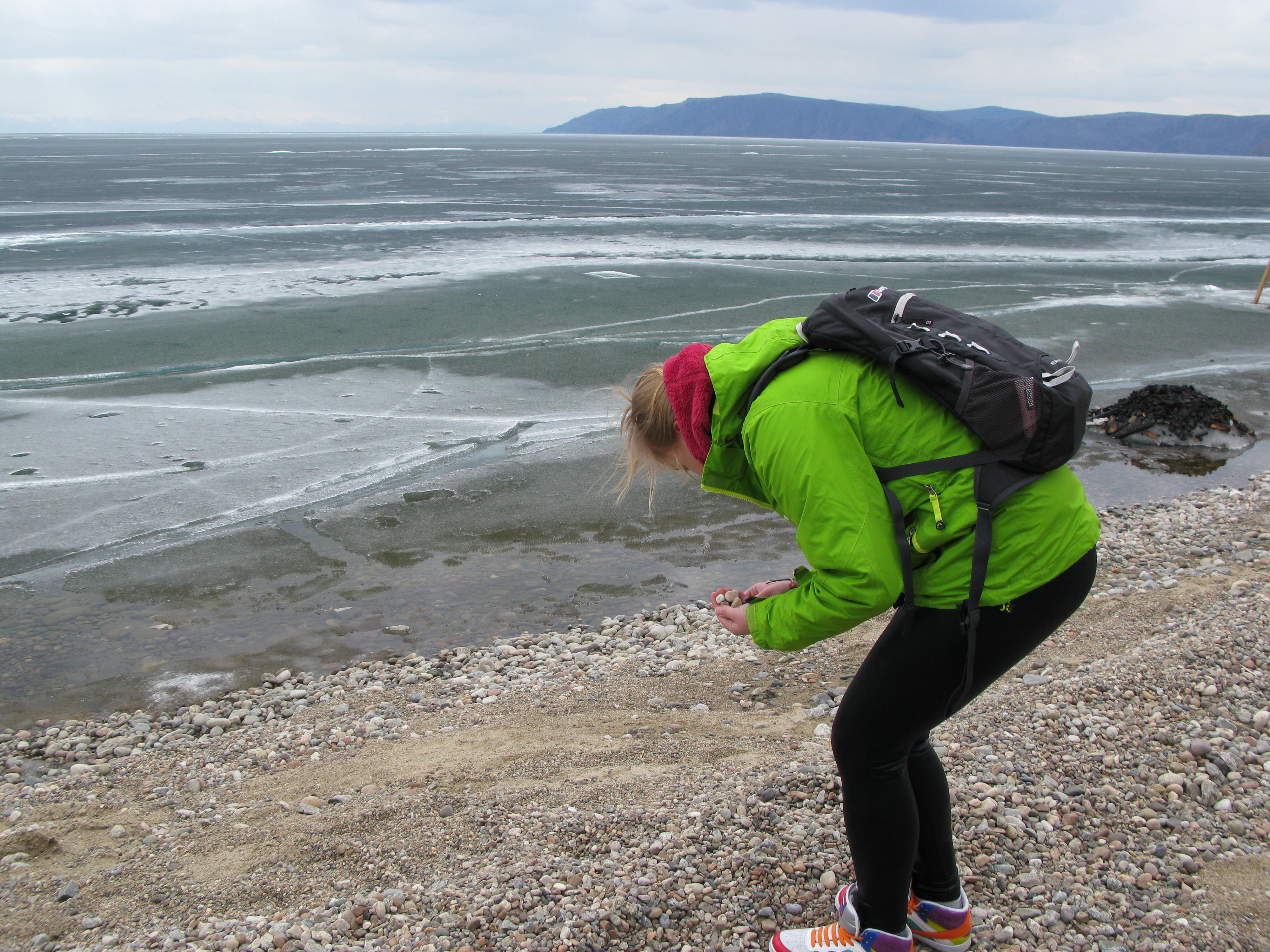 On our way to Listvyanka, there suddenly came upon us the most amazing view as we came to the point where the river leaves the lake. There ahead of us lay frozen Lake Baikal and on the far side, an impenetrable range of snow-covered mountains. Until you see it, you cannot imagine the scale of this lake – almost 400 miles long and 40 miles at the broadest point. After the Caspian Sea, it is the largest lake in the world. It’s also the deepest and contains one-fifth of the world’s fresh water. And to see the entire lake frozen as far as the eye could see….! Just a little bit of thaw at the edge of the shore… which meant you couldn’t step on to it safely at that point. Talking of shore, after a great meal of local fish, covered in onion, thinly sliced red paprika and tomato with sour cream and dill and lemon, all steamed in foil..Mmmm, I went on to the beach and found a bit of seaglass… then another. Then I was joined by Kasia who helped to find more. Later in the day, after showing Alena my spoils, she went off and came back with pocketfuls! So I now have enough for lots of jewellery and have passed details of my website on to my two glass collectors! Another plug: objaydequirk.com!
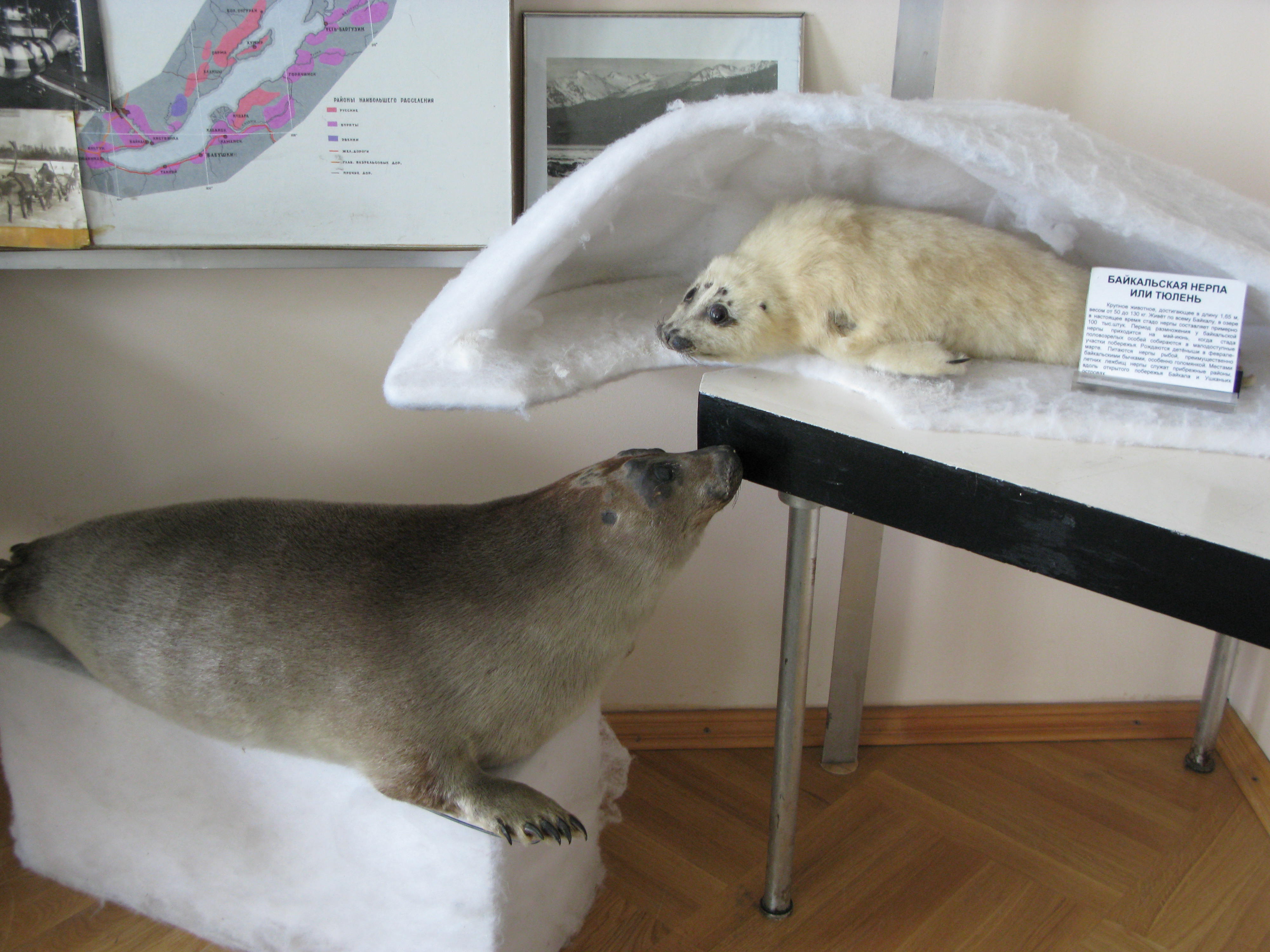
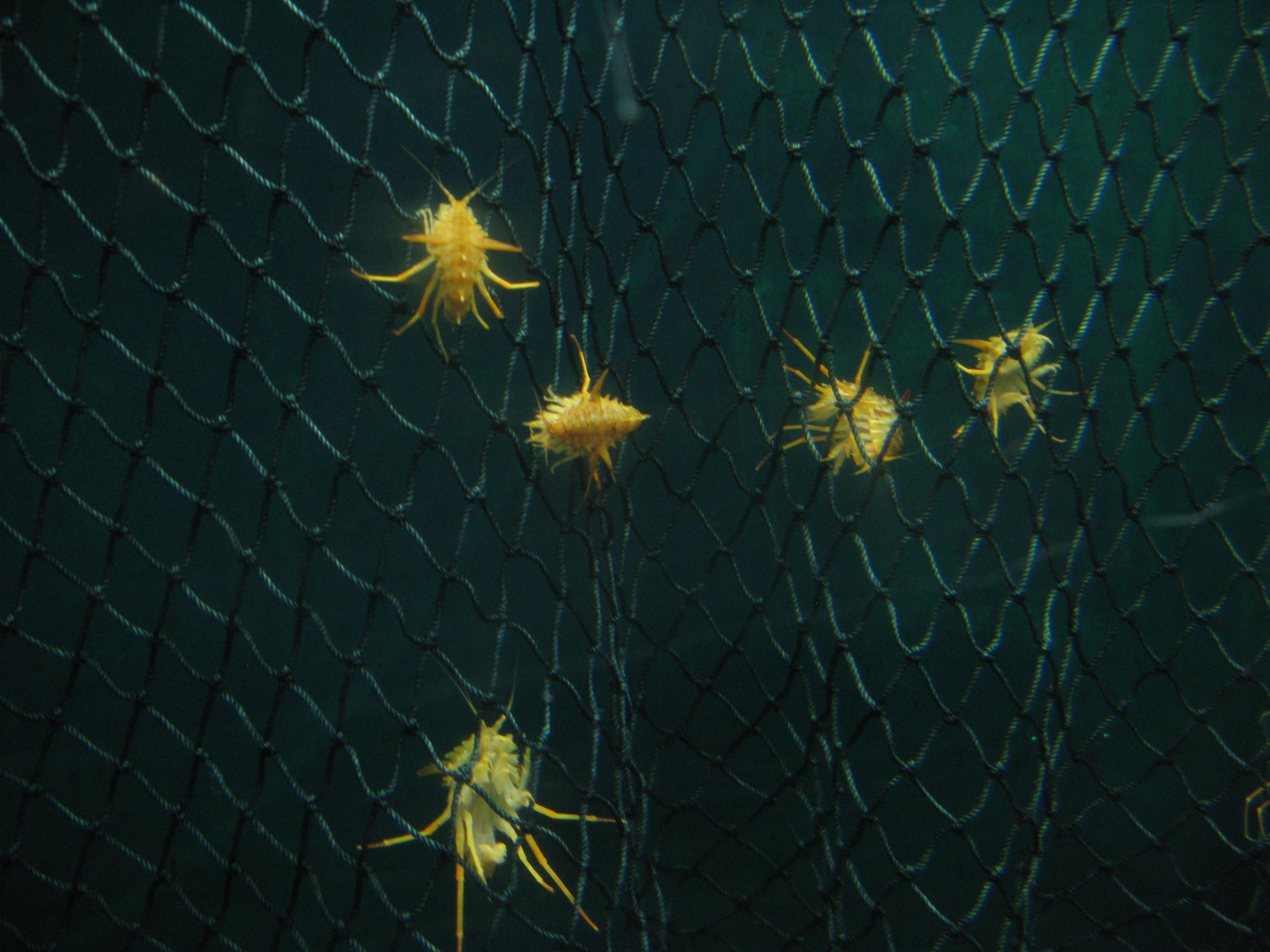 So what else did we do at the lake? We went to a great little market – selling lots of lovely jewellery made of local polished stone amongst other things. And to the Biological Research Institute (not sure of the name) where we saw lots of fascinating finds, lots of local fish – alive and in formaldehyde – and learnt about the various research projects carried out on the lake over the last hundred or so years. There are freshwater seals in Lake Baikal – whose ancestors must have made the long journey from the arctic circle, down two rivers, to the lake. We were also taken to several lookout points and shown various aspects of the lake and surrounding countryside. Olkhon Island is one of the special shamanic sites at the lake, but having said that, there is evidence of shamanic/Buryat influence all around. The southern and eastern parts of land adjoining the lake form the Buryat Republic, and it appears that though they were hard done by during the communist regime, they have retained their identity throughout. It seems the farther from Moscow, the more independent people have been able to remain. At a cost of course, but they have not lost their culture. And shamanism is now openly practised once again.
A great day out. We set off for Irkutsk to find the rest of the group already there and getting ready for the next stage of the train journey: Irkutsk to Ulaan Baator.
 Patamateria