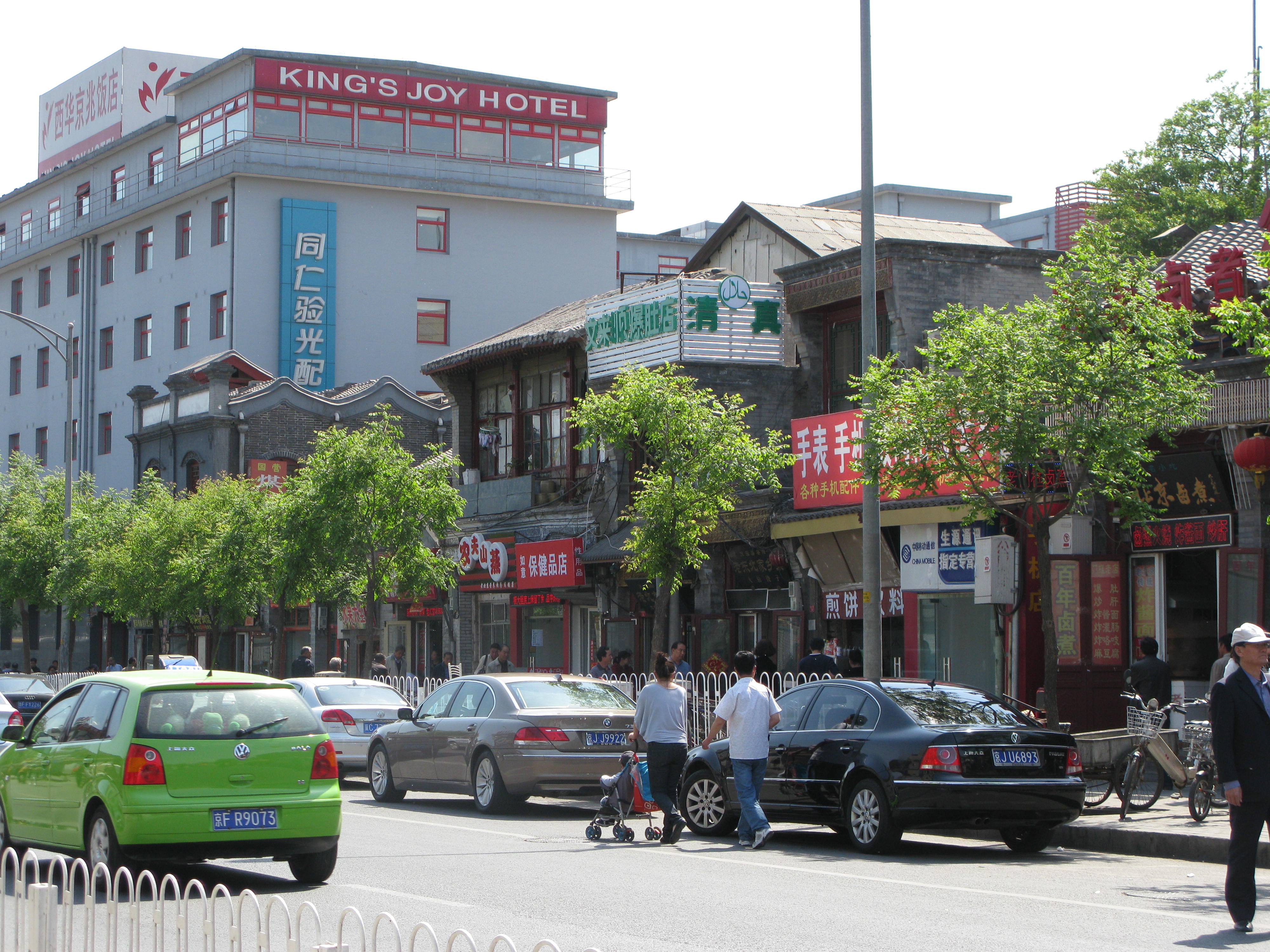
After a trek from the station to the awaiting bus, we were off to our hotel: King’s Joy Hotel. Lovely twin bedded rooms – I shared with Pat – a great bar on the top floor, internet access at last! and laundry. What more do you need? We had the rest of the day – just a few hours – to ourselves and a meal together in a local restaurant. Gary made sure I got enough vegetarian food, but I remain unconvinced about Chinese food. Some dishes were tasty, but on the whole I like my food less waterlogged. I was told there would be fried tofu – but when it came it was pallid, grey and floating in water. Cabbage plays a large part – OK if you’re a meat eater, but three types of cabbage for a vegetarian lacks excitement. The tasty veg was incorporated into meat dishes – pork with green peppers, beef and onions etc. I was dying for an onion! Enough said. There was an opportunity to go to a Chinese dance display in the evening, but I cried off and went to bed early. Lovely bed… You appreciate these things after being on a train!
The following day, we were whisked around Beijing as if there was no tomorrow. Gary was such an interesting guide who slowly warmed to us and after being purely professional and giving us potted histories, then opened up to us and gave us his own life story. So what started off as a tribute to the Mao years, finally became the story of one Chinese family and the implications the Mao years – and especially the Cultural Revolution – had on this family. Gary’s father had had his own business, but in the 50s had been stripped of this and forced to live as one of the workers. The impact on the family was considerable, and Gary himself escaped from this life purely because he did well at school and was allowed to attend a language college where he studied English. But his interest in English was also his downfall, as he was reported for tuning into BBC radio (to improve his English) and as a result got a black mark on his record and was denied entry to the Party. This had repercussions on his chosen career and as a result he did not follow the path he had once planned. But through it all, he never lost his faith in Mao; he praised many of his enlightened actions but stressed that, being human, Mao also made mistakes. The cultural revolution being one of them, as it set China back hugely and deprived people of the chance to develop themselves and their country creatively. Gary’s early employment as a teacher was not a very happy period for him – and he was glad of the opportunity to become a guide!
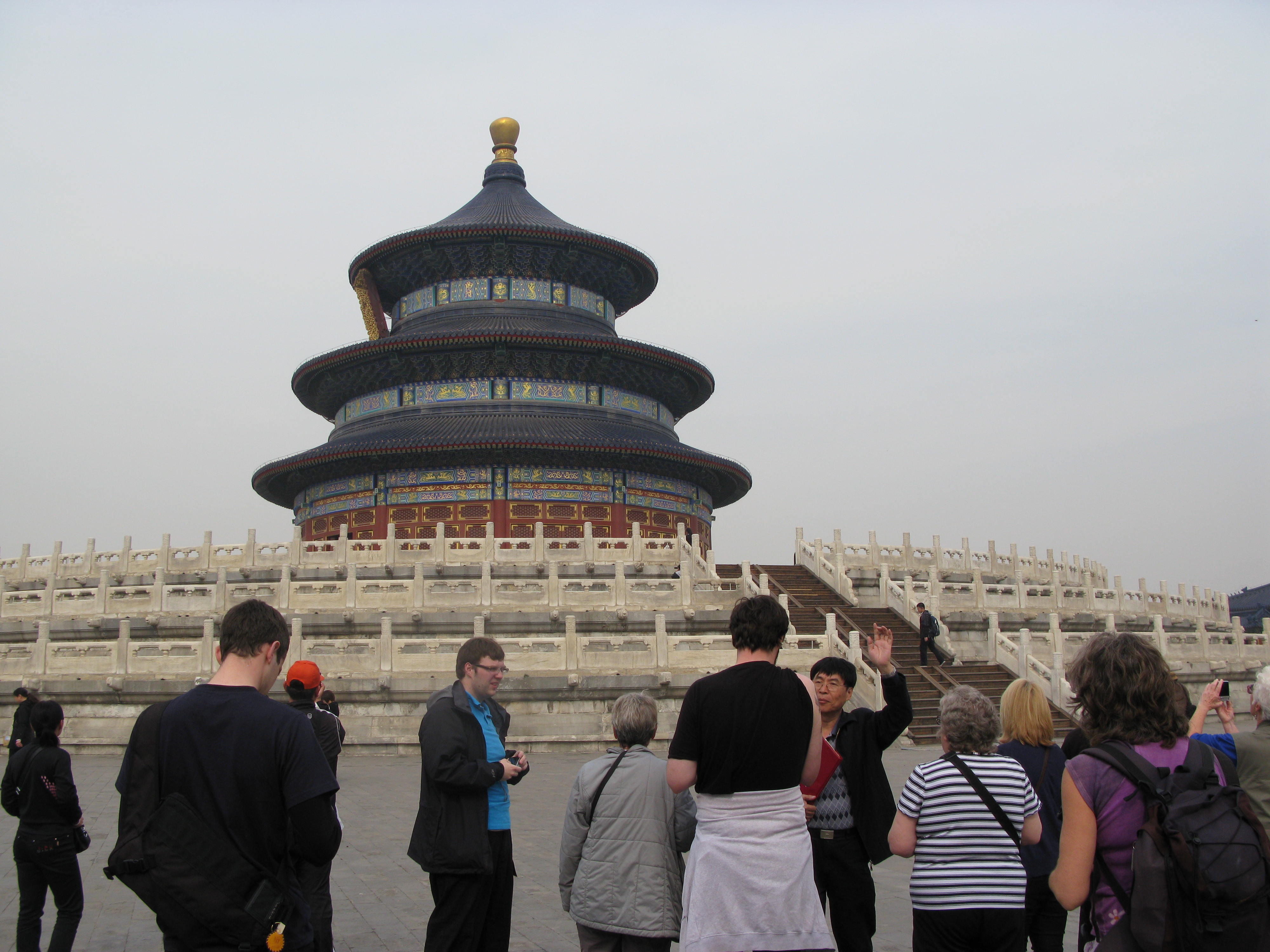
So, our mad, frenetic tour. Starting with the Temple of Heaven Park. This is a huge complex: gardens, buildings and courtyards and the nicest part is seeing all the people there enjoying themselves. The main sight to see was the round tower in the centre (see the photo above), round because that signifies the sky, and crowned with a golden orb, to signify the sun. Sky and sun being the main facets of good harvests, which is what this building, The Hall of Prayer for Good Harvests, is all about.
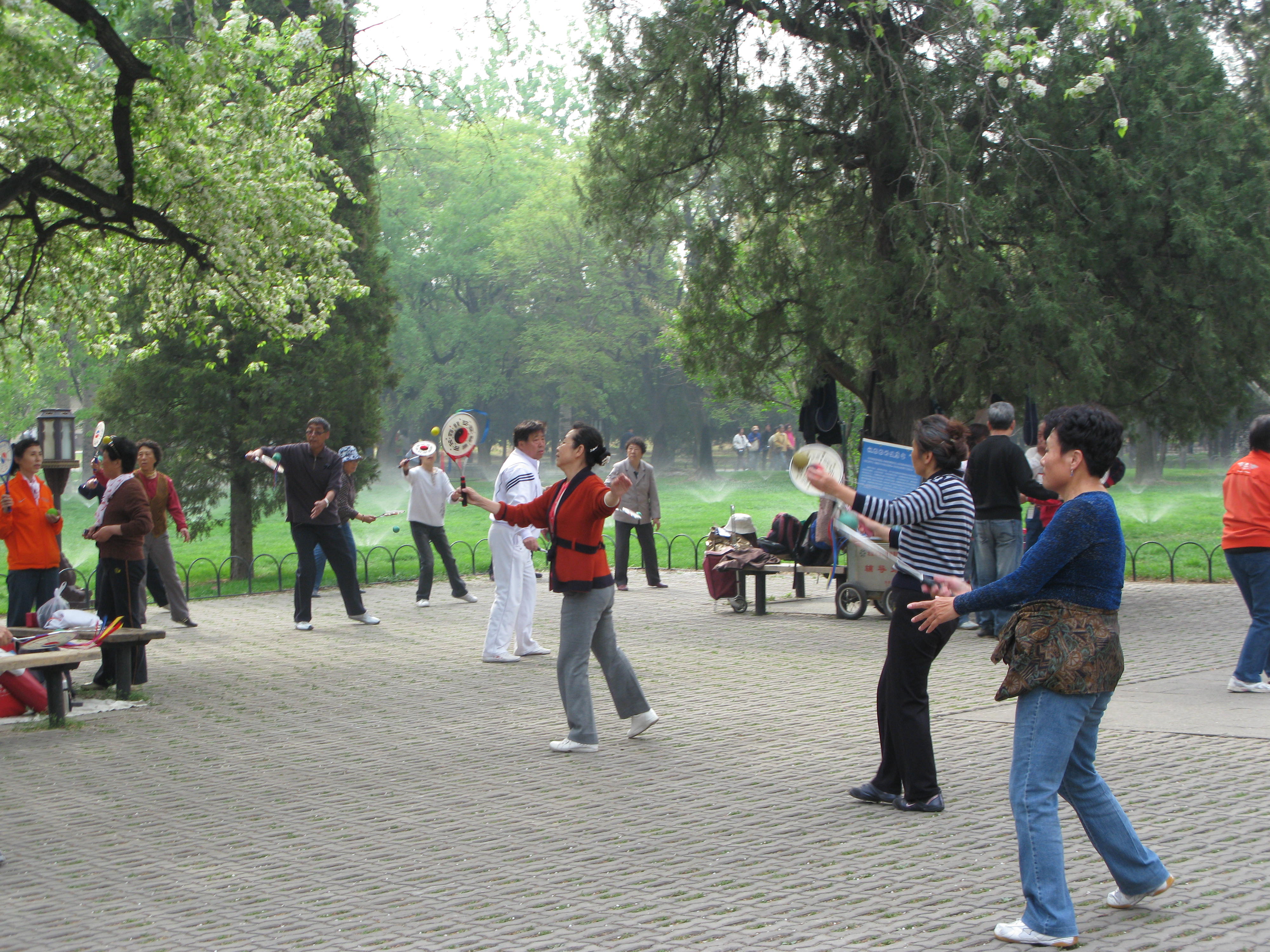
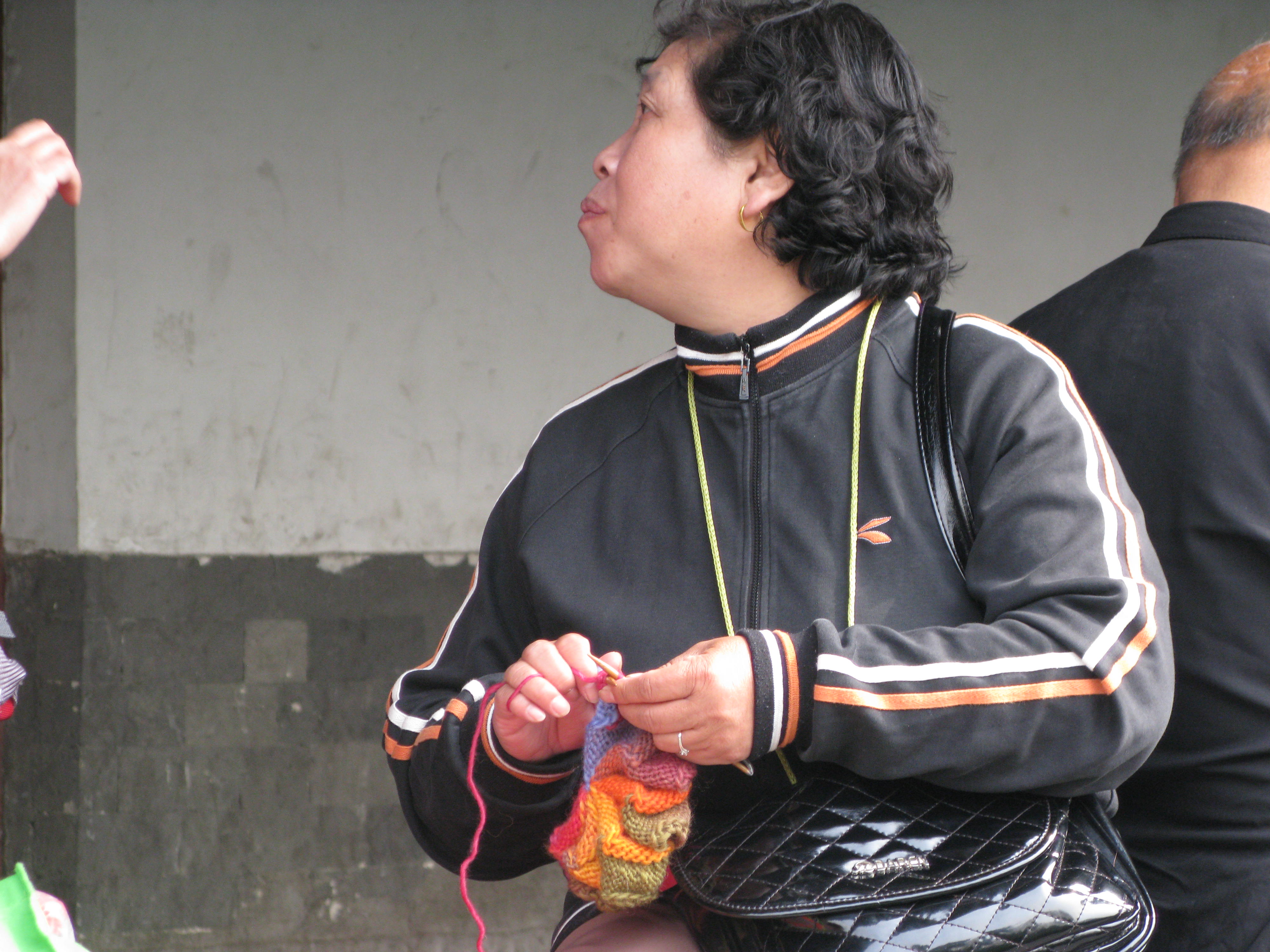
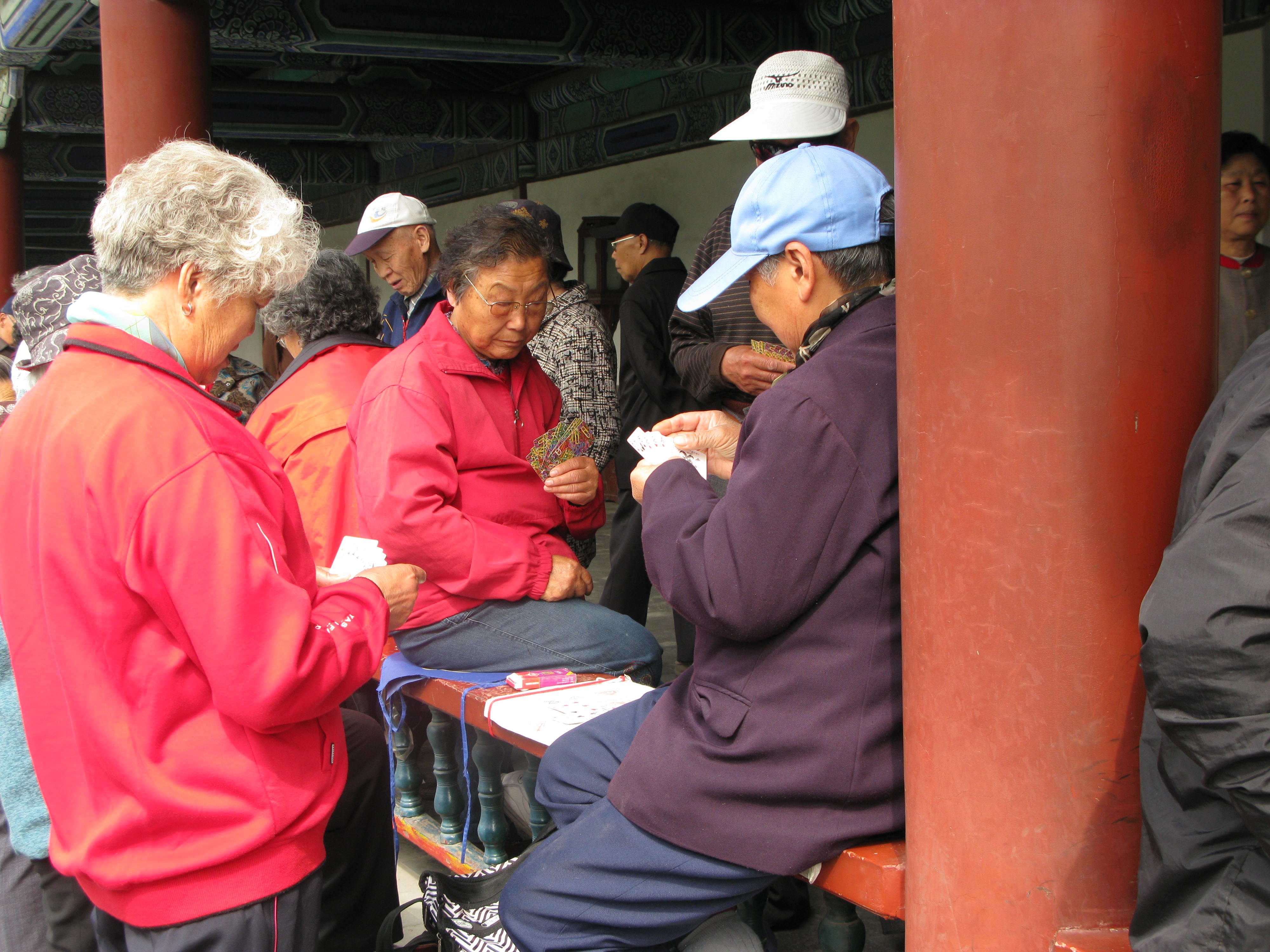 All over the gardens, in the courtyards and paved areas, we came across people engaging with each other: a group doing Tai Chi together; a few people perched on a low wall, knitting and crocheting; people making music with interesting instruments; others playing cards, or mahjong, or Chinese chess; people of all ages dancing (ballroom and American line-dancing!); others engaged in sport – badminton, ping-pong and other games I’ve never seen before.
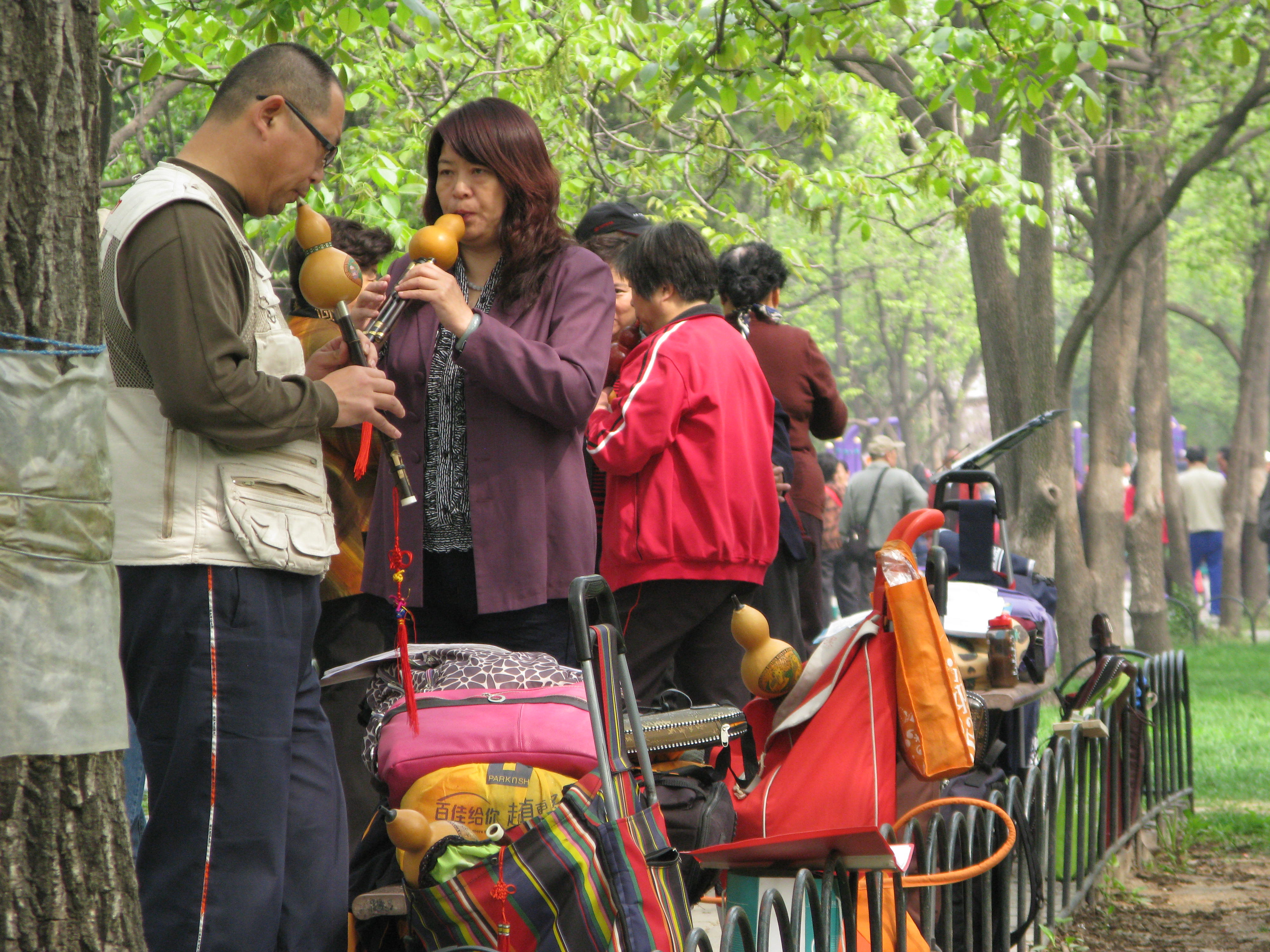
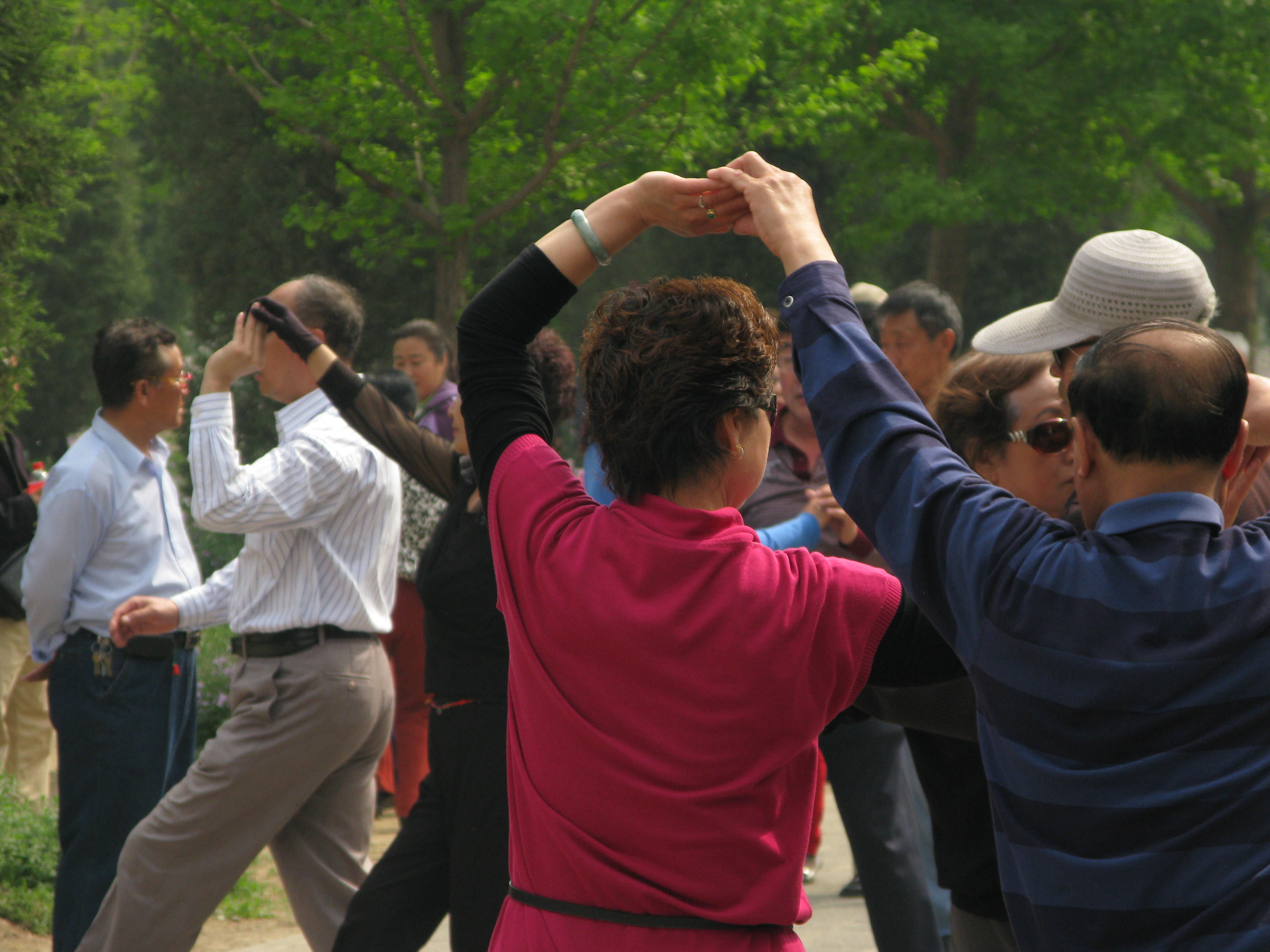
Apparently the age of retirement is 60, but many people take earlier retirement in order to free up jobs for younger people. And once retired, you go out daily to parks such as this to meet your friends, get exercise, play cards or other games. People tend to take a picnic lunch with them so they can spend the entire day in the parks when the weather is good. I am so impressed by this system – feel like going home and forcing people to do likewise! All around us we saw people in their 70s and 80s who were happy and smiling (unless cross with each other at cards!) and a lot more energetic than most of their counterparts in the UK.
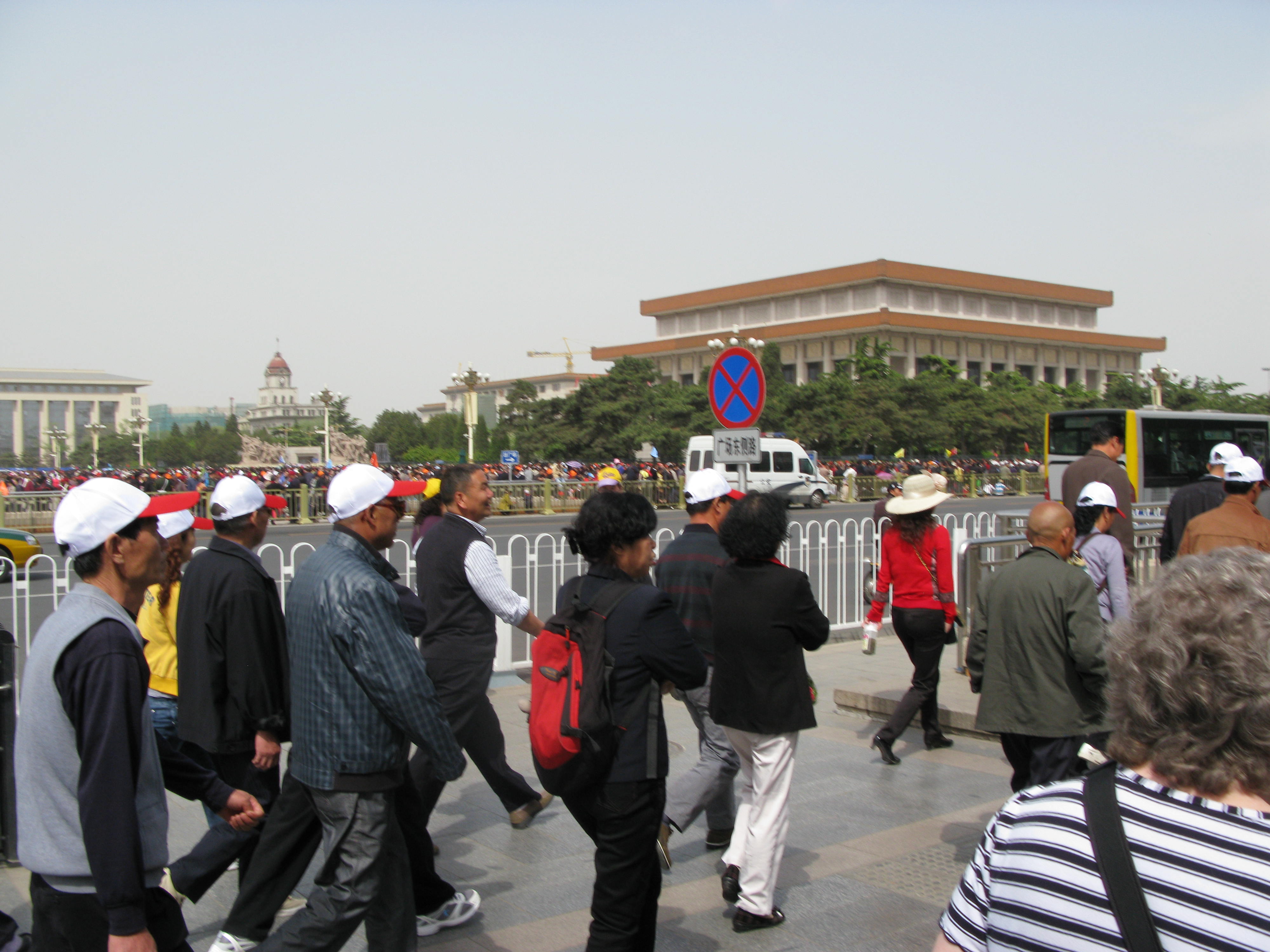
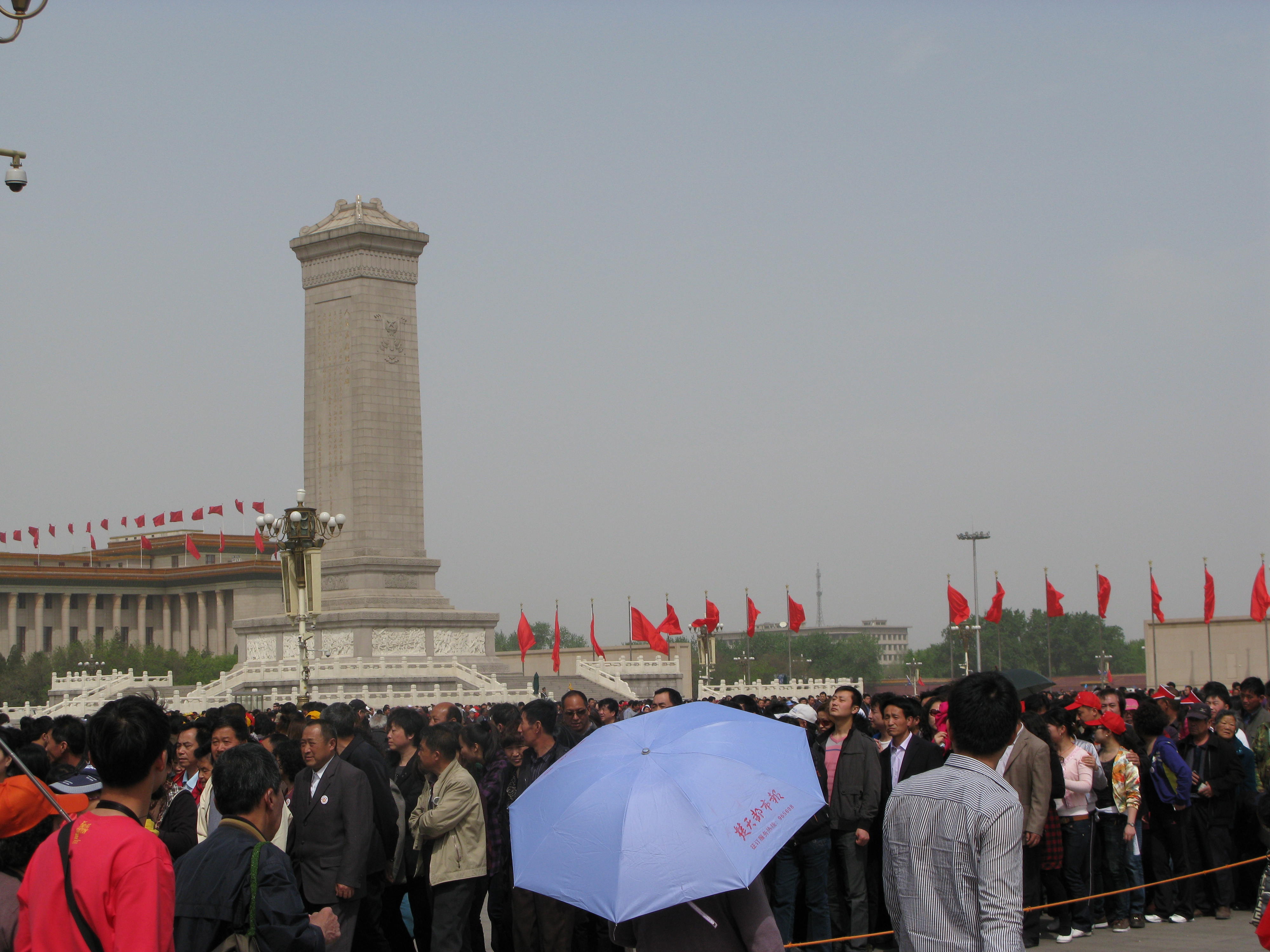
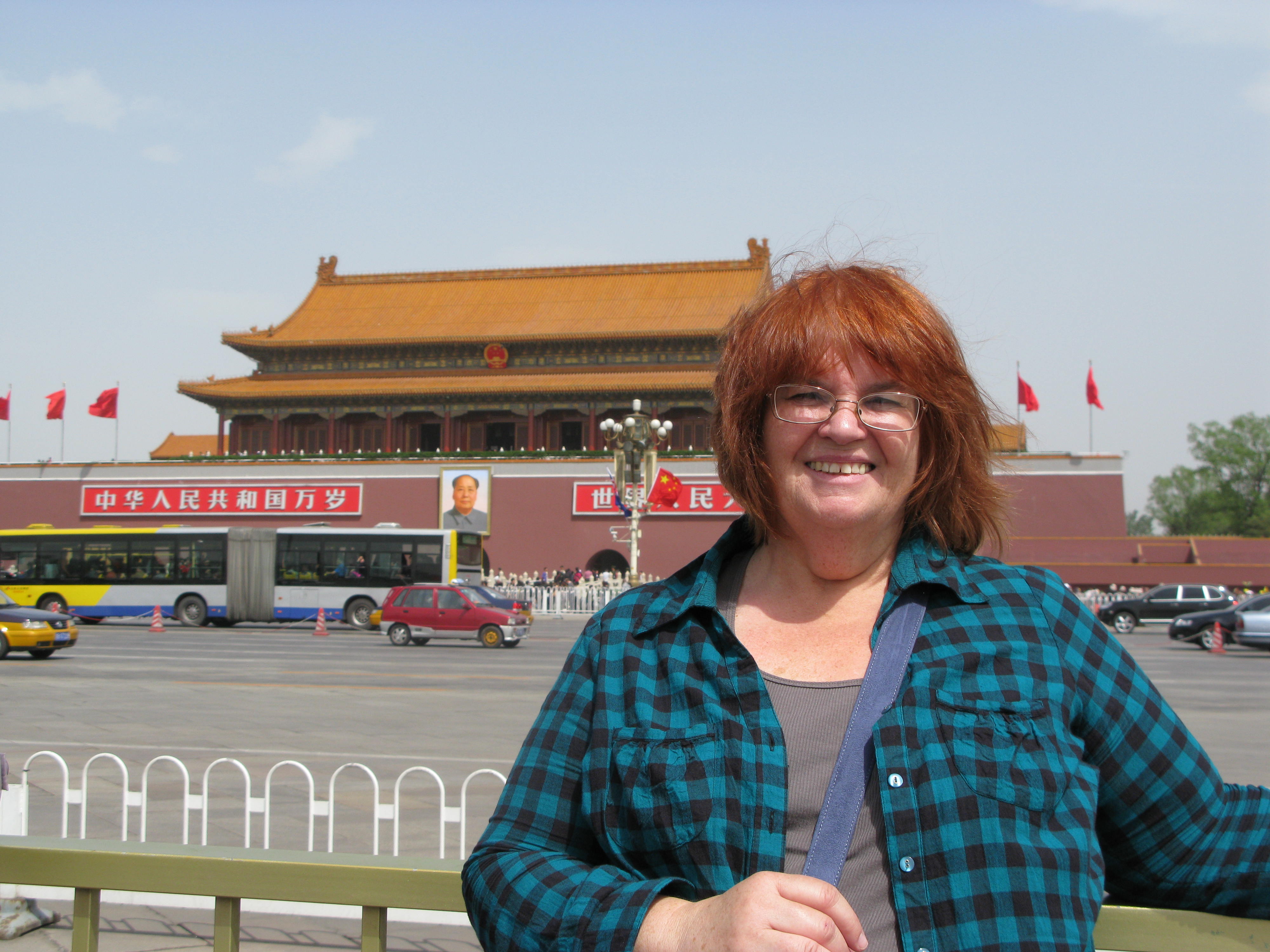
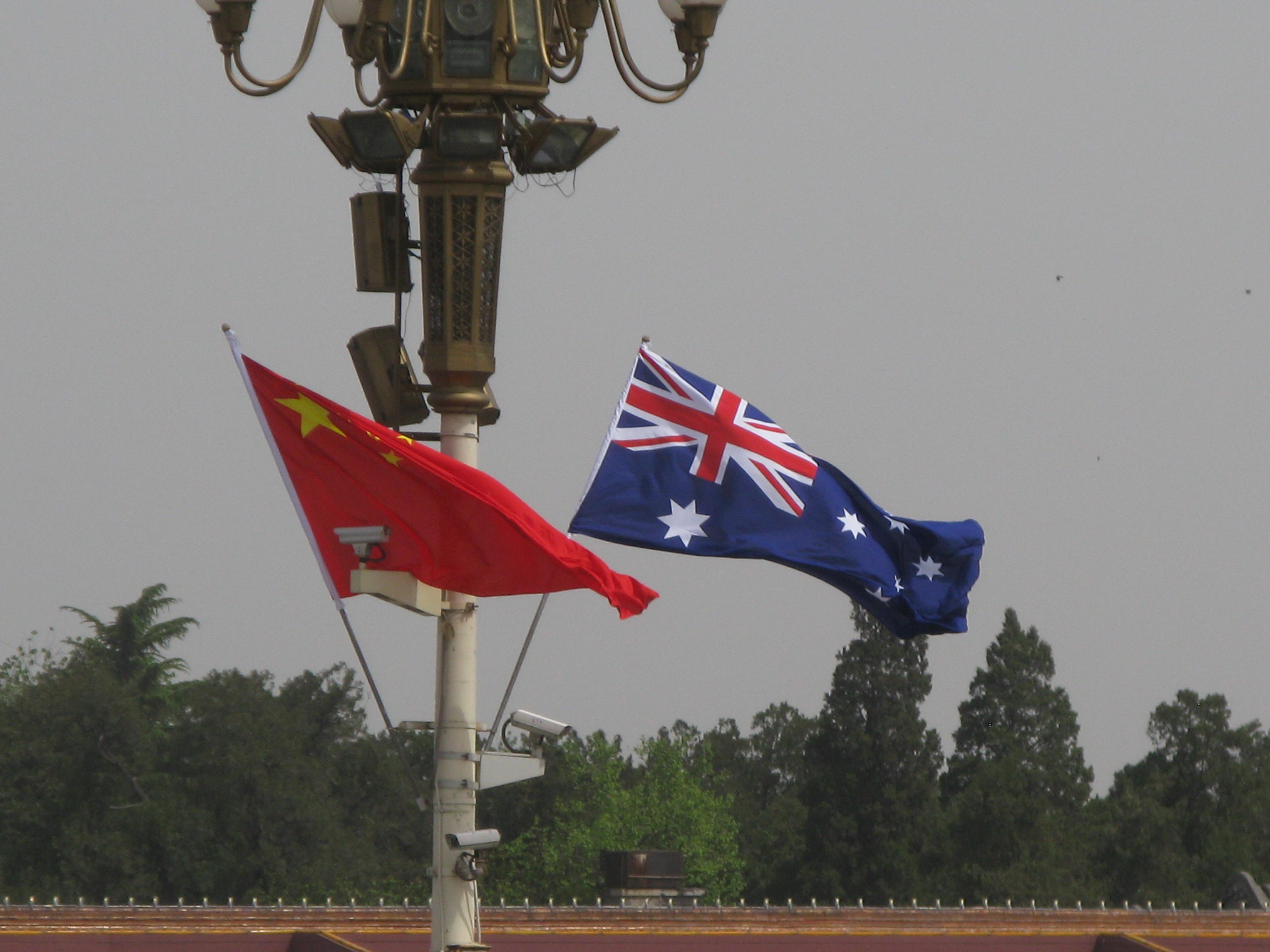 Then we were whisked away to Tian’anmen Square (Qianmen in Chinese, with ‘Q’ pronounced ‘ch’). We were warned it was enormous, and it was. Absolutely huge, and swarming with people. At one end, there was a long, winding queue, constantly on the move, of people wishing to pay their respects to Mao, who lies in state still since his death in 1976. His mummified body lies in a crystal cabinet and according to some who viewed him, he’s looking pretty waxy. Mao built the square to represent the might of communism and used to review troops of up a million people here. Appparently at his death, two million squeezed into the area. We walked the length of the square, taking in the paired flags flying at intervals – Chinese and Australian – to mark the state visit of Julia Gillard, the Australian prime minister. At the far end of Tian’anmen Square is the Forbidden City, and the street which separates the square from the palace is where an intrepid demonstrator stood in front of an approaching tank and sparked off the incident which made headlines all over the world in 1989. I remember seeing Kate Adey reporting and ducking her head as shots rang out. The Chinese we spoke to stress that it was just a little incident, where only a few people got injured, and are inclined to ignore questions about it.
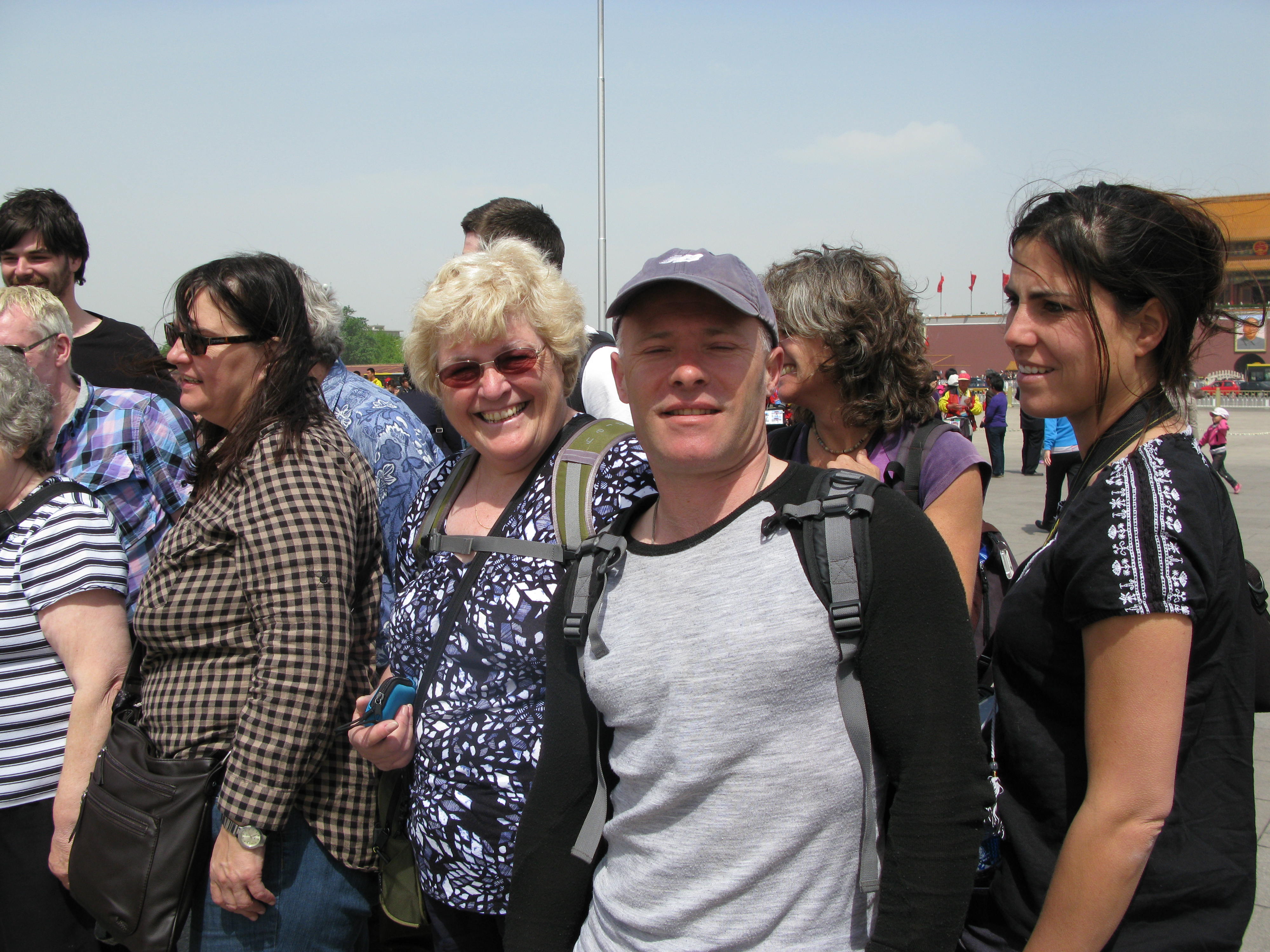
Way back in Russia, we met a guy called Neil who was travelling 3rd class on the train from Moscow, but hung around the Ozbus crowd because we’re such a fabulous group of people. Since then we’d bumped into him a couple more times – most recently in Ulaan Baator, where I discovered that while living in Perth, Australia, he’d actually spent the last couple of months visiting his mum in Barry! So we were amazed to literally run into him in crowded Tian’anmen Square. I took his photo and his mum’s address and will surprise her when I get home.
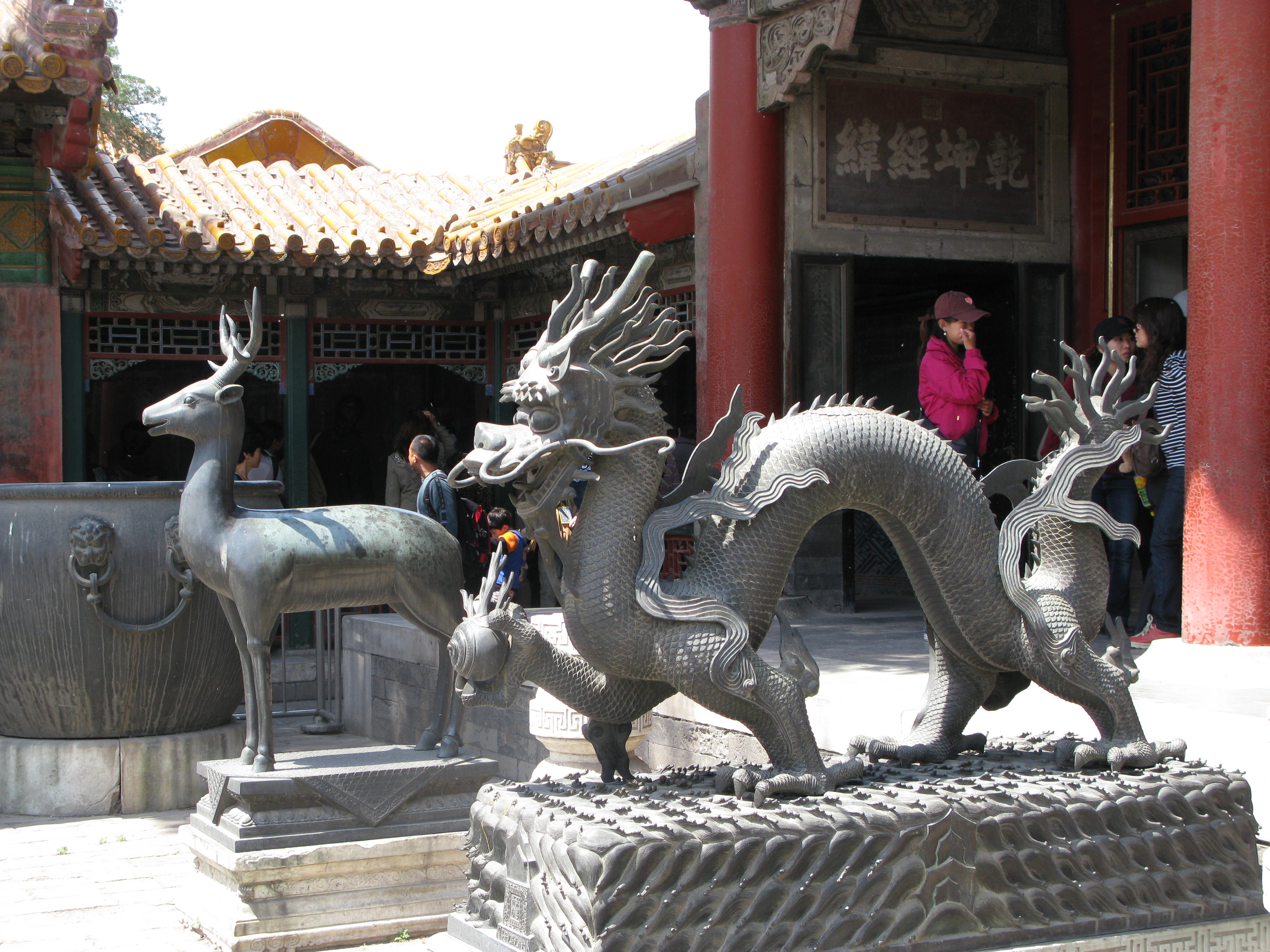
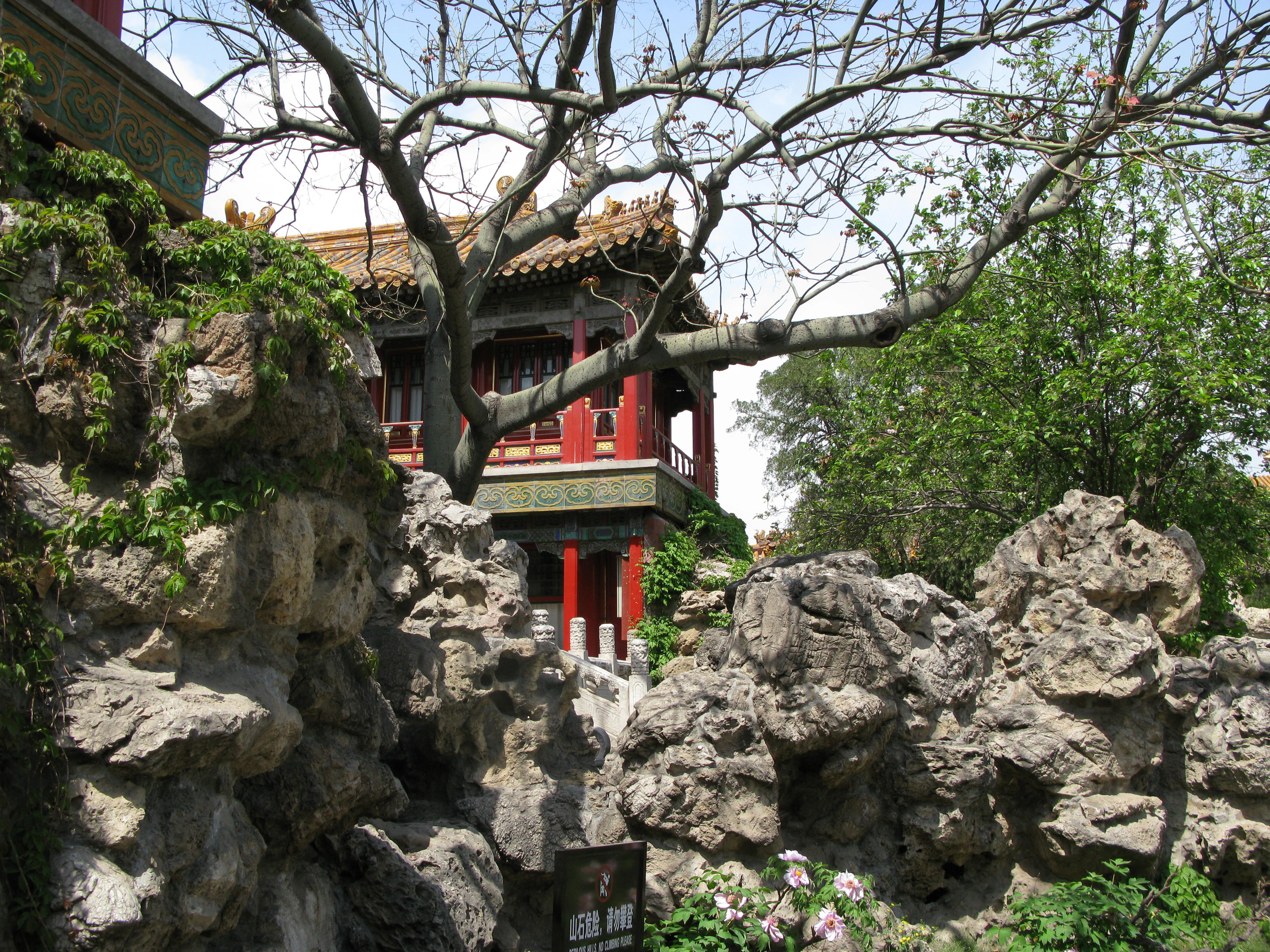
By this time I’d walked my legs off, and had no idea how much more we had ahead! That was when we entered the Forbidden City, so called because it was the imperial home of emperors of the Ming and Qing dynasties, therefore off-limits to the masses for over 500 years. We walked up endless steps, through magnificent arches or ceremonial halls, down steps into the next courtyard, then up the next steps.. and so on, through pavilions and palaces, round the amazing Imperial Garden with its classical Chinese landscaping: stone rockeries, vegetation, pavilions and water features. I now know what to do with my wee patch of unusable side garden in Barry. The decorations were beautiful, on the wood of the pavilions, inside the rooms, at the sides of the walkways. Every inch that could be painted or tiled or covered in gold leaf, had been. And inside some of the buildings were the most beautiful murals, paintings, artefacts…. the sort of place you’d need to spend days exploring in order to do it justice.
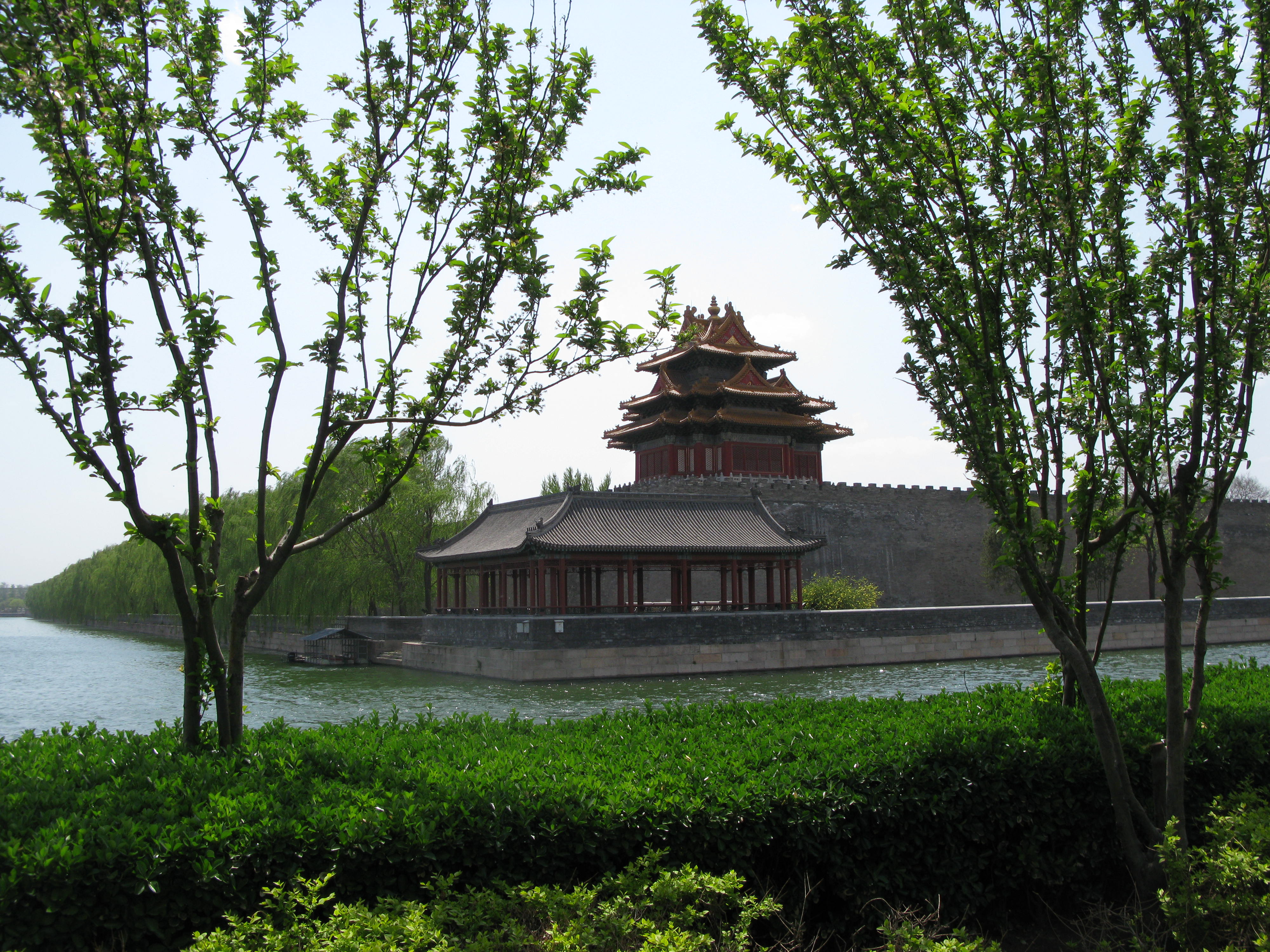
By the time we’d walked through this massive palace, each part more beautiful than the last, my legs were giving out and I was ready for a more restful activity! We found the coach a street or two away, on the far side of the moat which surrounds the palace, and were off for the final jaunt of the day. Shattered by this time. Walked miles….
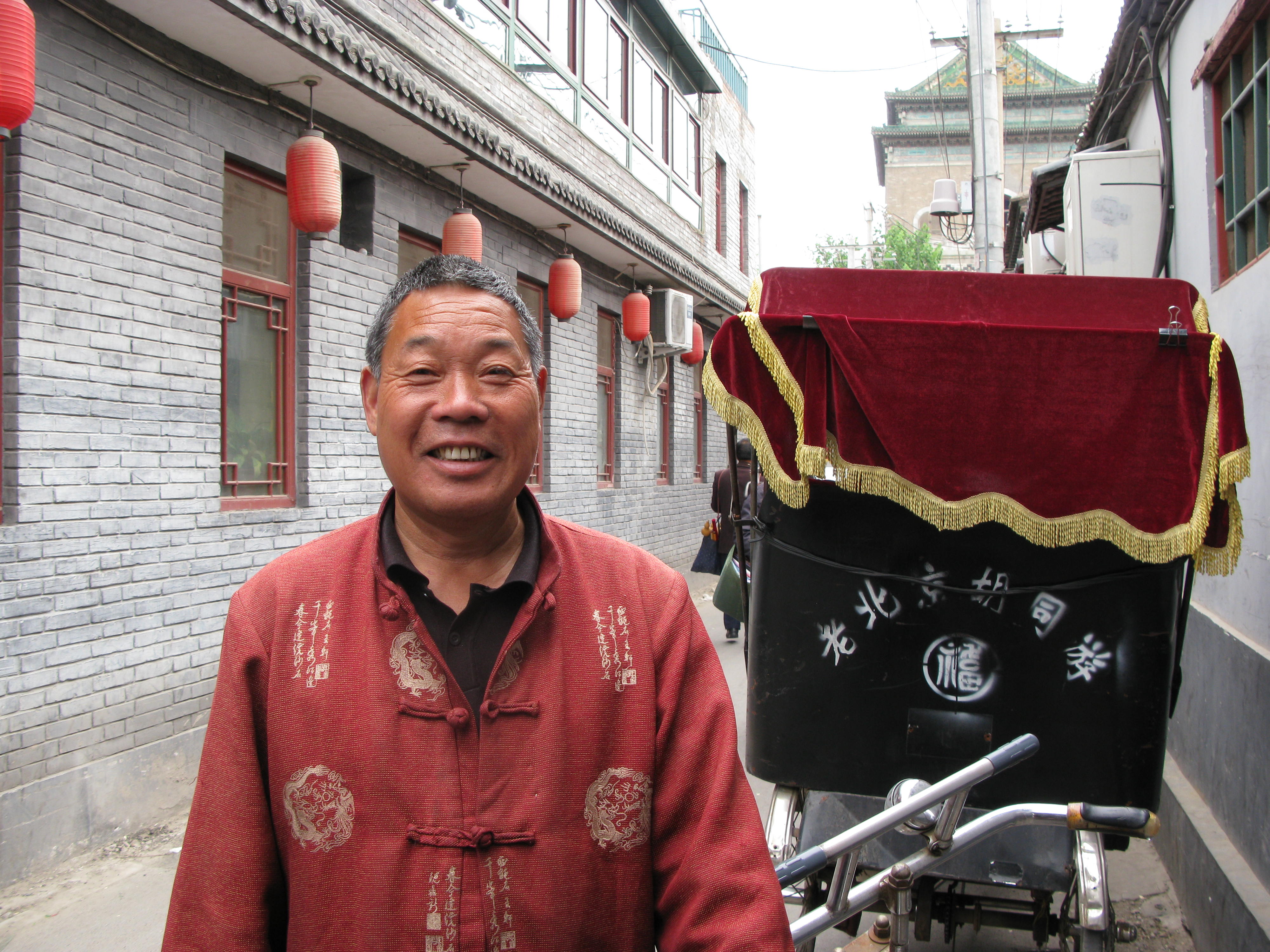
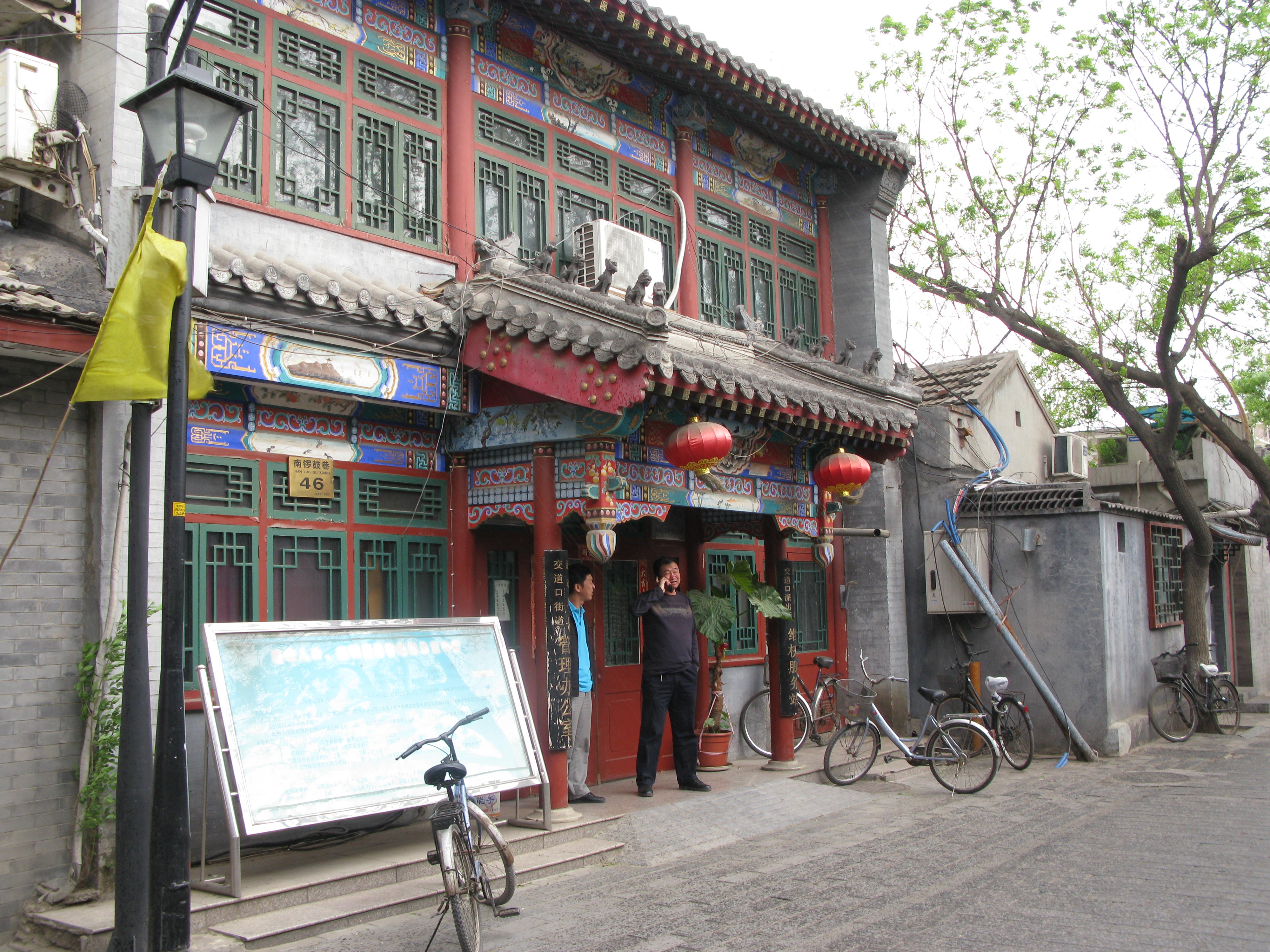
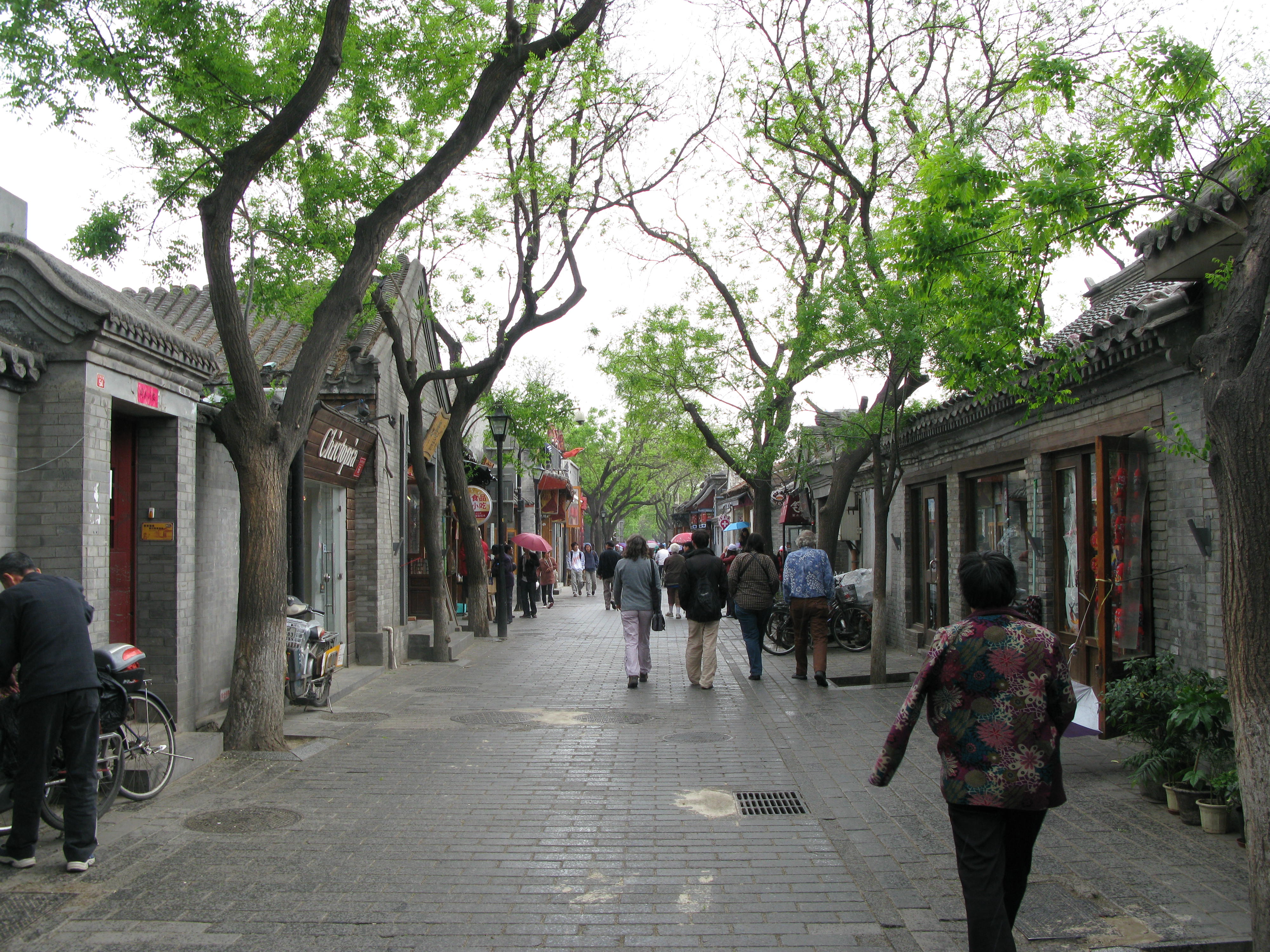
And so, on to the next part of the tour, which was pretty leisurely – in twos, haring around the Hutongs of Beijing in a rickshaw. Such fun! Under a canopy behind a pedal bike – just like the samlors of Bangkok when I was a child. The Hutongs are the lanes of Beijing, usually lined with shops, barrows – anybody selling anything. The particular area we went along is one of the last real traditional Chinese communities left in the city. Many hutongs have been razed to the ground in order to modernise the city. That means building high rise offices and flats. Similarly, the ancient city walls were destroyed to make way for more traffic-friendly ring roads. Let’s hope they halt this programme of expansion before more of old Beijing is lost. We paid a visit to a fairly ramshackle house in this area and talked with the owner, who described his house, family, way of life and the price his house would fetch nowadays. About the equivalent of £2m! Then we were taken to a new area which is being developed as a new shopping precinct – but very attractive and keeping to the scale of the old hutongs.
Very relieved to get back to the hotel after such a busy day. I took some photos from the bedroom window of Tian’anmen Square lit up at night. Very pretty, and so glad we’re in such a central position. You walk out of the door of the hotel and are in the midst of the bustle of this lovely city. And there’s a 24-hr indoor ATM at the end of the street!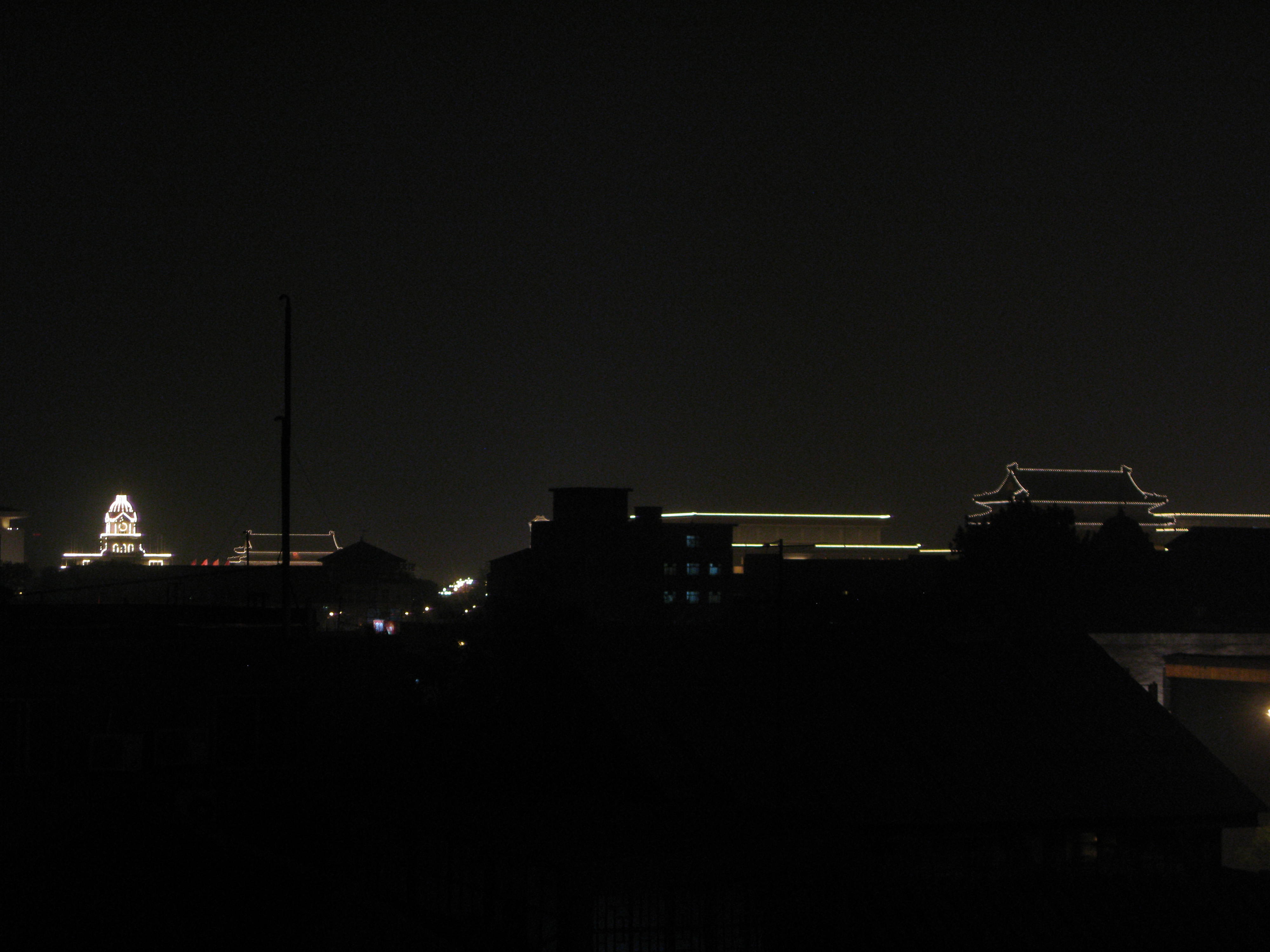
 Patamateria