The Last Train in China – off to Xian


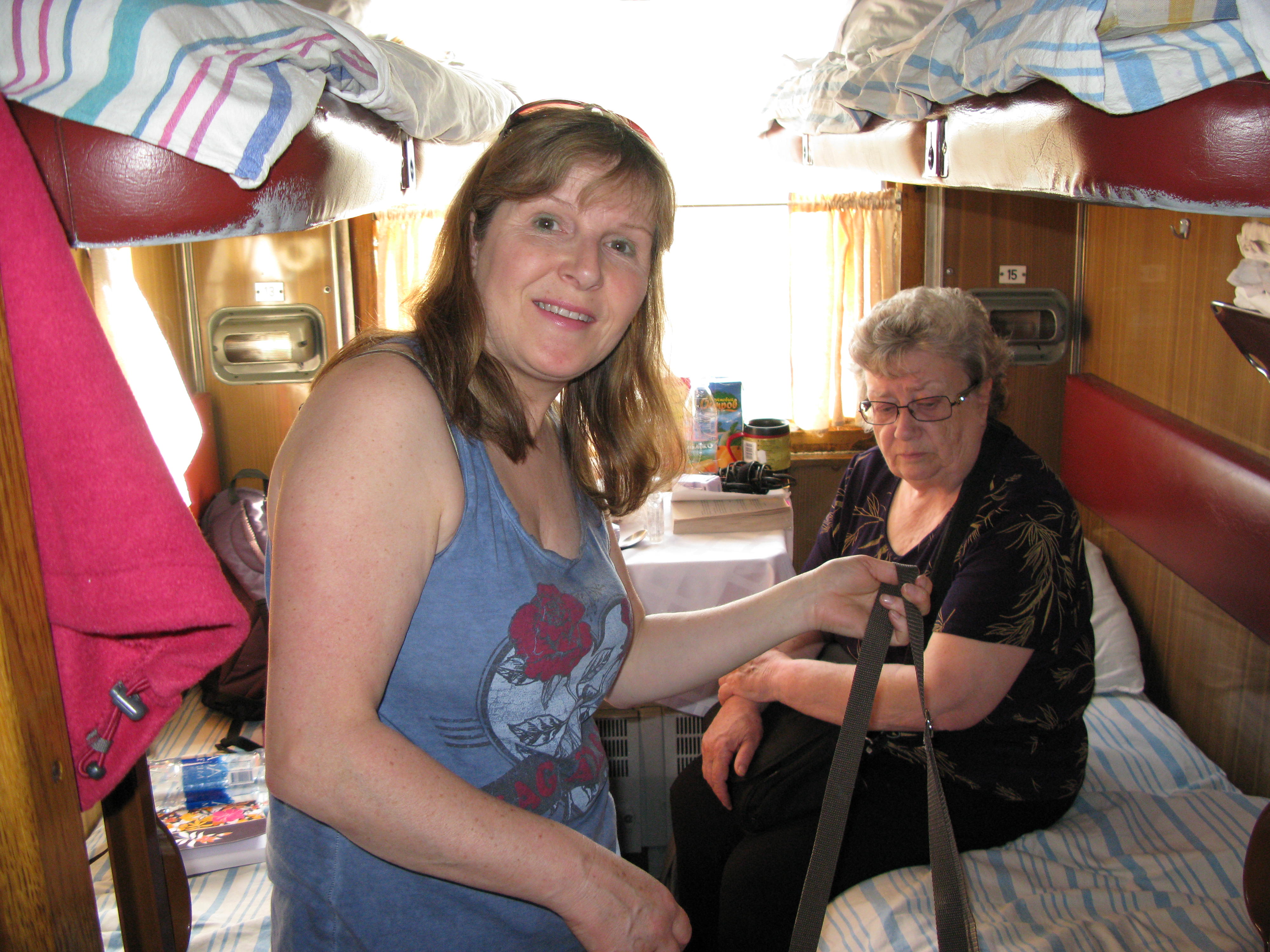
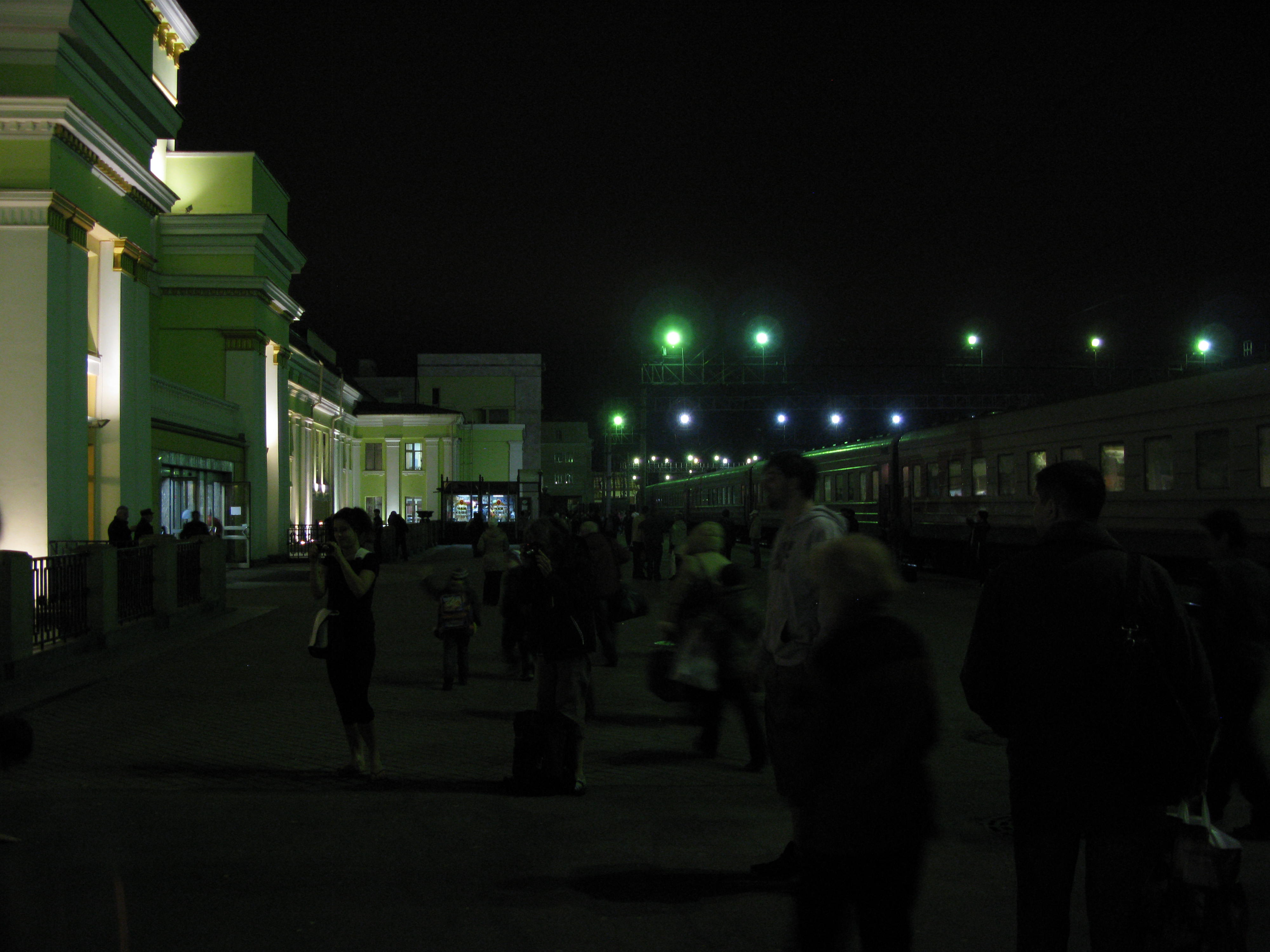
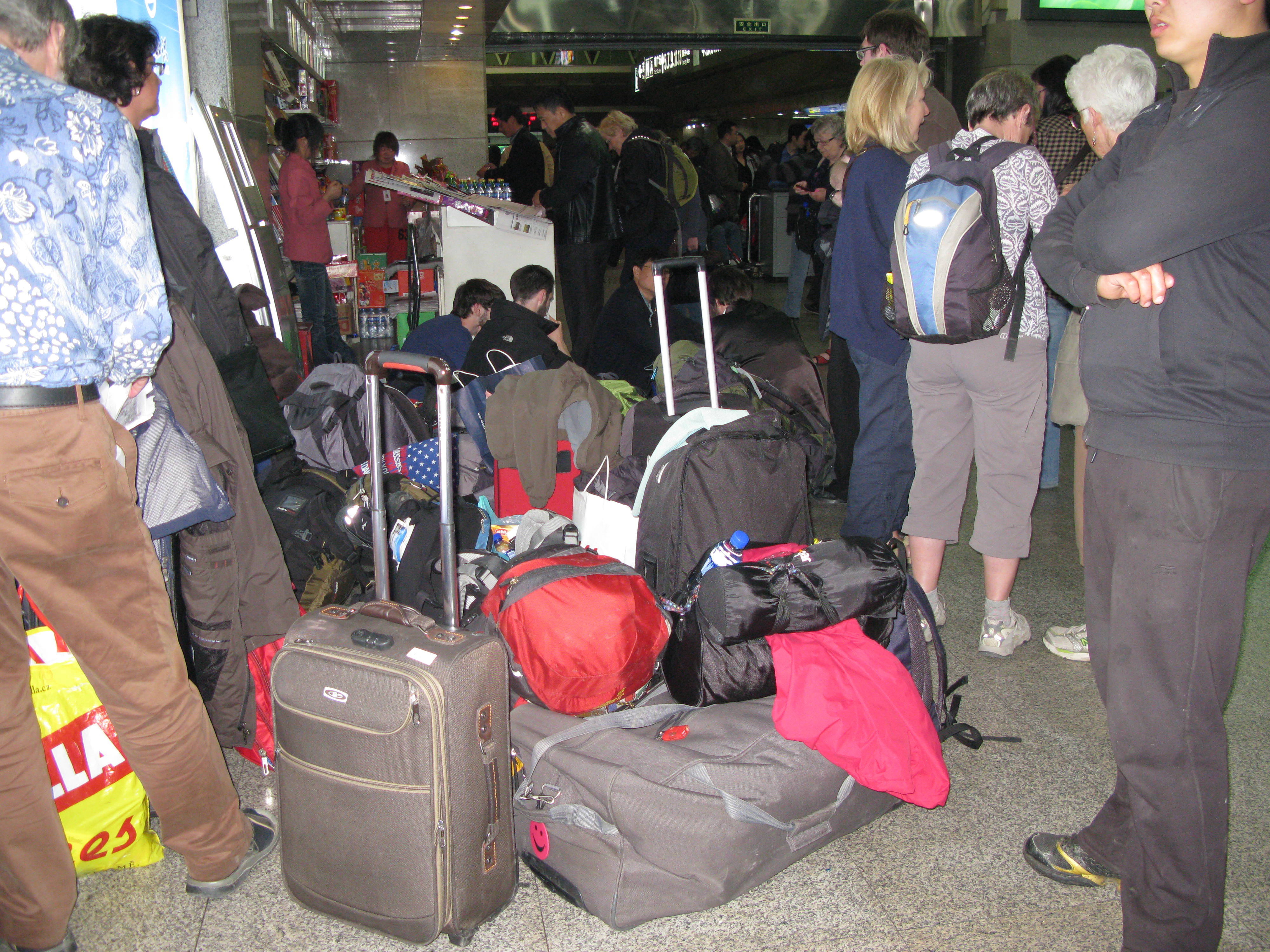
Well, not really, just the last train I’m taking this trip. The station we left from in Beijing is really state of the art – probably beautified specially for the Beijing Olympics in 2008. We were able to wait in the mothers and children waiting room – either on account of the aged mothers amongst us, or the children who constitute our younger members. But actually, Gary made it happen – western tourists are still accorded some sort of special treatment, like in the Middle Eastern and Asian tales from Somerset Maugham or Agatha Christie. The train was similar to the ones we’d been on before, cold at night, so I was glad of my inner fleece sleeping bag. I shared with Tony and Sandra again but as it was about 10pm by the time we got settled, and we had an early arrival in Xian the next day, we just got ourselves into our bunks. No card playing with Sandra.
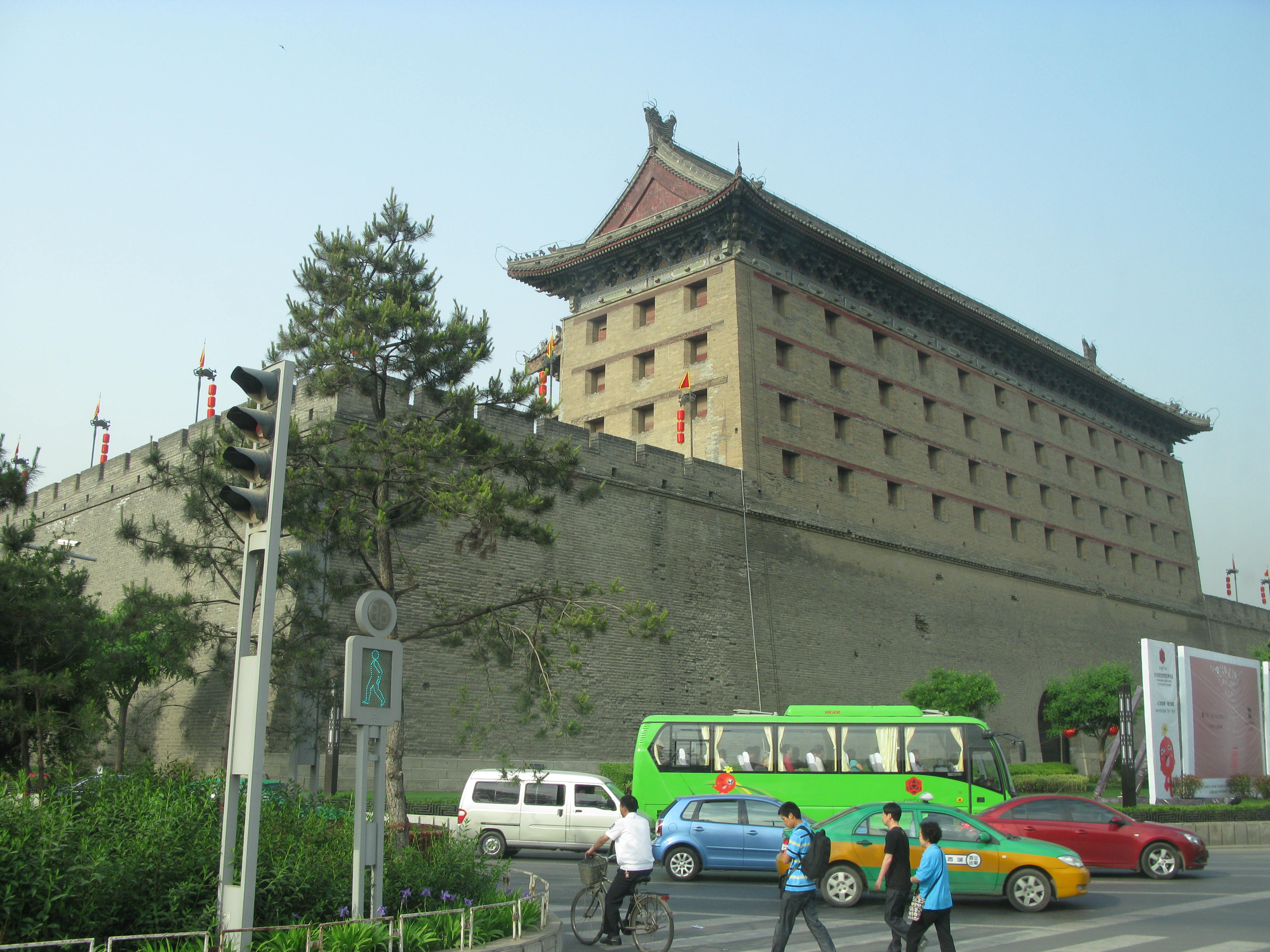
At the other end, we were met by An, our Xian guide. Very sweet! We had a bit of a tour around the city walls and inside the old city before driving past the Digital Area (where there are shops selling everything from TVs and mobiles to computers etc) and on to our hotel. This particular one is normally used by Chinese businessmen. So no one spoke any English, the menu was totally in Chinese, there was one bottle of wine in the bar and one of our party bought that on the first night. The staff ran around for ages trying to find how much it cost, then trying to locate a corkscrew. There was actually one attached with cellophane to the bottle…. Over the next couple of days we tried to get alcoholic drinks at the bar. A couple of bottles of beer were all that were forthcoming.
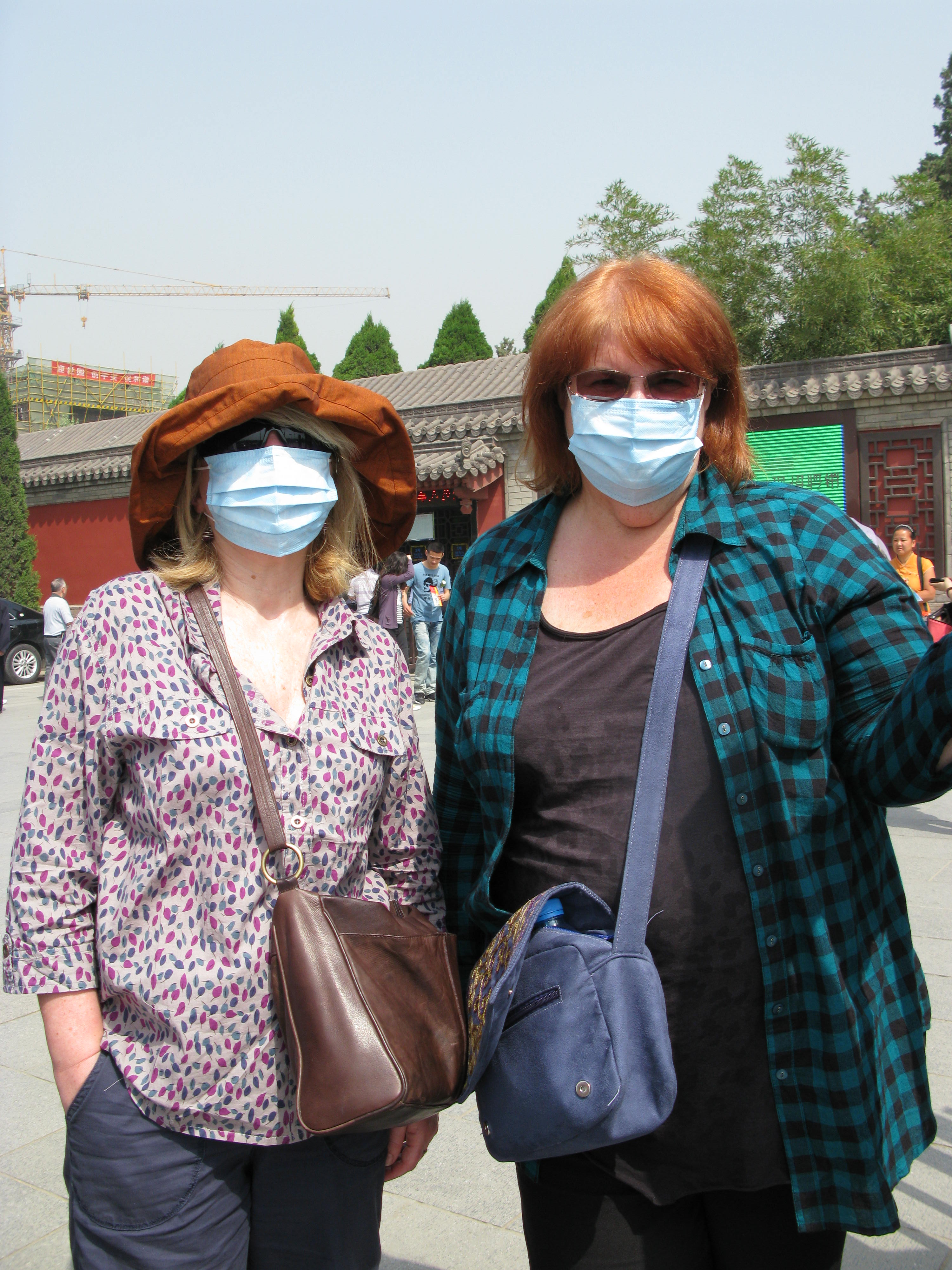

The room was pleasant – twin beds – apart from that I found Xian quite a challenge. The sand that was blowing over north China from the Gobi Desert was the major problem, together with Xian’s natural smog, caused partly by car exhausts but also from wood and coal stoves all over the city. Just like Victorian London. When we went out, Gary bought dust masks for Caroline and me and we wore them through the Wild Goose Pagoda visit. A most attractive look! (Sorry – can’t get the photo to stay rotated…!) Xian is the capital of Shaanxi province, and Shaanxi is part of the Loess Plateau which is covered by microscopic silt that began blowing down from Siberia during the last Ice Age. This makes is a very dusty place – you can see it all just hanging in the air. Couldn’t even open the bedroom windows, so had air-con on all day and night.
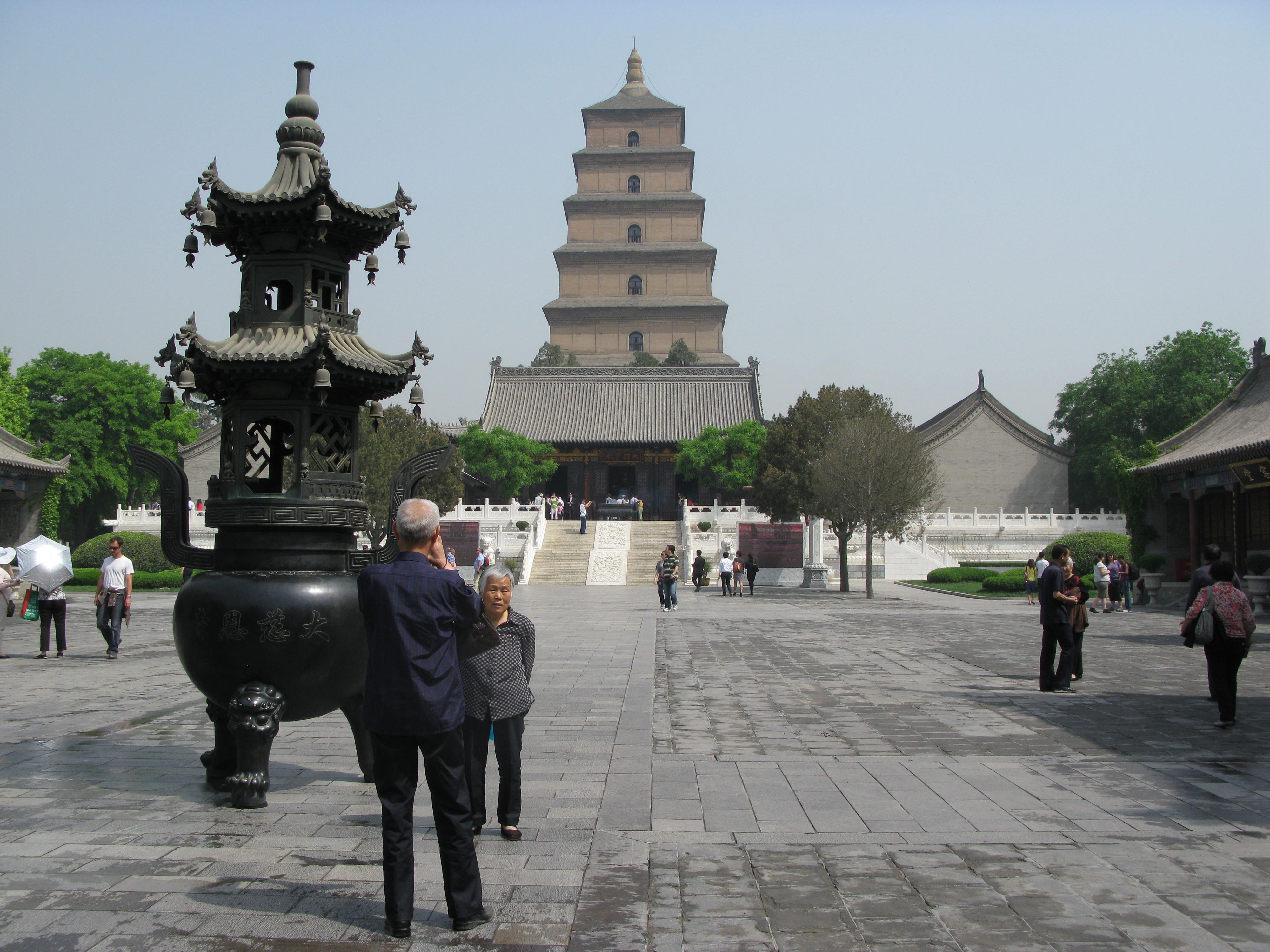
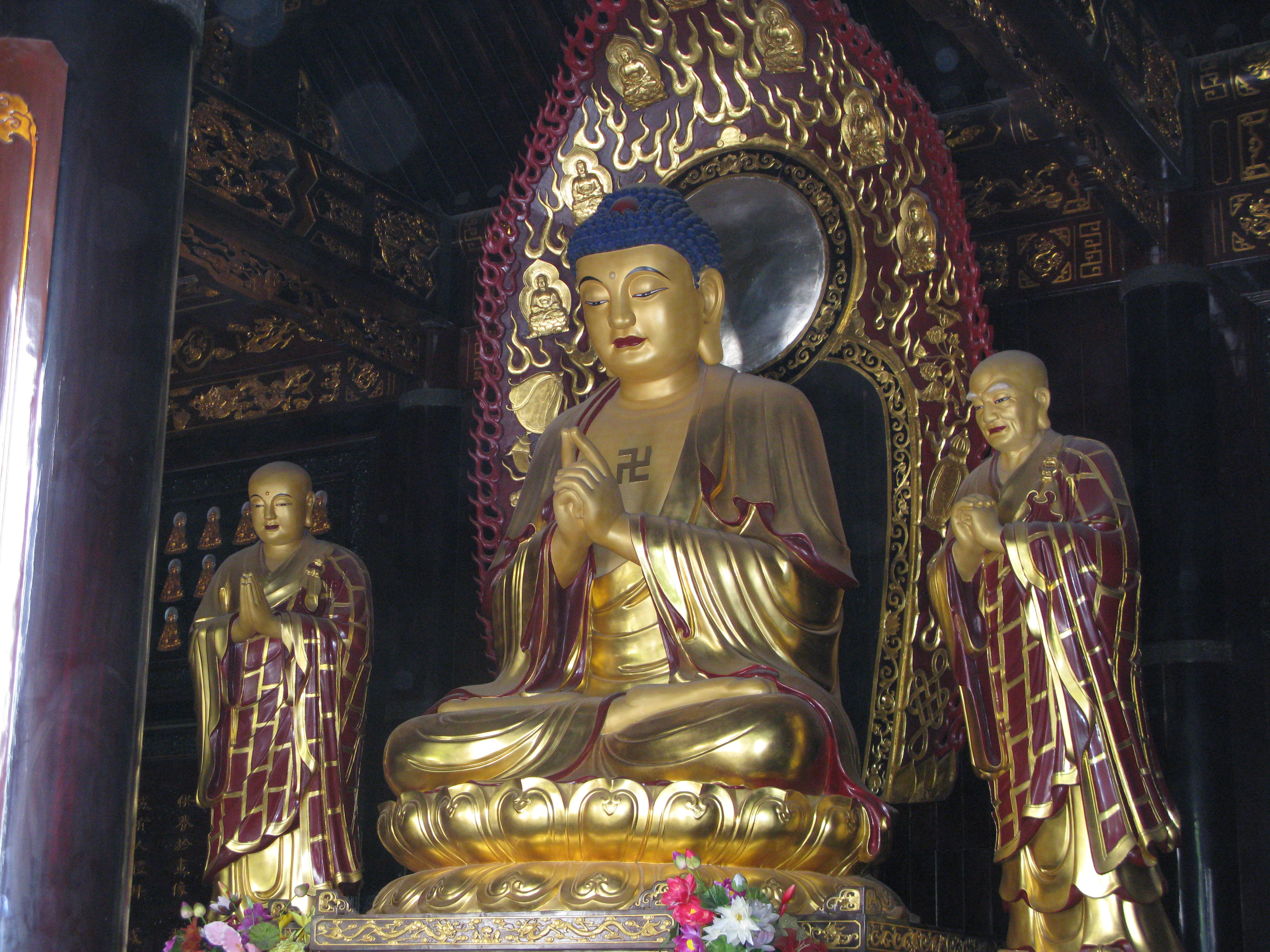
The Wild Goose Pagoda houses the Buddhist sutras brought back from India by Xuan Zang in the 7th century. He spent his life translating them and his travels inspired one of China’s best known works of literature: ‘Journey to the West’. Gary meanwhile was telling us all sorts of interesting facts and anecdotes about China. The Chinese flag consists of one large star – the government – and four smaller stars which represent the four occupations of the inhabitants: workers, farmers, soldiers and intellectuals. The latter must have read the three main pieces of Chinese literature: ‘Journey to the West’, ‘The Dream of the Red Mansion’ and ‘Three Kingdoms’.

We were whisked away after this to a jade factory – so interesting; I now know the difference between jadeite which is found polished by running water in streams, and agates which are hewn from rock. Jadeite is very hard – can scratch glass – and translucent, and carries a heftier pricetag. It is also much harder to carve – and this is generally done with diamond cutters. The more intricate jade work is generally done with softer agate. There is also ‘fake’ jade around, mainly soapstone or other stones. But what does it matter if they are beautiful in their own right?! I ended up buying a variety of pieces in Xian, then later in Beijing. They are all lovely, regardless of what stone they are. The trick is not to part with too much money for the cheaper ones!

Finally, after lunch, we were off to see the Terracotta Warriors, the main reason for our visit to Xian.
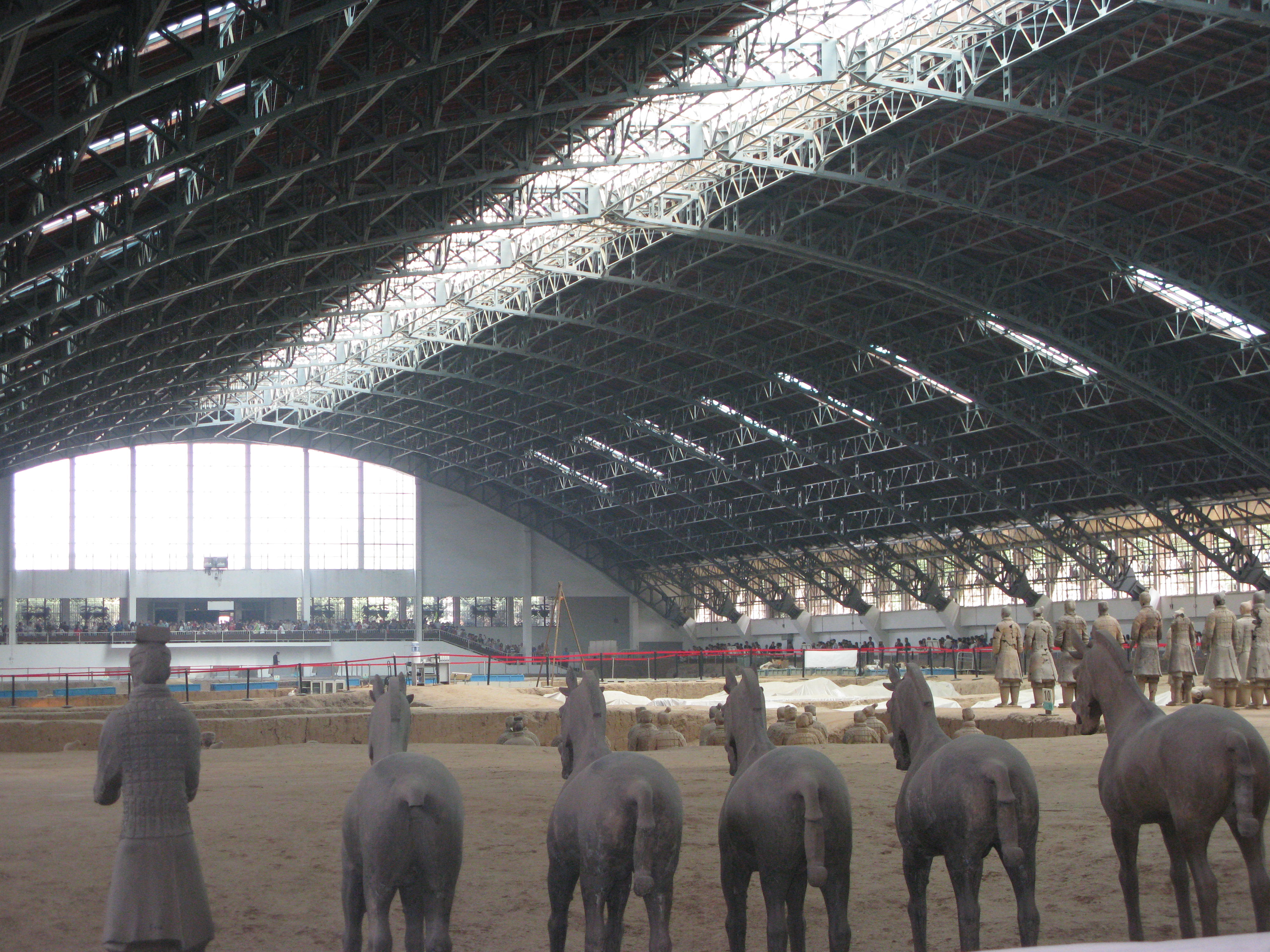

Once upon a time (about 2000 years ago) there was a boy of 13 who became the first ruler to unify China. A truly amazing man who ruled for 36 years: Qin Shi Huang. He has been described as a chronic overachiever. He centralised government, standardised measurements, currency and writing; he built new roads and canals and conquered a good few of his neighbours. He was also a pretty controlling individual with a nasty sadistic streak: he enslaved thousands to work on his projects and according to legend he couldn’t take criticism so buried alive about 460 disapproving scholars. Not nice.
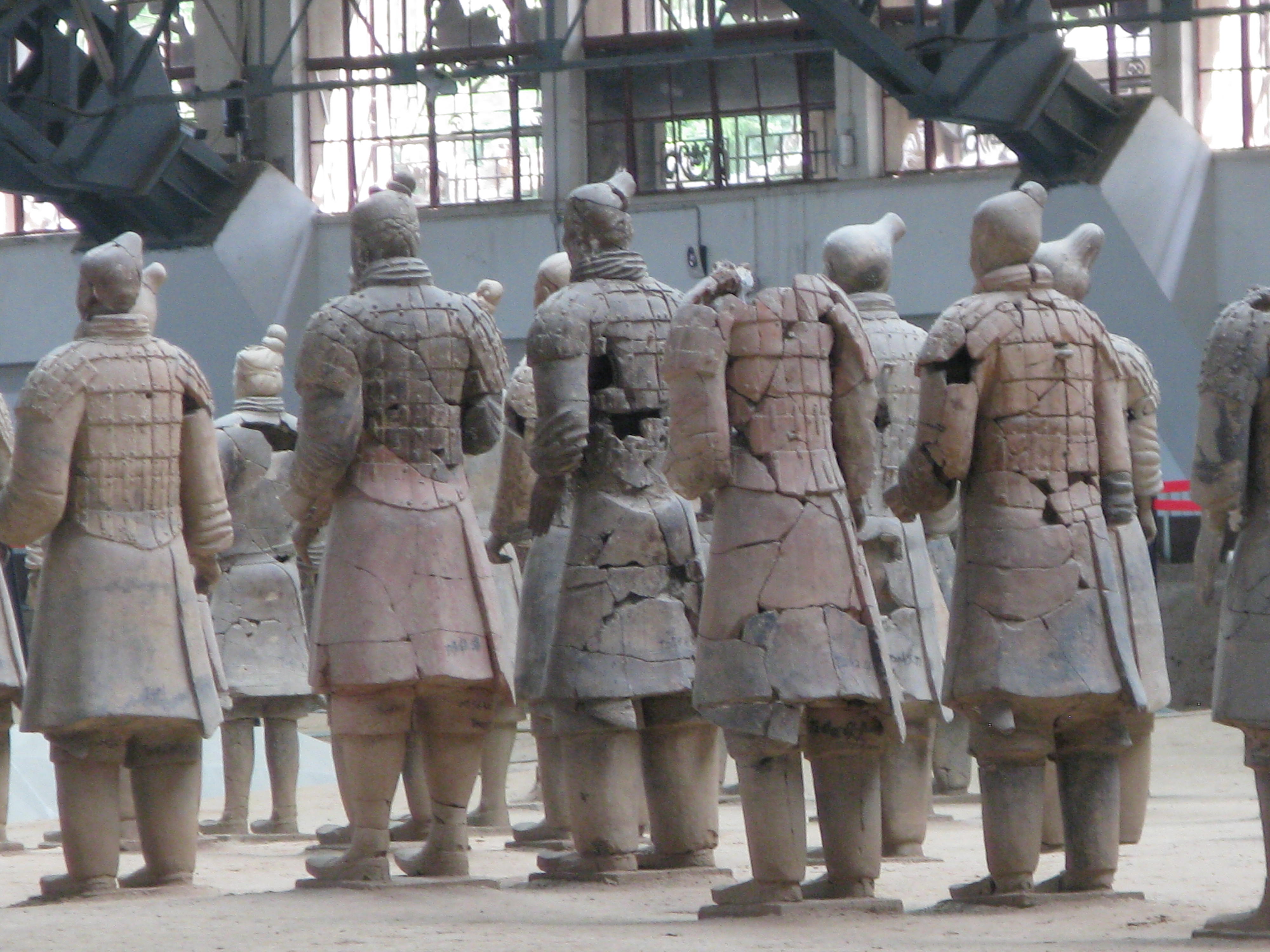
So where does the Terracotta Army come in? Well, there are two main theories about this massive collection of archers, infantrymen, horsemen and their horses and chariots, and officers. One theory is that in all his battles he was responsible for the deaths of thousands of soldiers and was seriously afraid of retribution from their spirits in the afterlife. He therefore produced his own life-size terracotta army to protect him. The second theory – the one archaeologists prefer – is that he expected his rule to continue in death as it had in life, so of course he took his army with him. The sight of all these figures is truly amazing – much more impressive than I ever imagined. No two faces are identical; it is said he had masks made from every soldier in his army and the task of creating the warriors was farmed out to craftsmen in villages all over the area. A huge undertaking. As well as warriors, there are countless horses – and the attention to detail is fabulous.
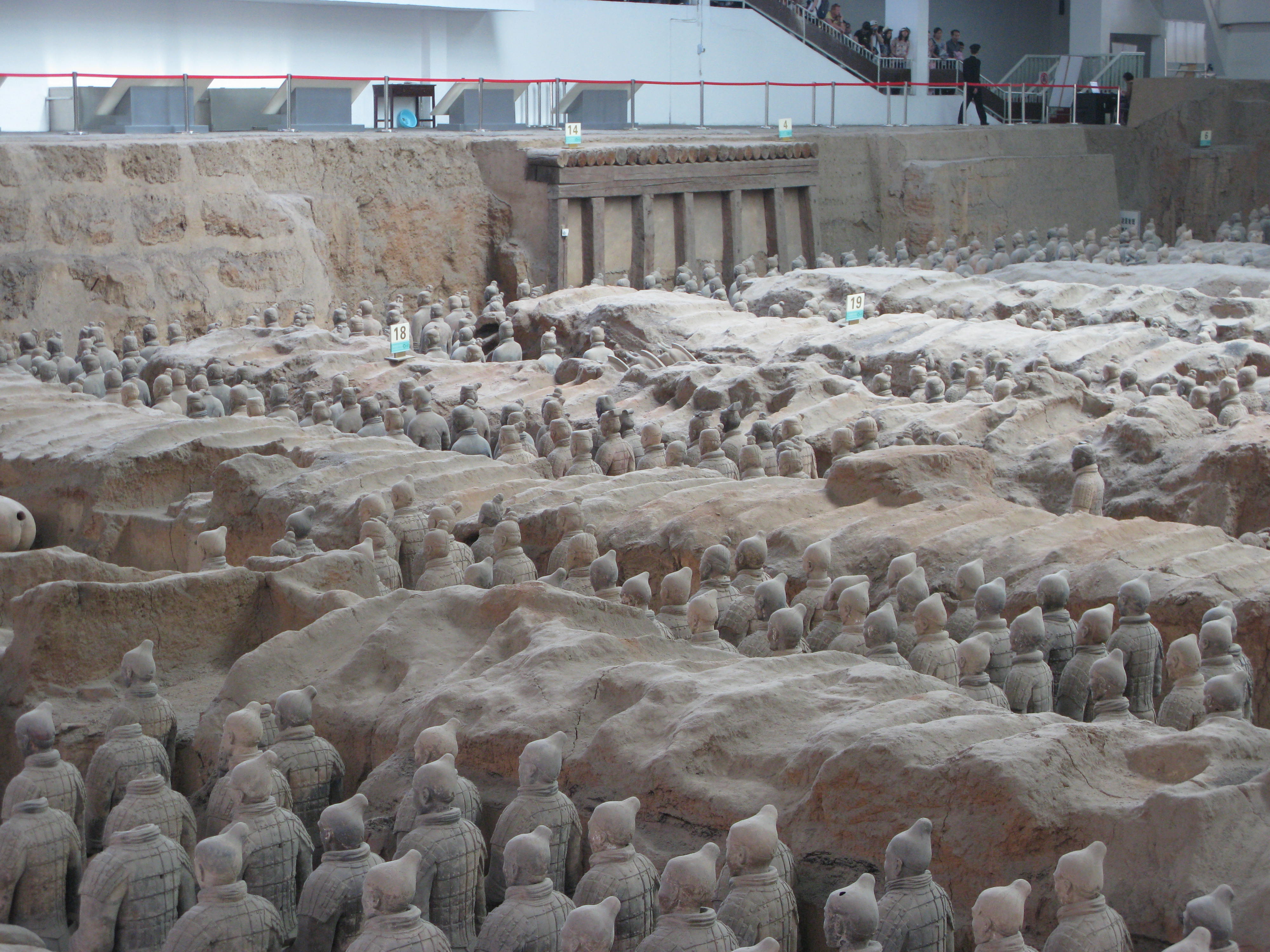
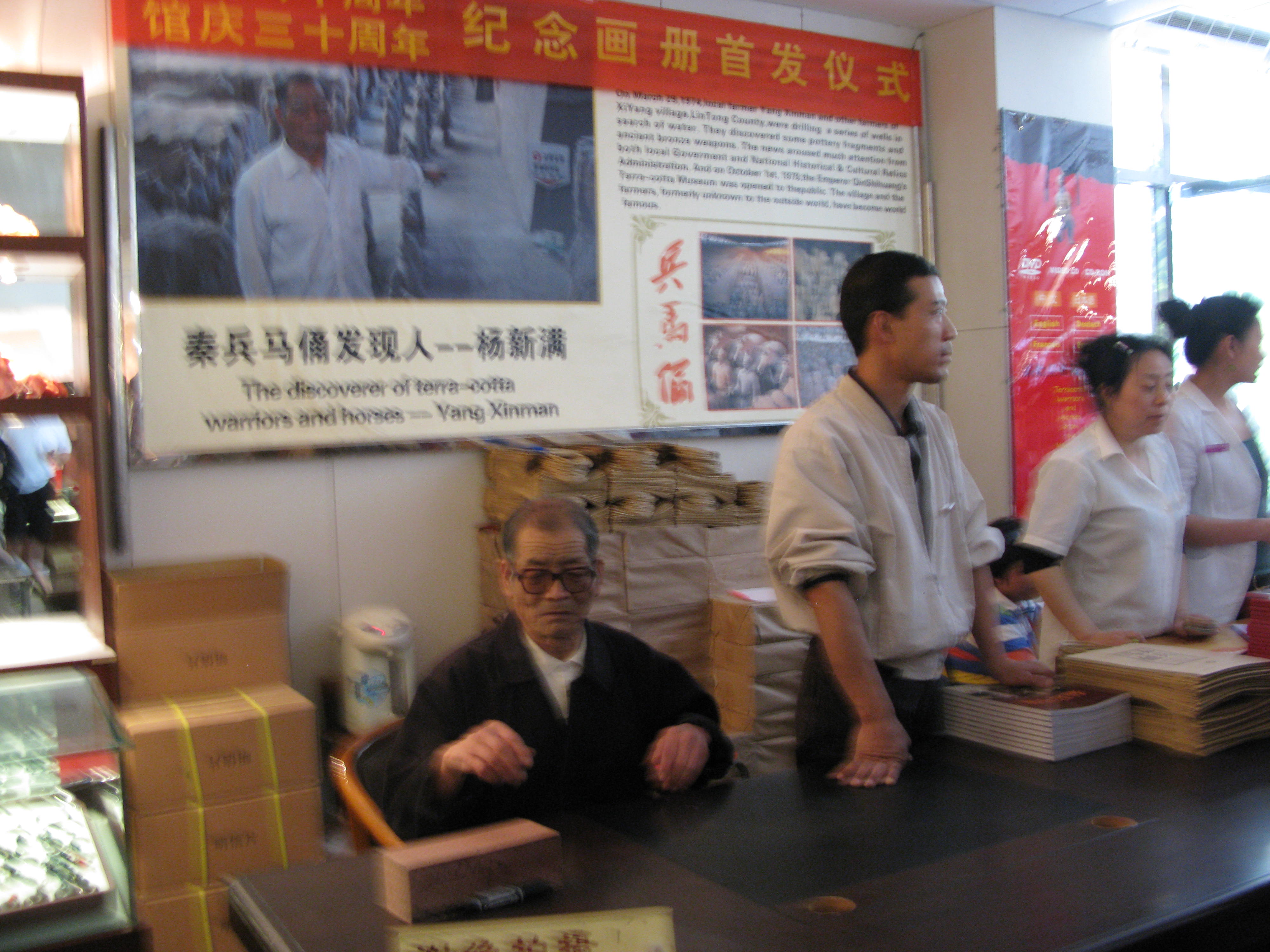
In 1974 a few farmers were digging a well when they came across an underground vault containing the remains of thousands of soldiers in battle formation, together with their horses. The government acquired their land in order to carry out further excavations, and rewarded the farmers by building them a small community of lovely houses where they could also carry out other businesses. One of the original farmers sits in the Terracotta Army complex and signs books for tourists. They are apparently extremely wealthy as a result of their accidental find all those years ago!
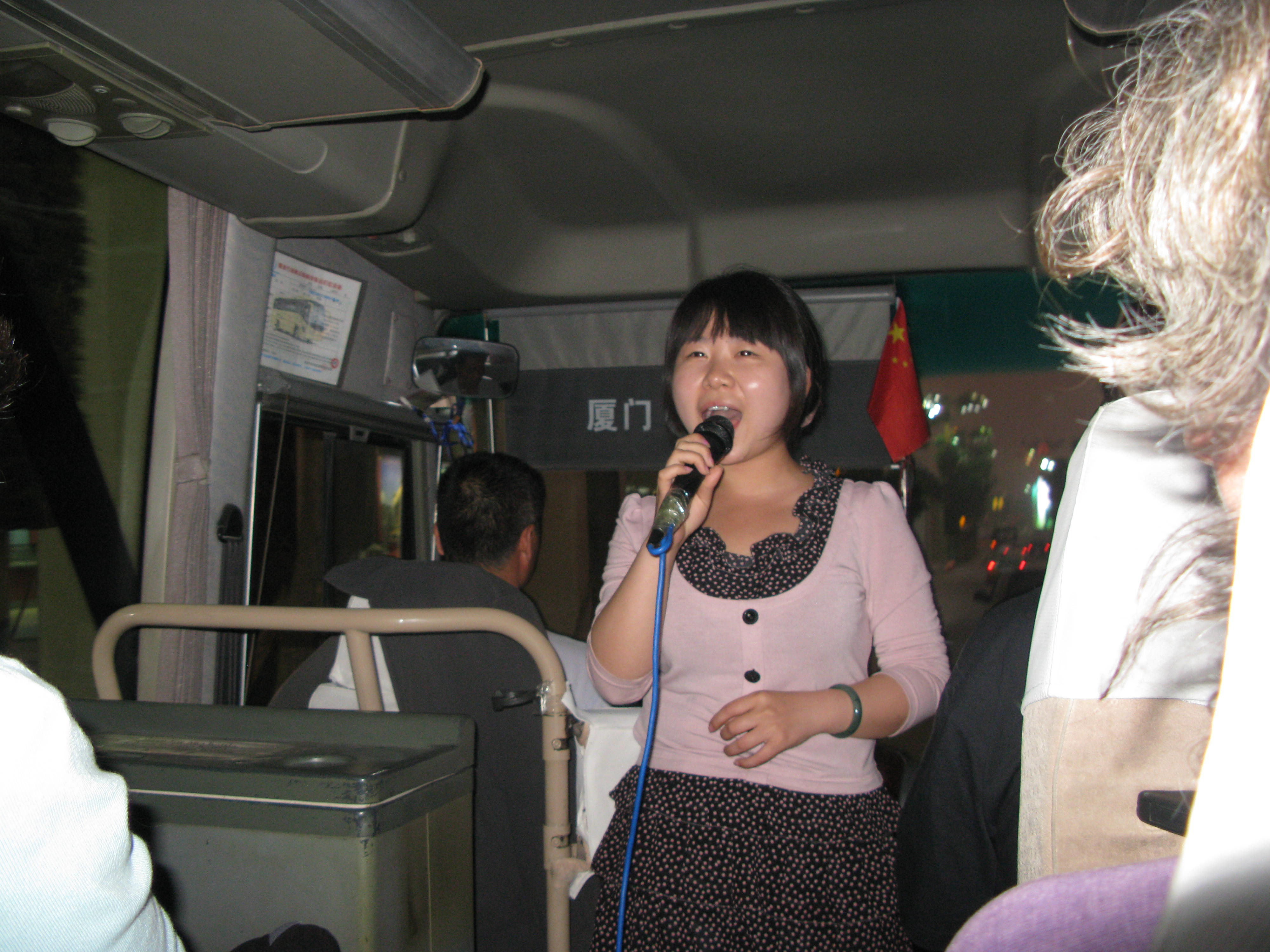
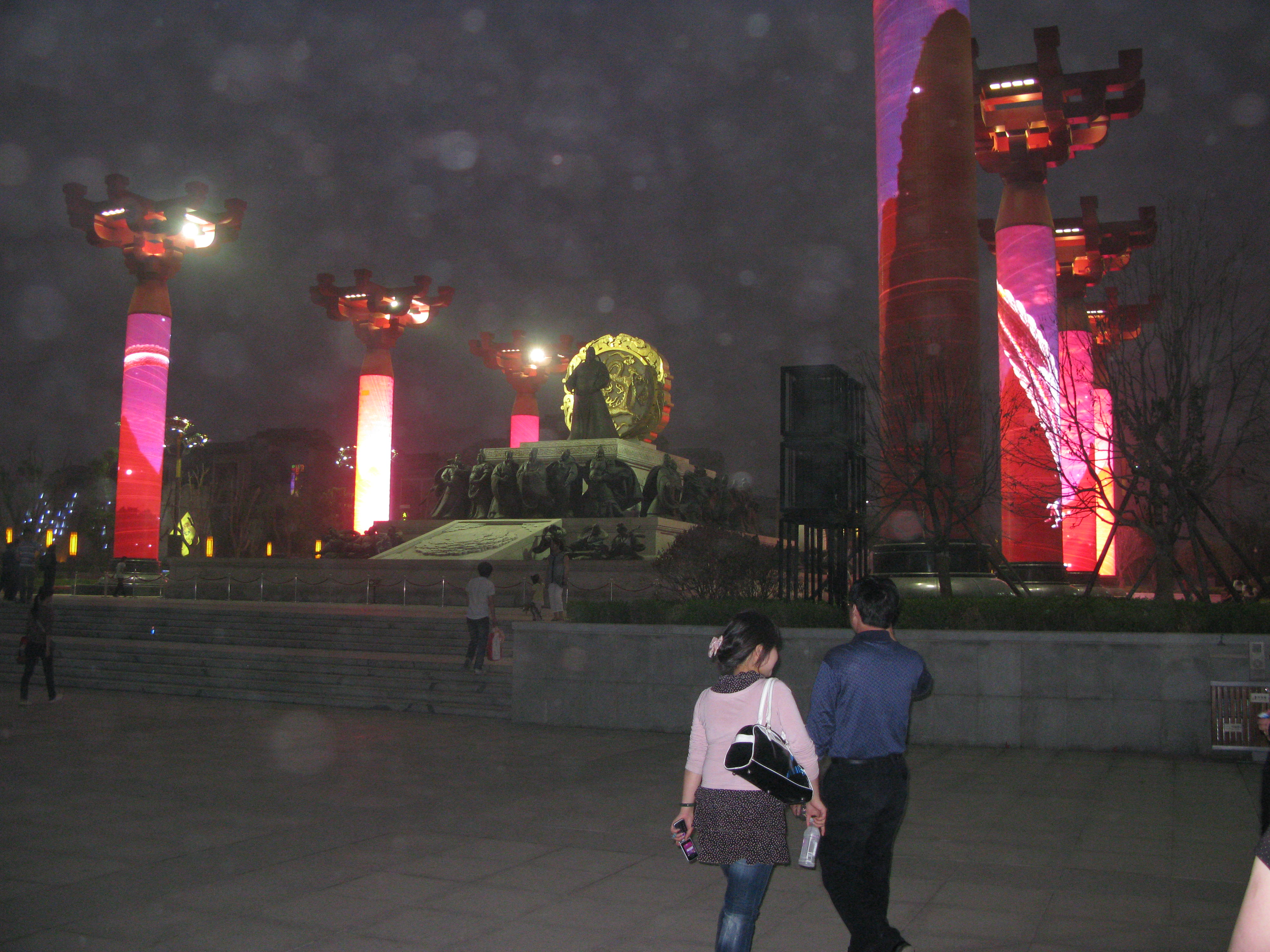
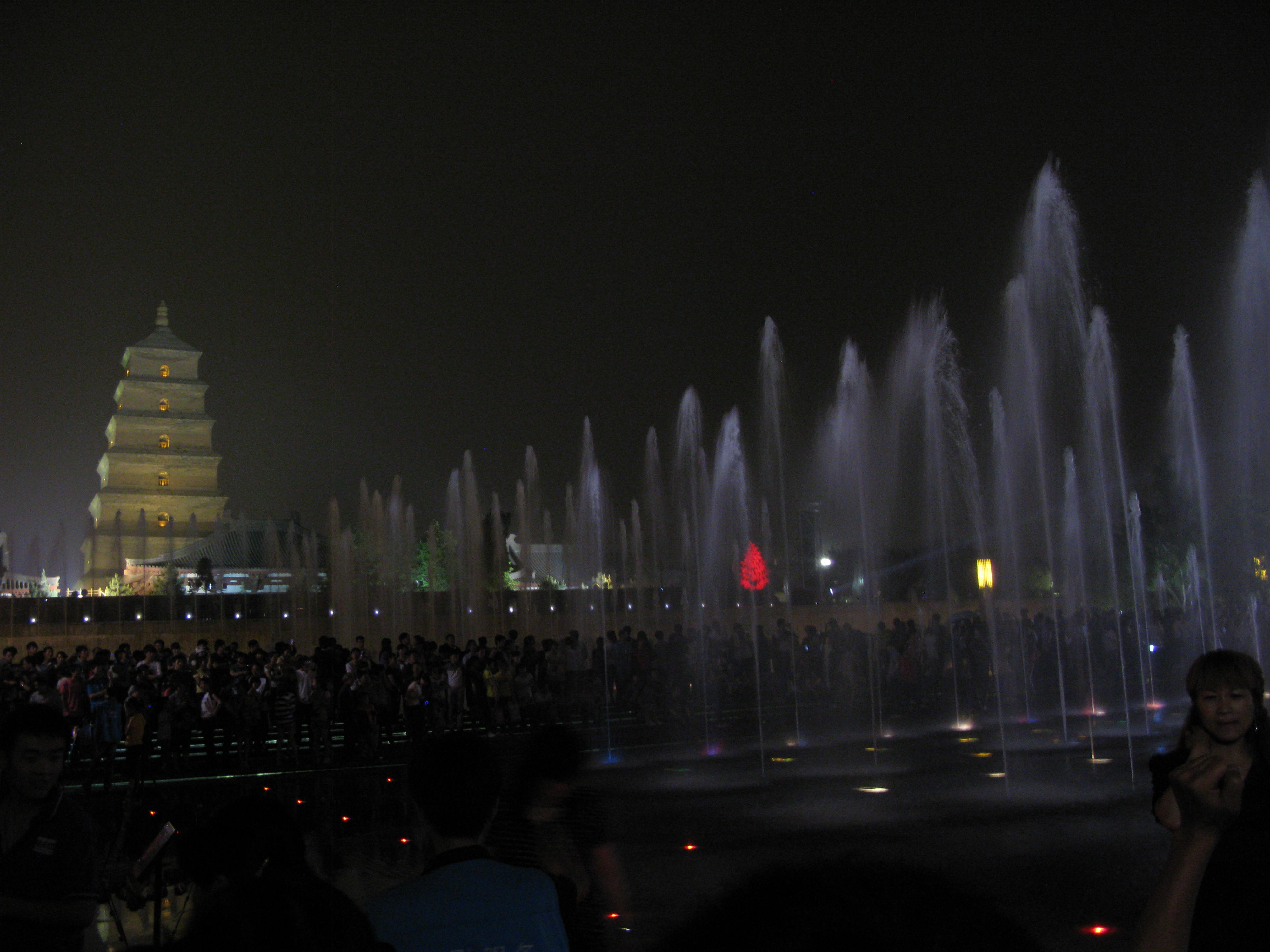
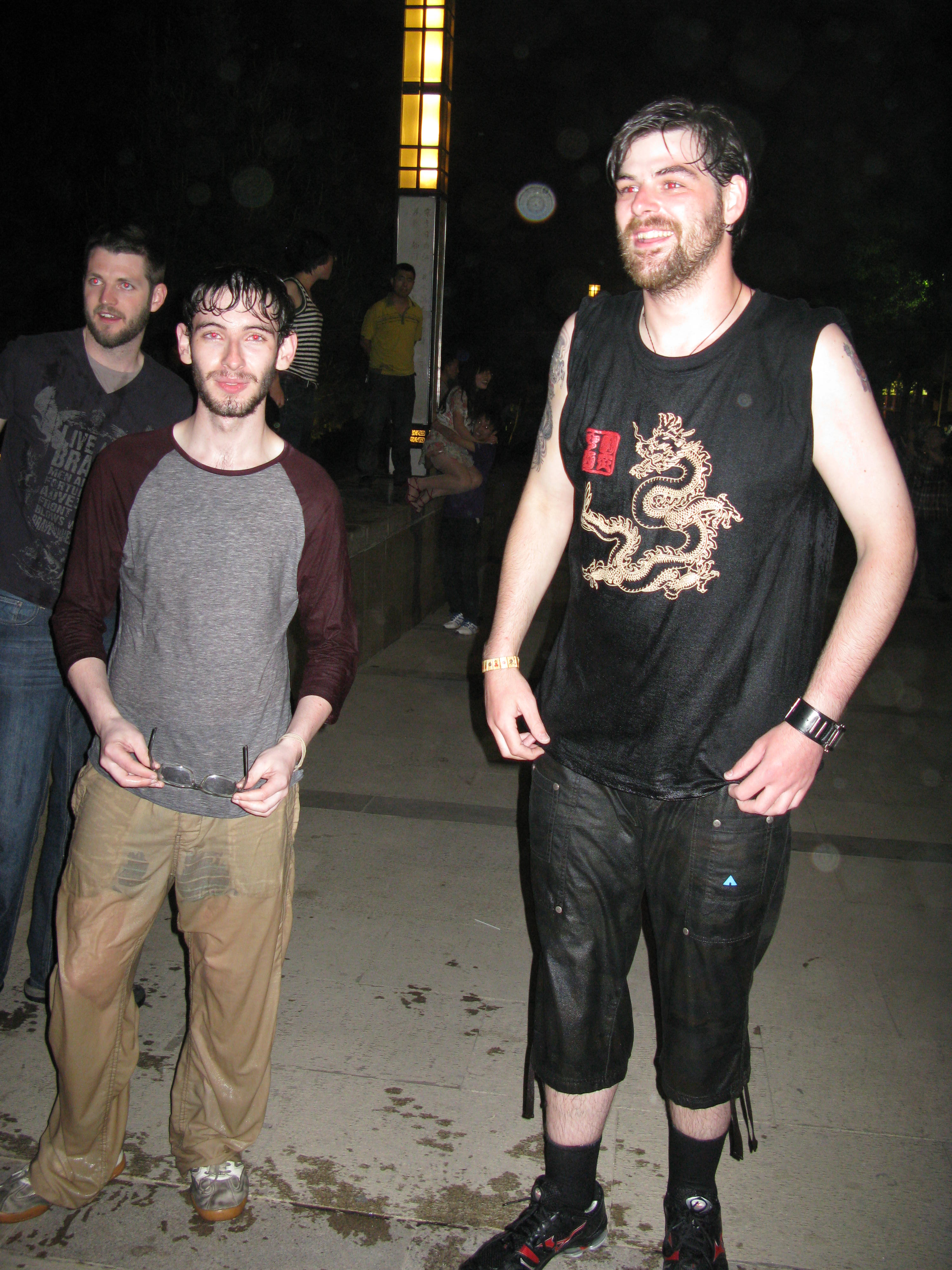
The next day I took a day off, as I really didn’t fancy wearing the mask and walking around the city wall with some of the others in the group. So I relaxed with laptop, book and the Chinese TV commentary of the William – Kate wedding in London. Then I was joined by a few others and we found a local English language news channel and watched highlights on that. Not entirely accurate, actually, The presenter kept saying ‘Diana’ instead of Kate, and when explaining who the guests were, made some of them relatives of the Queen. But a good laugh! Our guide An sang us two songs on the coach that evening – one of them a love song in Chinese dedicated to William and Kate. We went out that evening to a light and fountain display in honour of Labour Day. The festivities run over three days and the Chinese know how to enjoy themselves! Splashing around in the fountains, madly waving umbrellas and squirting each other. Andy and Pete followed suit, of course.
Beijing: A day to explore….


So lovely to wake up naturally, with no alarm to get you on a train or a coach on time. This was a splendid day – sometimes you just need one where you ramble around aimlessly and rest mind and body. And this was quite aimless, spent in local streets looking at shops, buying the odd thing (two tops – I’m thoroughly fed up with what I have after wearing them to death for weeks) and taking loads of photos.
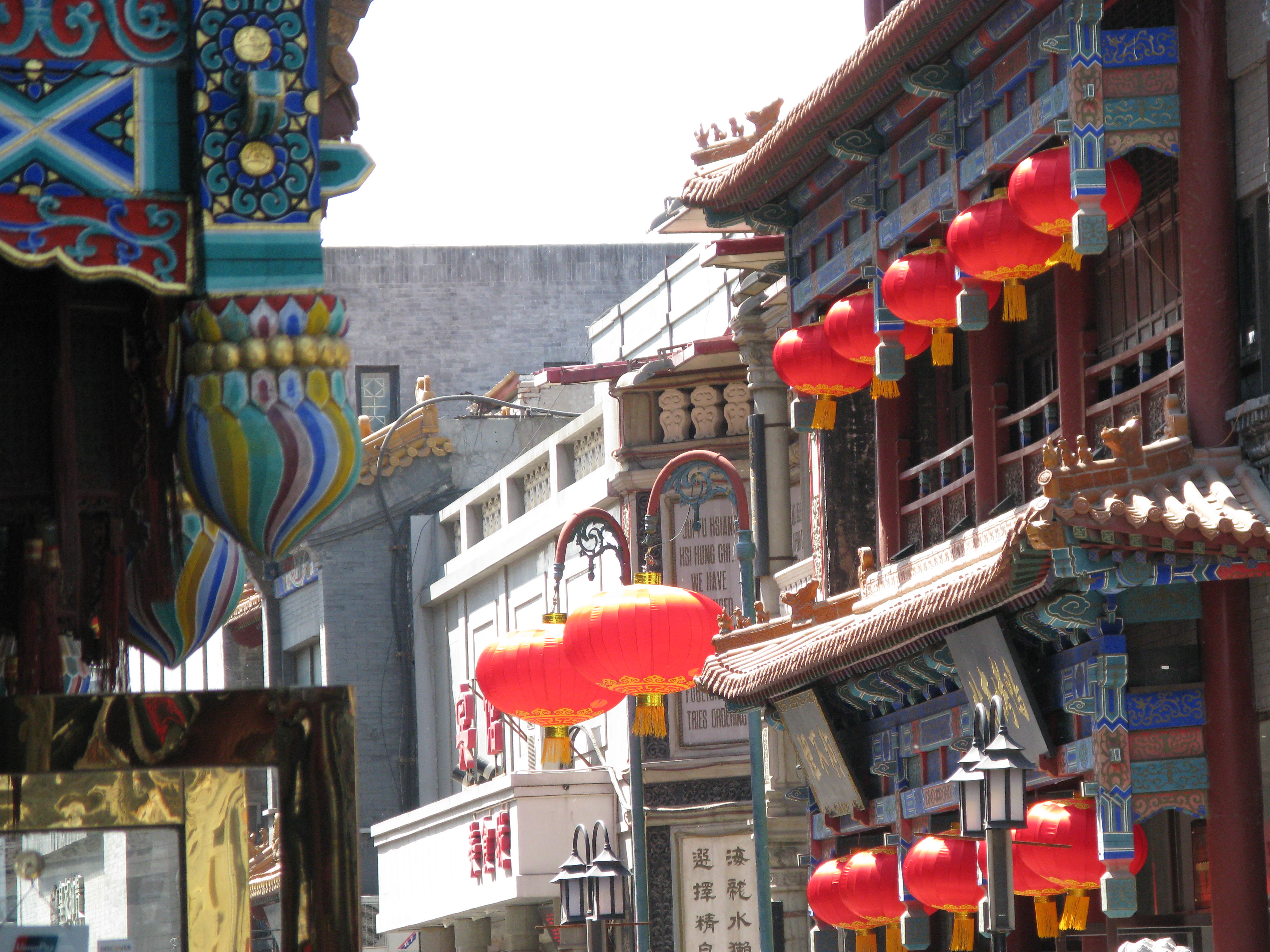
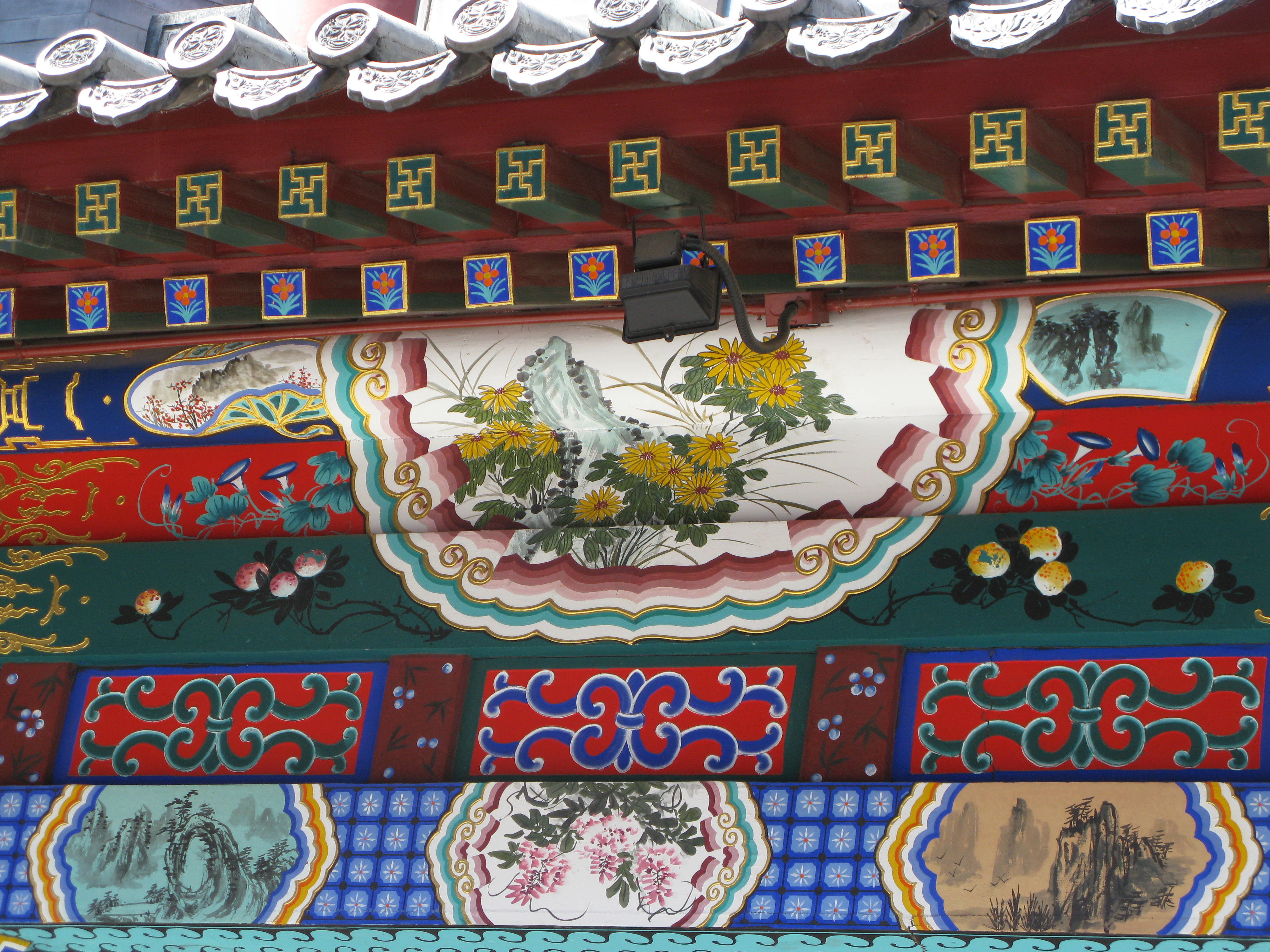
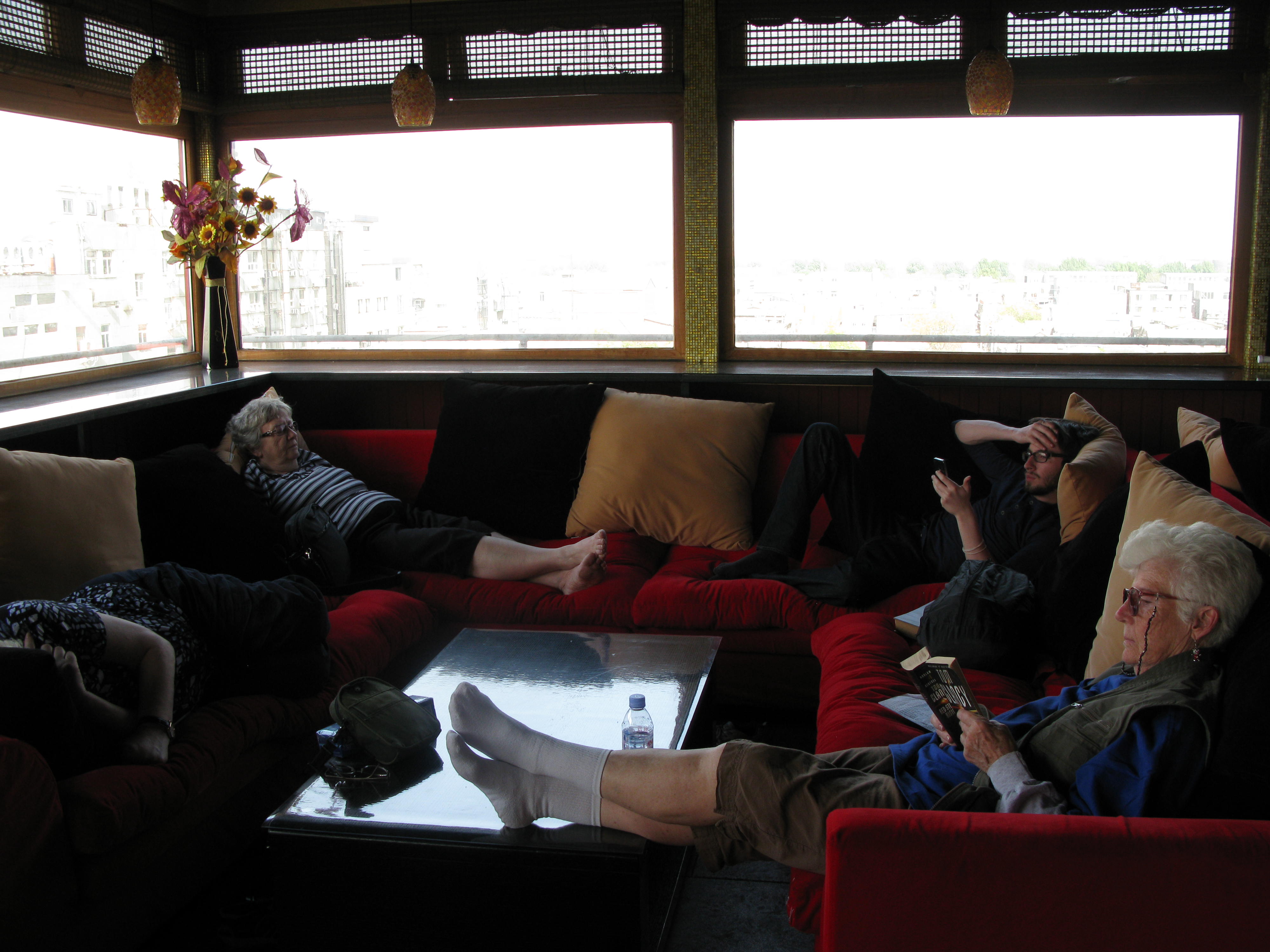
Everything is so colourful and exotic – just lends itself to being snapped. Some of the painted decoration was just fabulous – given me a few ideas for home…..I just wandered for a few hours, had a coffee with Pat in a KFC (still had squat toilets though, so not that western!) and then meandered some more before returning to the bar of the hotel – to find several fellow travellers asleep on the sofas.

Later we went out to a great little theatre to see ‘The Legend of Kung Fu’ – which was excellent. And just the right surroundings to see it in. Amazingly it was in English with Chinese surtitles. Apparently they’ve performed it a few thousand times in Beijing and abroad. Very energetic, some startling kung fu feats – even the little boys in the cast were fantastic. The Irish embassador, or some such, saw it and proclaimed it more energetic than Lord of the Dance. Anyway, a great bit of story-telling and I almost wish I’d bought the DVD.

Back to the hotel to pack up belongings and decide what to take on the next stage of the journey. Tomorrow we’re off by train to Xian for a couple of days, before travelling by coach across country to Pingyao and Datong and back to Beijing. As I hate trundling my large bag around, I’ve bought a small cylindrical holdall and together with my rucksack, that should do for 6 days. Leaving my large case in storage in Beijing is very attractive!

Arrival in Beijing…..and the mad day that followed

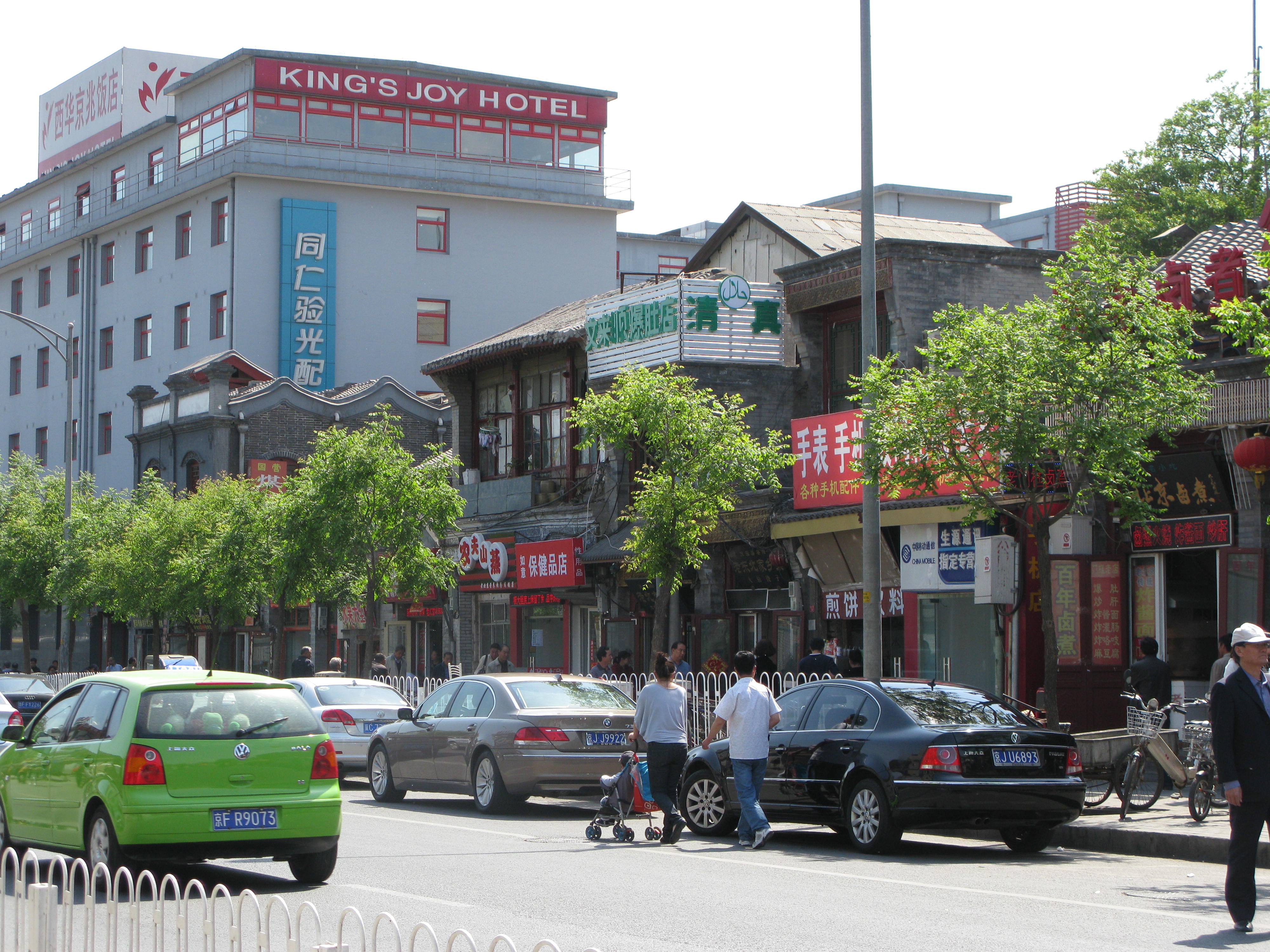
After a trek from the station to the awaiting bus, we were off to our hotel: King’s Joy Hotel. Lovely twin bedded rooms – I shared with Pat – a great bar on the top floor, internet access at last! and laundry. What more do you need? We had the rest of the day – just a few hours – to ourselves and a meal together in a local restaurant. Gary made sure I got enough vegetarian food, but I remain unconvinced about Chinese food. Some dishes were tasty, but on the whole I like my food less waterlogged. I was told there would be fried tofu – but when it came it was pallid, grey and floating in water. Cabbage plays a large part – OK if you’re a meat eater, but three types of cabbage for a vegetarian lacks excitement. The tasty veg was incorporated into meat dishes – pork with green peppers, beef and onions etc. I was dying for an onion! Enough said. There was an opportunity to go to a Chinese dance display in the evening, but I cried off and went to bed early. Lovely bed… You appreciate these things after being on a train!


The following day, we were whisked around Beijing as if there was no tomorrow. Gary was such an interesting guide who slowly warmed to us and after being purely professional and giving us potted histories, then opened up to us and gave us his own life story. So what started off as a tribute to the Mao years, finally became the story of one Chinese family and the implications the Mao years – and especially the Cultural Revolution – had on this family. Gary’s father had had his own business, but in the 50s had been stripped of this and forced to live as one of the workers. The impact on the family was considerable, and Gary himself escaped from this life purely because he did well at school and was allowed to attend a language college where he studied English. But his interest in English was also his downfall, as he was reported for tuning into BBC radio (to improve his English) and as a result got a black mark on his record and was denied entry to the Party. This had repercussions on his chosen career and as a result he did not follow the path he had once planned. But through it all, he never lost his faith in Mao; he praised many of his enlightened actions but stressed that, being human, Mao also made mistakes. The cultural revolution being one of them, as it set China back hugely and deprived people of the chance to develop themselves and their country creatively. Gary’s early employment as a teacher was not a very happy period for him – and he was glad of the opportunity to become a guide!

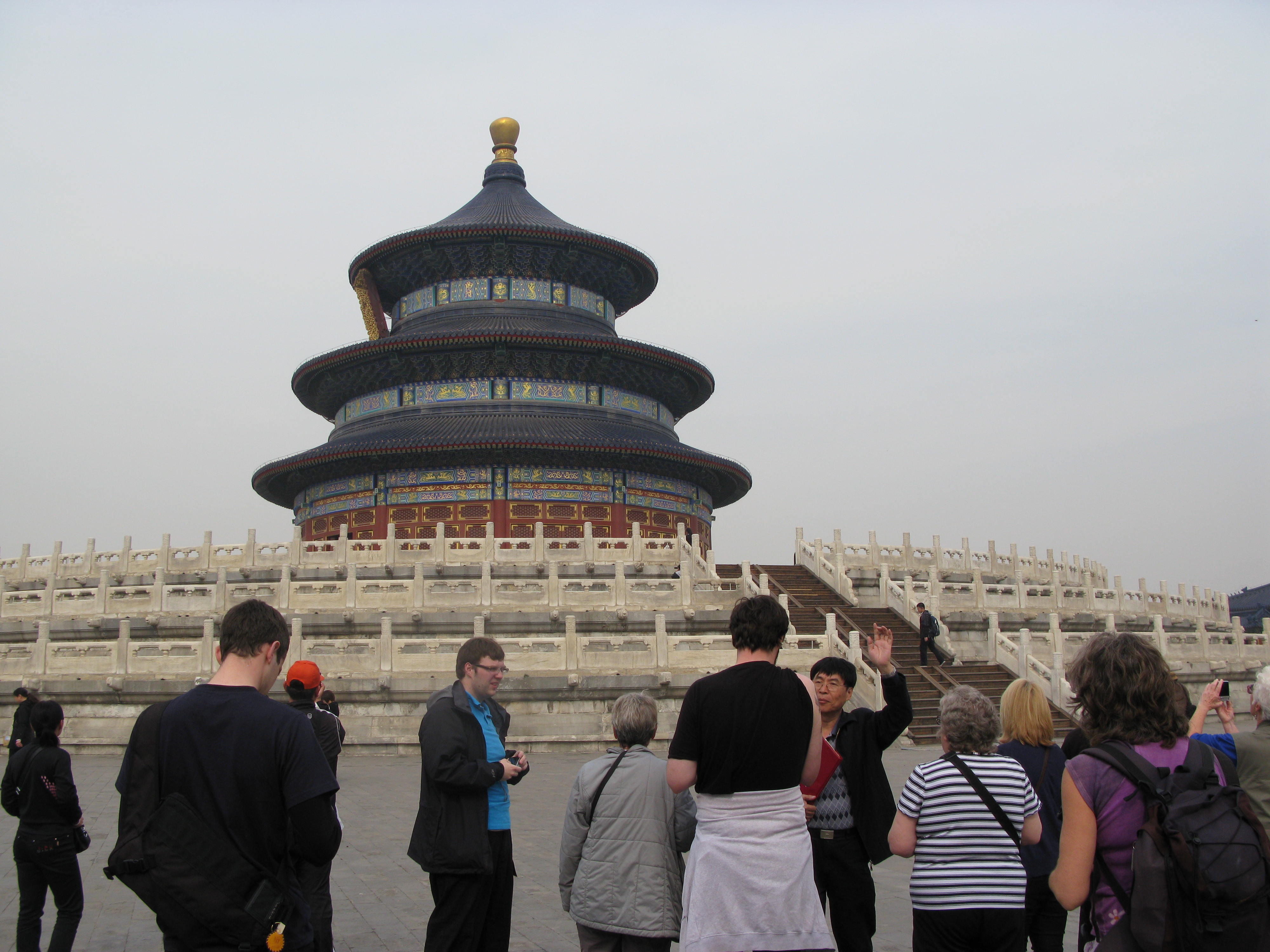
So, our mad, frenetic tour. Starting with the Temple of Heaven Park. This is a huge complex: gardens, buildings and courtyards and the nicest part is seeing all the people there enjoying themselves. The main sight to see was the round tower in the centre (see the photo above), round because that signifies the sky, and crowned with a golden orb, to signify the sun. Sky and sun being the main facets of good harvests, which is what this building, The Hall of Prayer for Good Harvests, is all about.

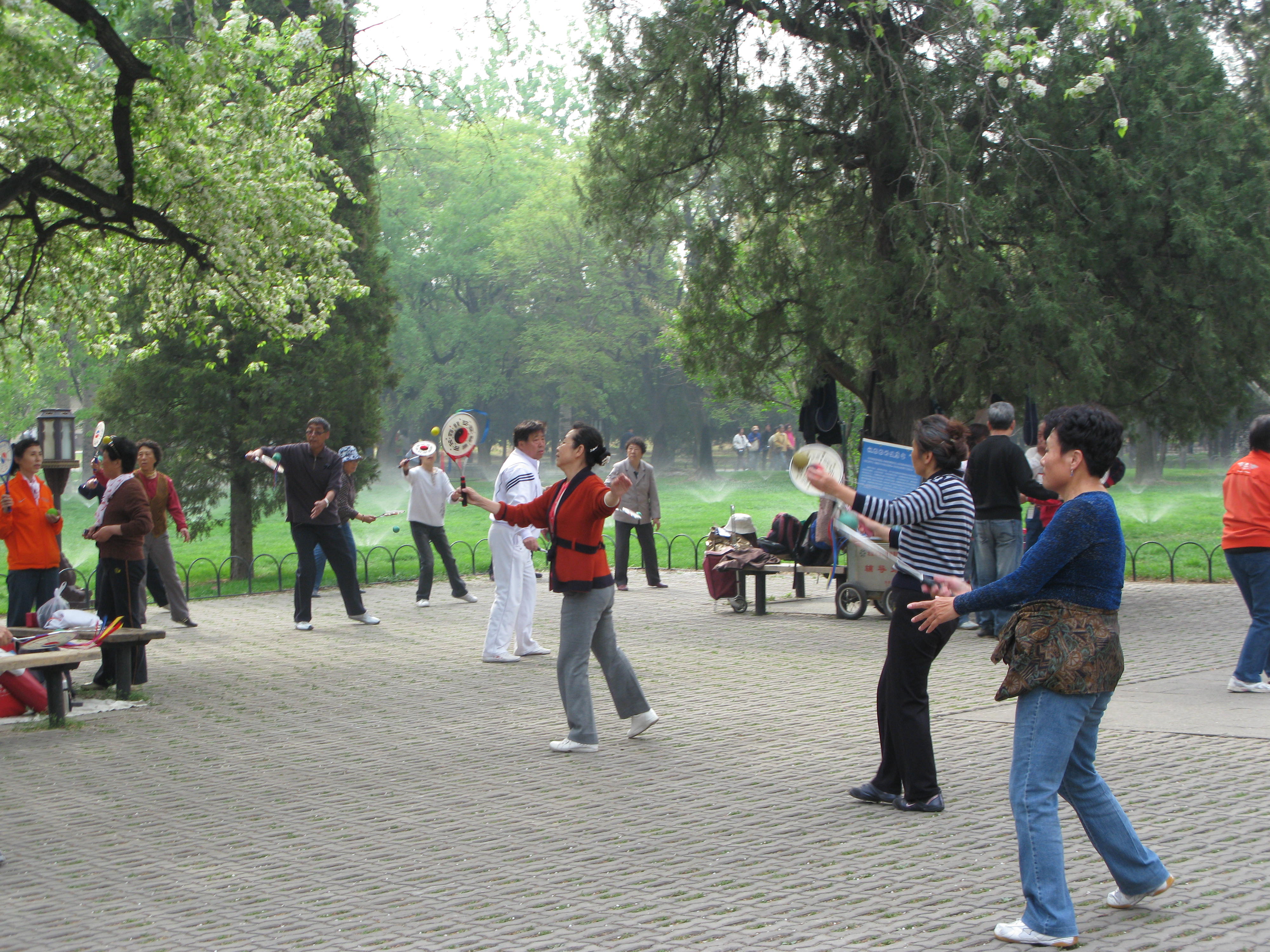
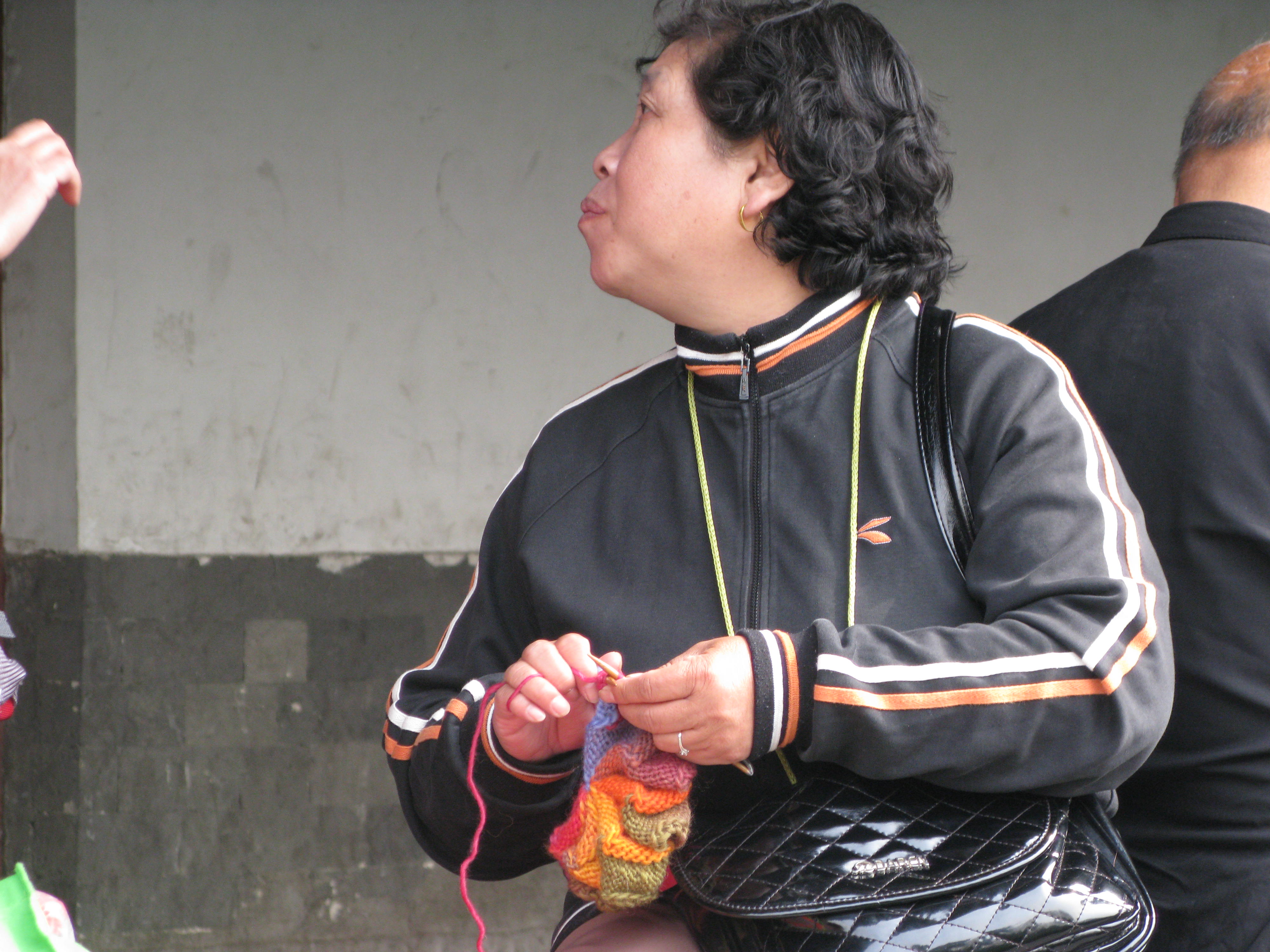
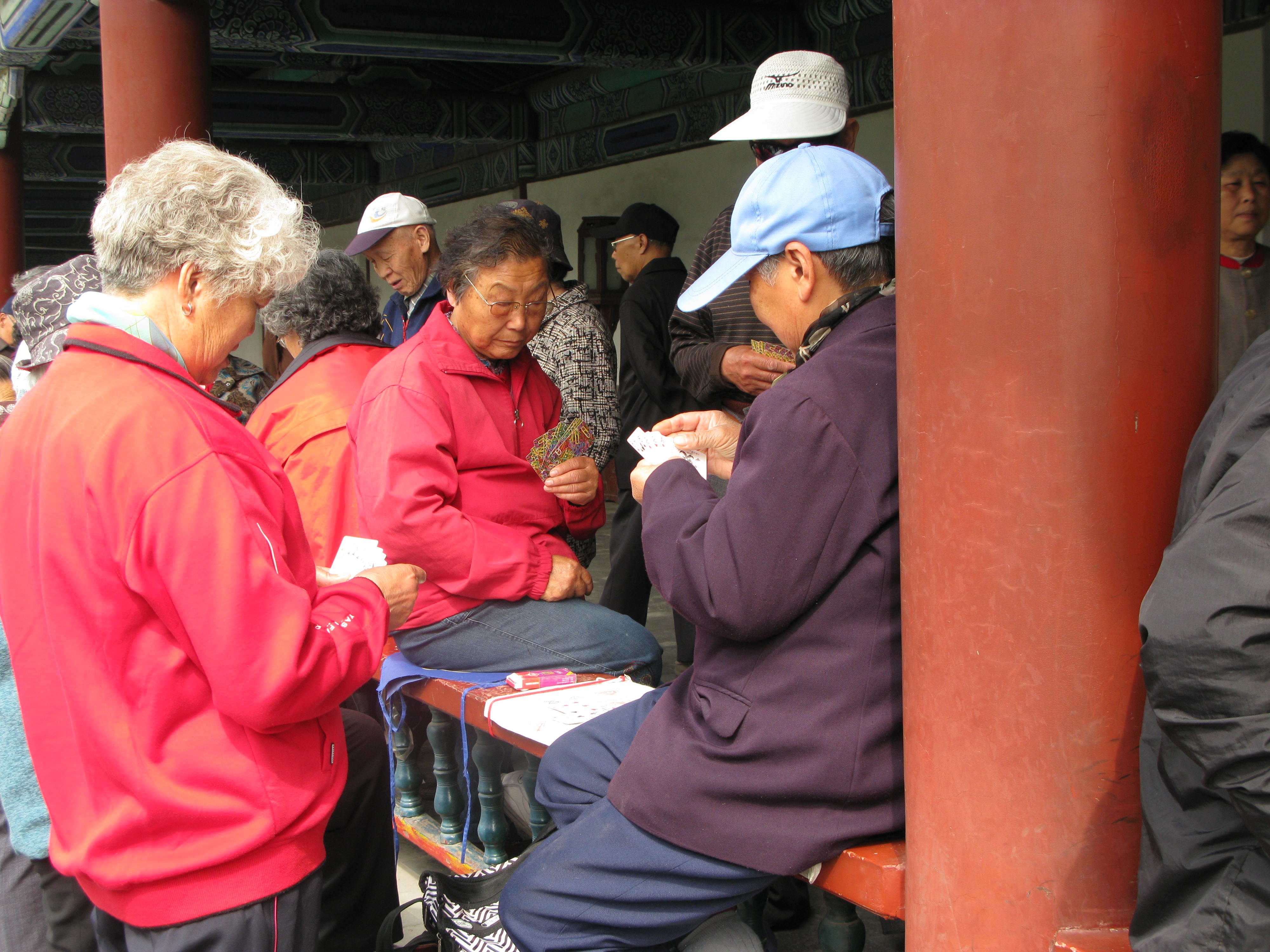
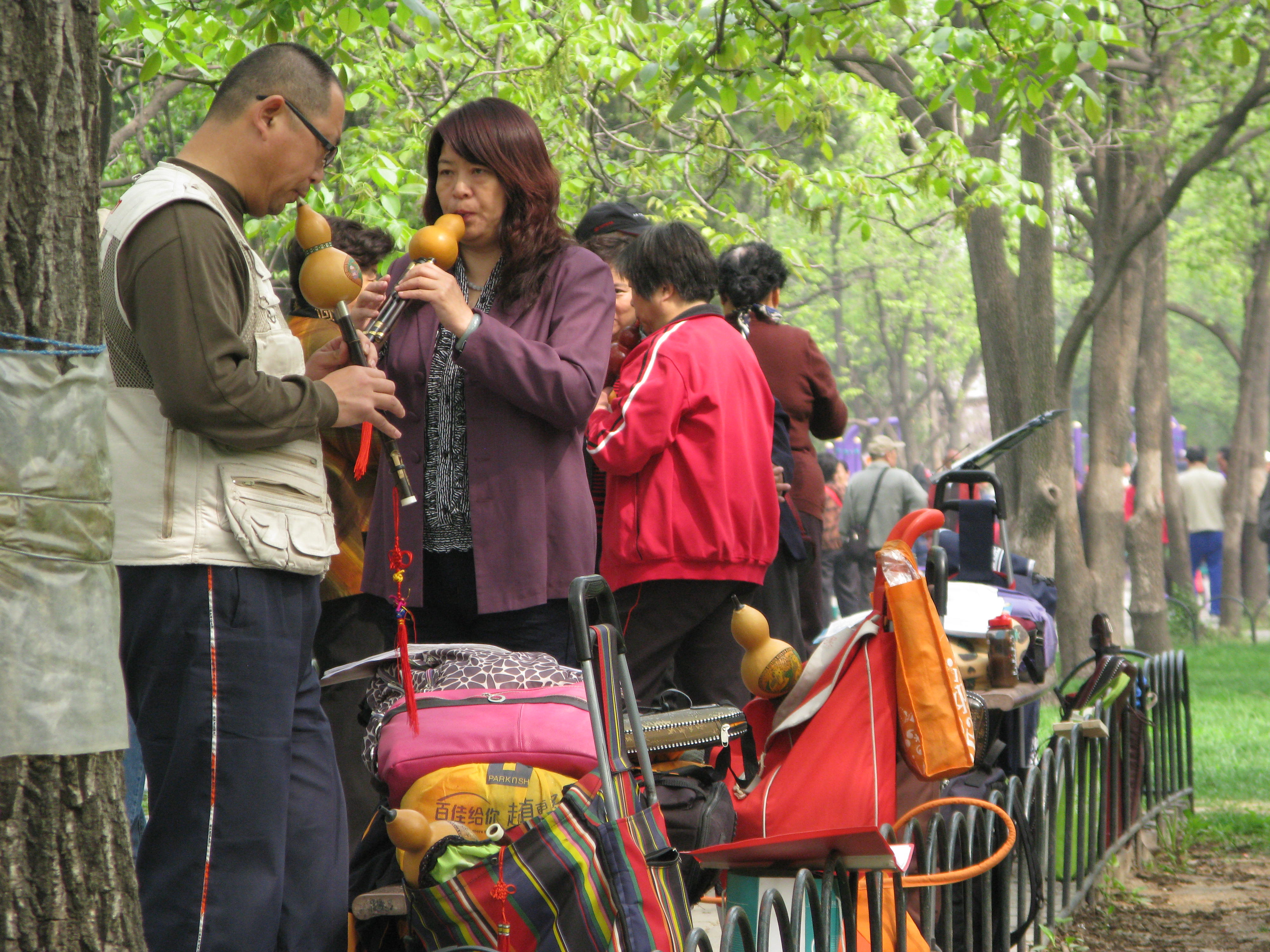
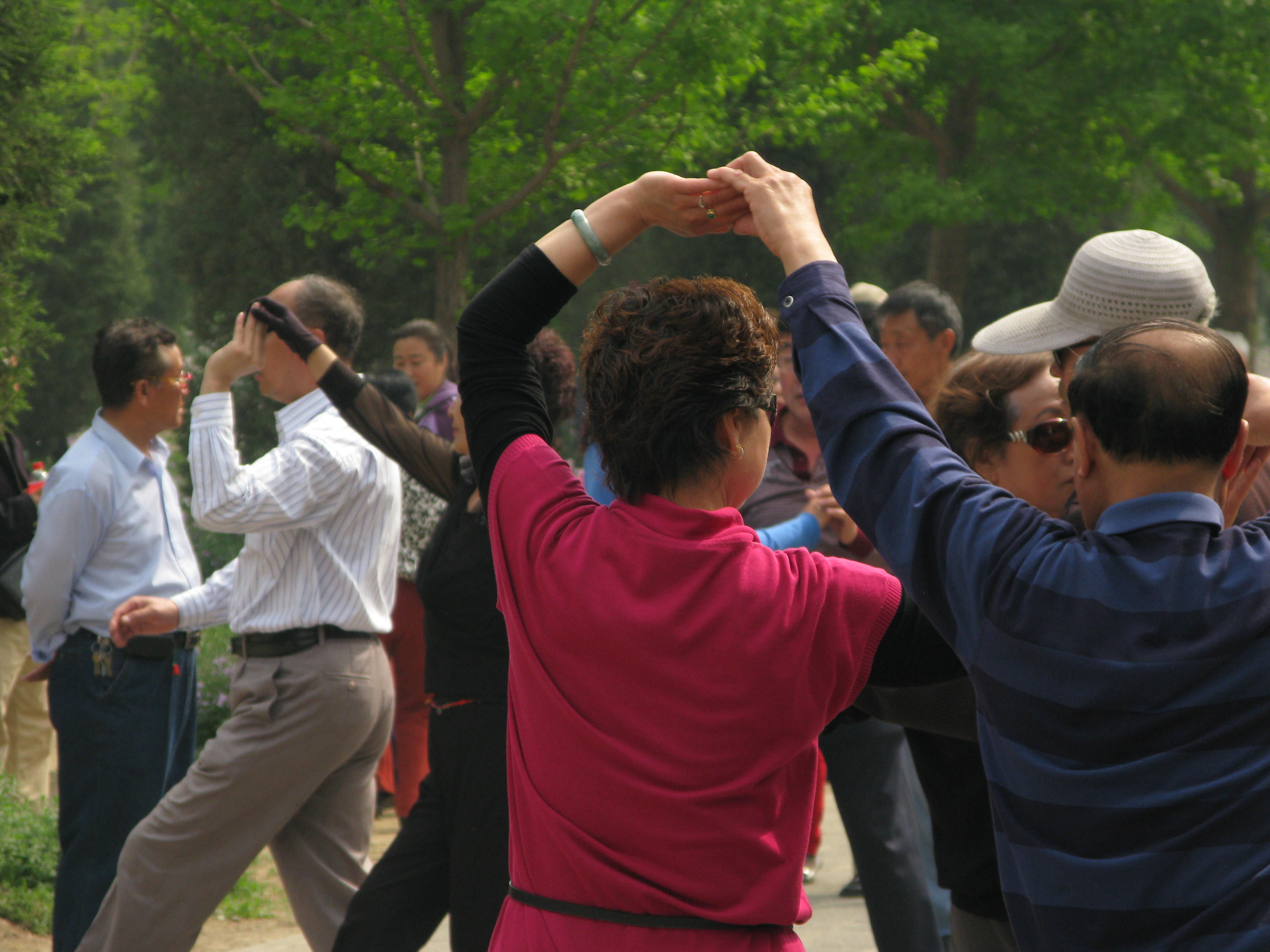
All over the gardens, in the courtyards and paved areas, we came across people engaging with each other: a group doing Tai Chi together; a few people perched on a low wall, knitting and crocheting; people making music with interesting instruments; others playing cards, or mahjong, or Chinese chess; people of all ages dancing (ballroom and American line-dancing!); others engaged in sport – badminton, ping-pong and other games I’ve never seen before.


Apparently the age of retirement is 60, but many people take earlier retirement in order to free up jobs for younger people. And once retired, you go out daily to parks such as this to meet your friends, get exercise, play cards or other games. People tend to take a picnic lunch with them so they can spend the entire day in the parks when the weather is good. I am so impressed by this system – feel like going home and forcing people to do likewise! All around us we saw people in their 70s and 80s who were happy and smiling (unless cross with each other at cards!) and a lot more energetic than most of their counterparts in the UK.

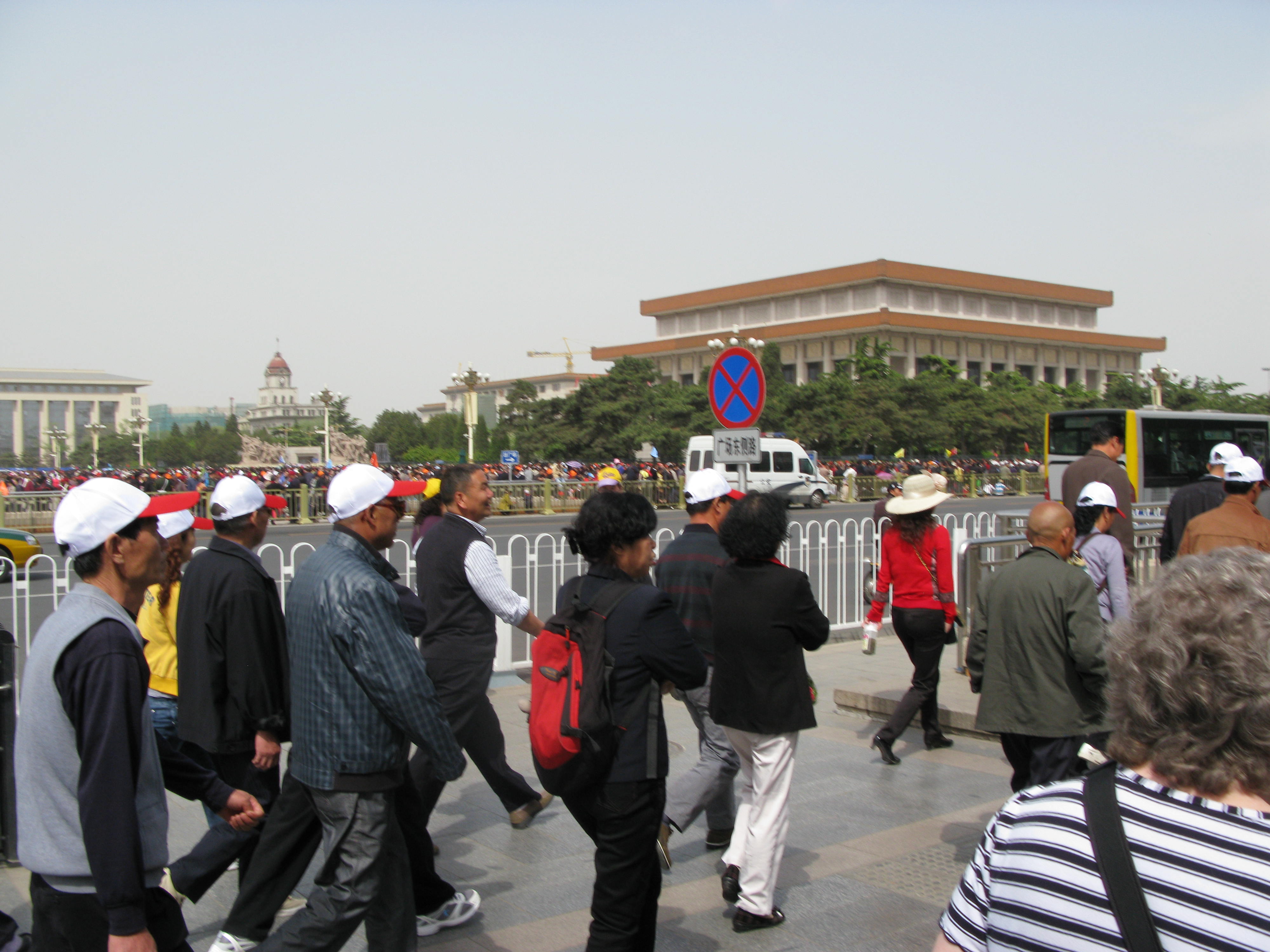
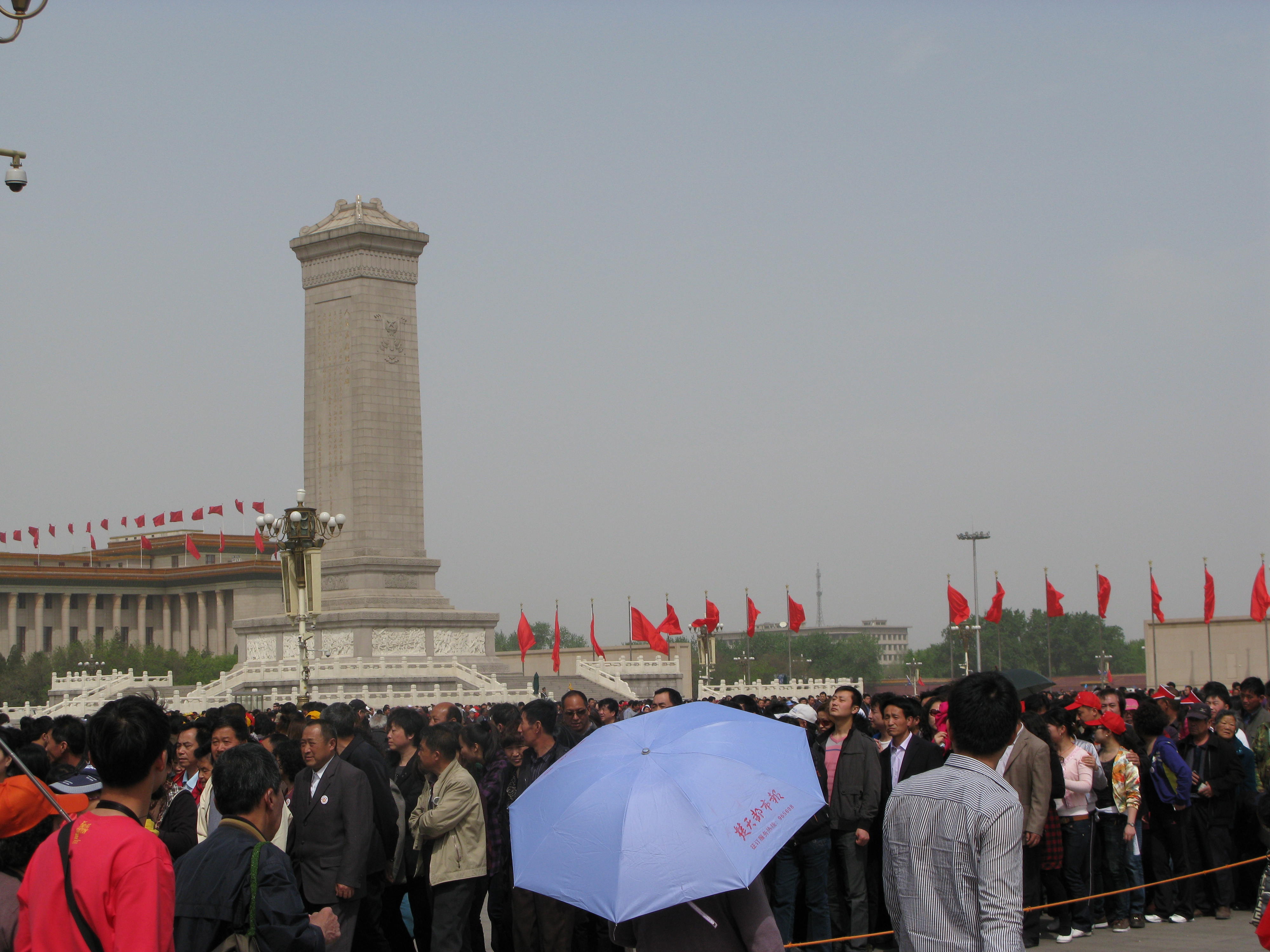
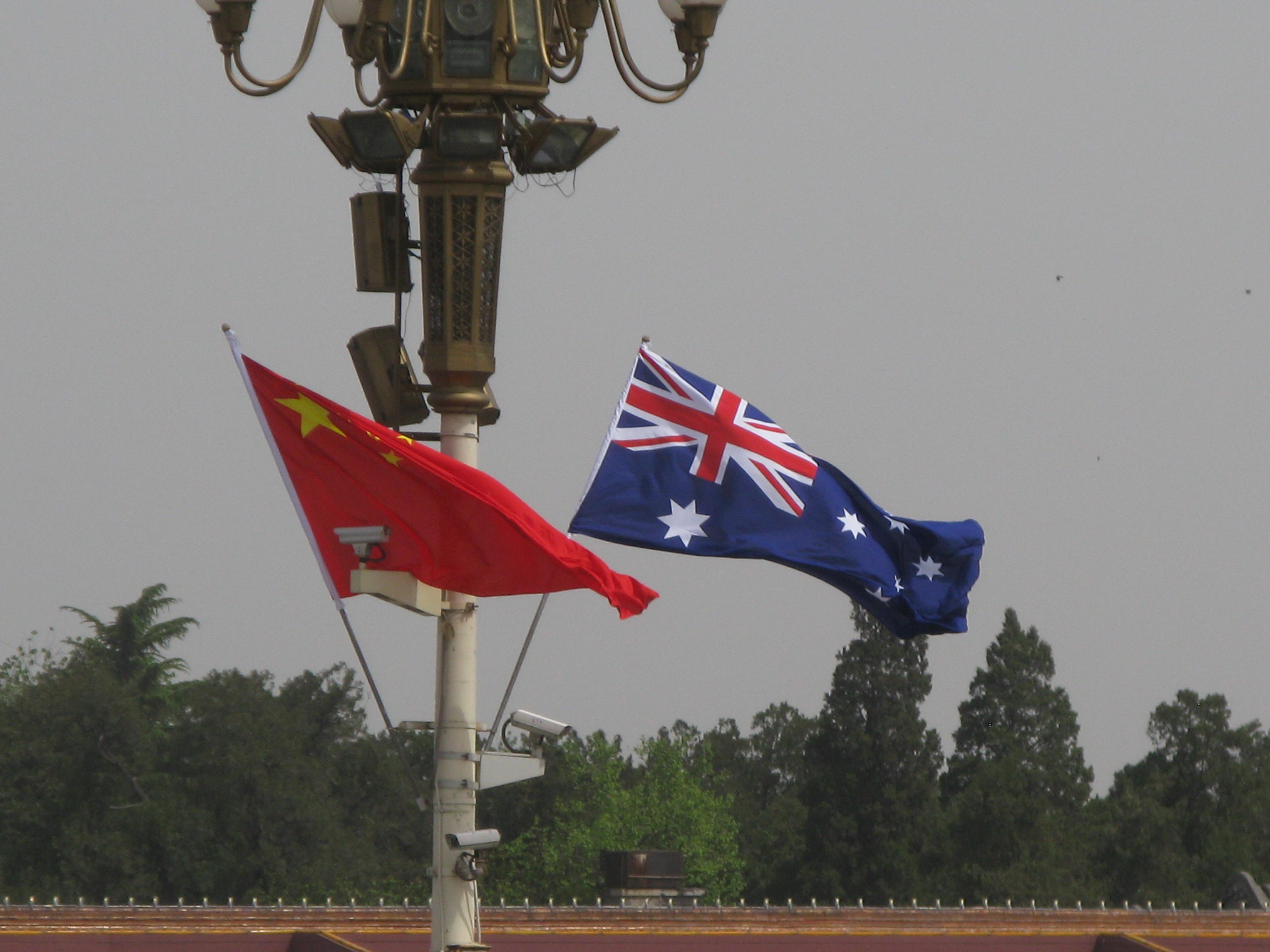
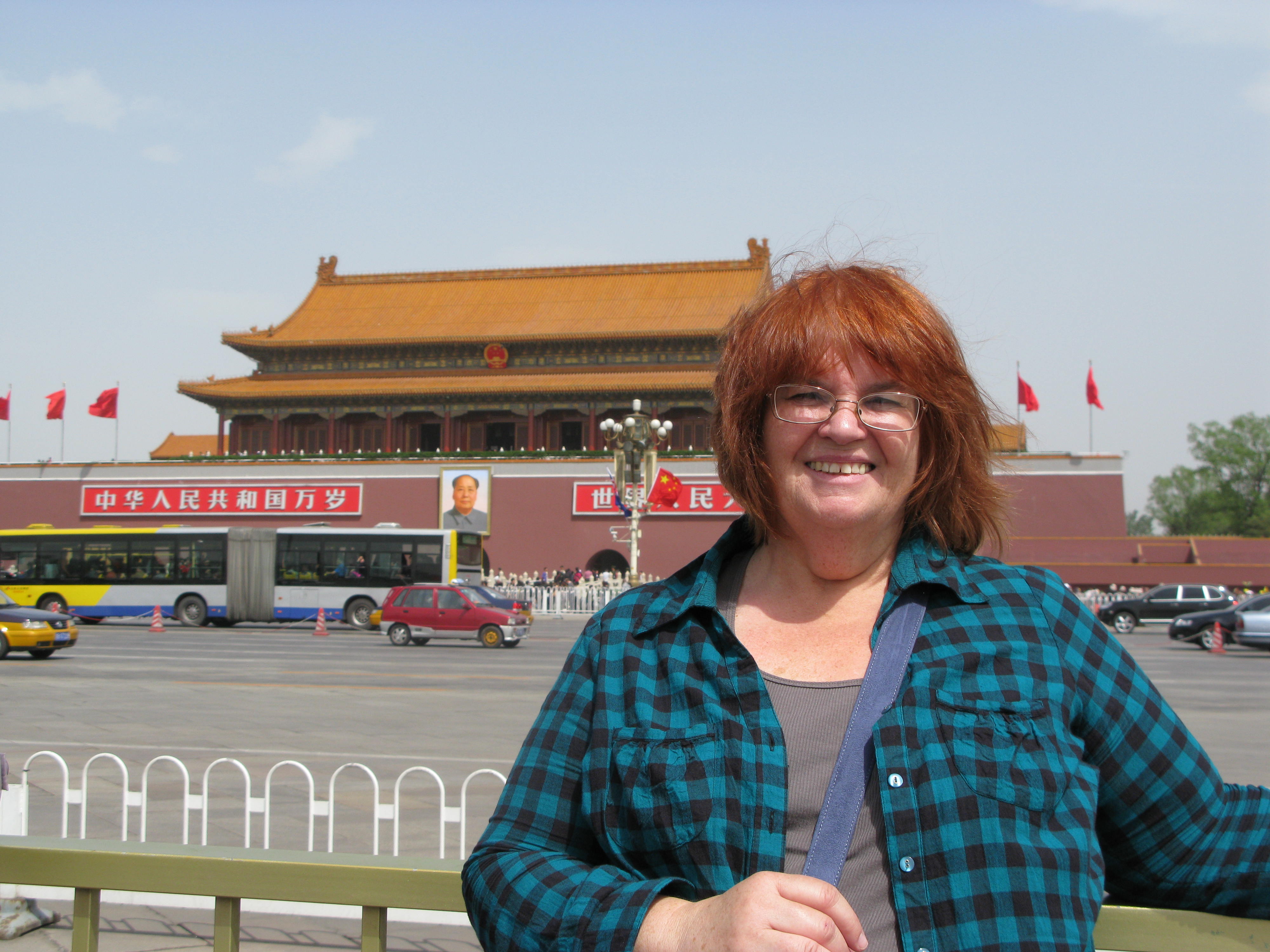
Then we were whisked away to Tian’anmen Square (Qianmen in Chinese, with ‘Q’ pronounced ‘ch’). We were warned it was enormous, and it was. Absolutely huge, and swarming with people. At one end, there was a long, winding queue, constantly on the move, of people wishing to pay their respects to Mao, who lies in state still since his death in 1976. His mummified body lies in a crystal cabinet and according to some who viewed him, he’s looking pretty waxy. Mao built the square to represent the might of communism and used to review troops of up a million people here. Appparently at his death, two million squeezed into the area. We walked the length of the square, taking in the paired flags flying at intervals – Chinese and Australian – to mark the state visit of Julia Gillard, the Australian prime minister. At the far end of Tian’anmen Square is the Forbidden City, and the street which separates the square from the palace is where an intrepid demonstrator stood in front of an approaching tank and sparked off the incident which made headlines all over the world in 1989. I remember seeing Kate Adey reporting and ducking her head as shots rang out. The Chinese we spoke to stress that it was just a little incident, where only a few people got injured, and are inclined to ignore questions about it.


Way back in Russia, we met a guy called Neil who was travelling 3rd class on the train from Moscow, but hung around the Ozbus crowd because we’re such a fabulous group of people. Since then we’d bumped into him a couple more times – most recently in Ulaan Baator, where I discovered that while living in Perth, Australia, he’d actually spent the last couple of months visiting his mum in Barry! So we were amazed to literally run into him in crowded Tian’anmen Square. I took his photo and his mum’s address and will surprise her when I get home.


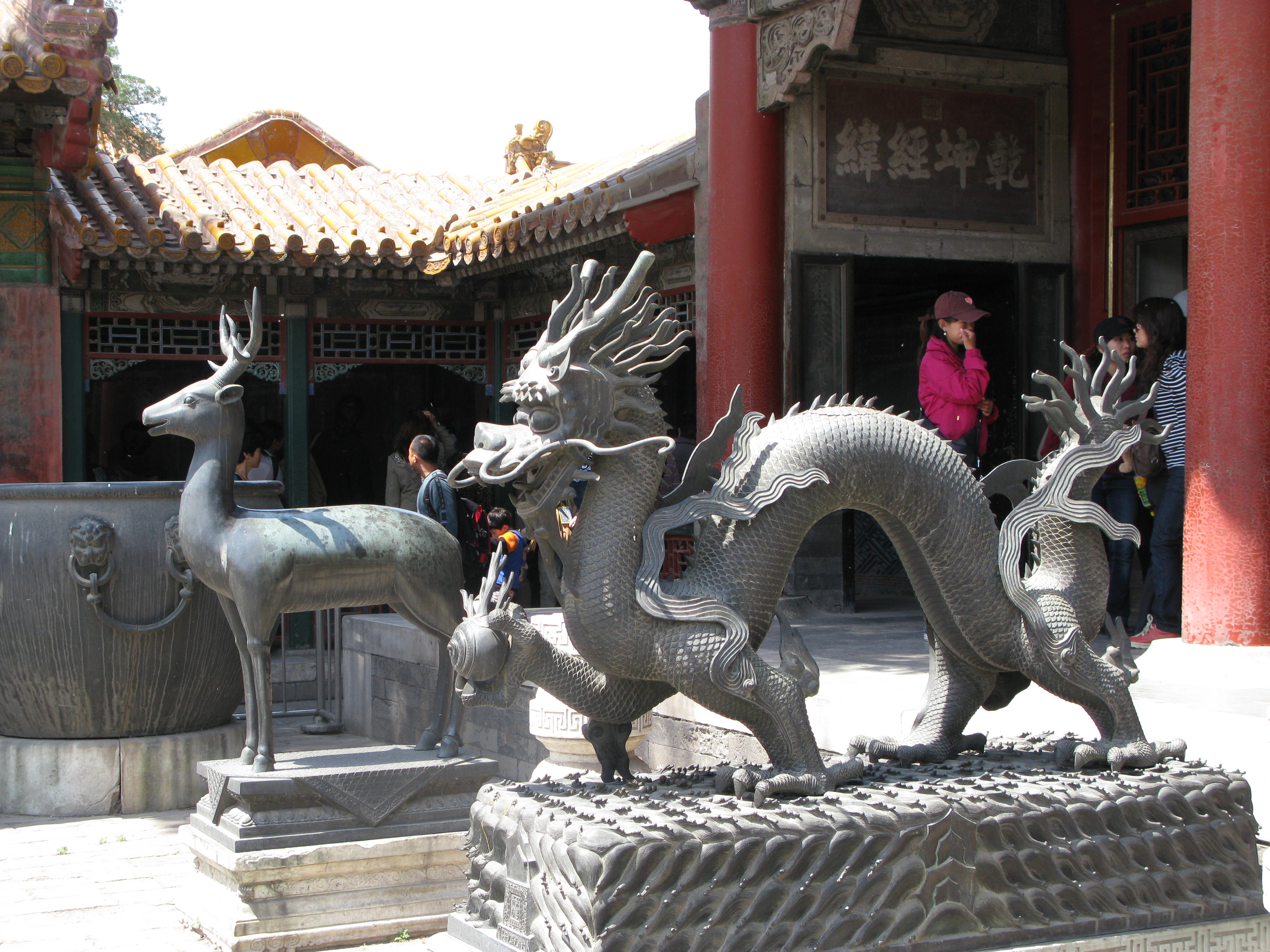
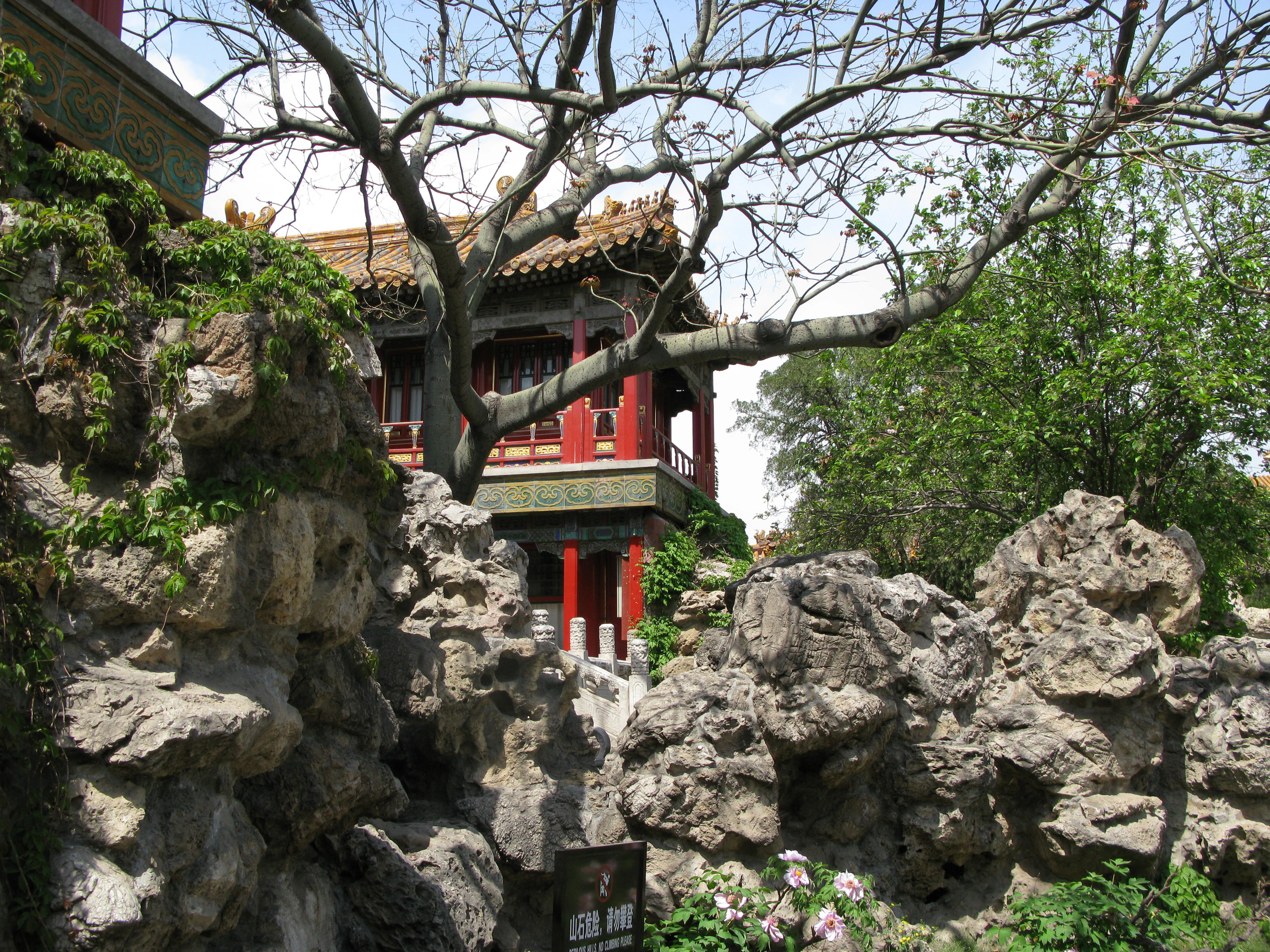
By this time I’d walked my legs off, and had no idea how much more we had ahead! That was when we entered the Forbidden City, so called because it was the imperial home of emperors of the Ming and Qing dynasties, therefore off-limits to the masses for over 500 years. We walked up endless steps, through magnificent arches or ceremonial halls, down steps into the next courtyard, then up the next steps.. and so on, through pavilions and palaces, round the amazing Imperial Garden with its classical Chinese landscaping: stone rockeries, vegetation, pavilions and water features. I now know what to do with my wee patch of unusable side garden in Barry. The decorations were beautiful, on the wood of the pavilions, inside the rooms, at the sides of the walkways. Every inch that could be painted or tiled or covered in gold leaf, had been. And inside some of the buildings were the most beautiful murals, paintings, artefacts…. the sort of place you’d need to spend days exploring in order to do it justice.


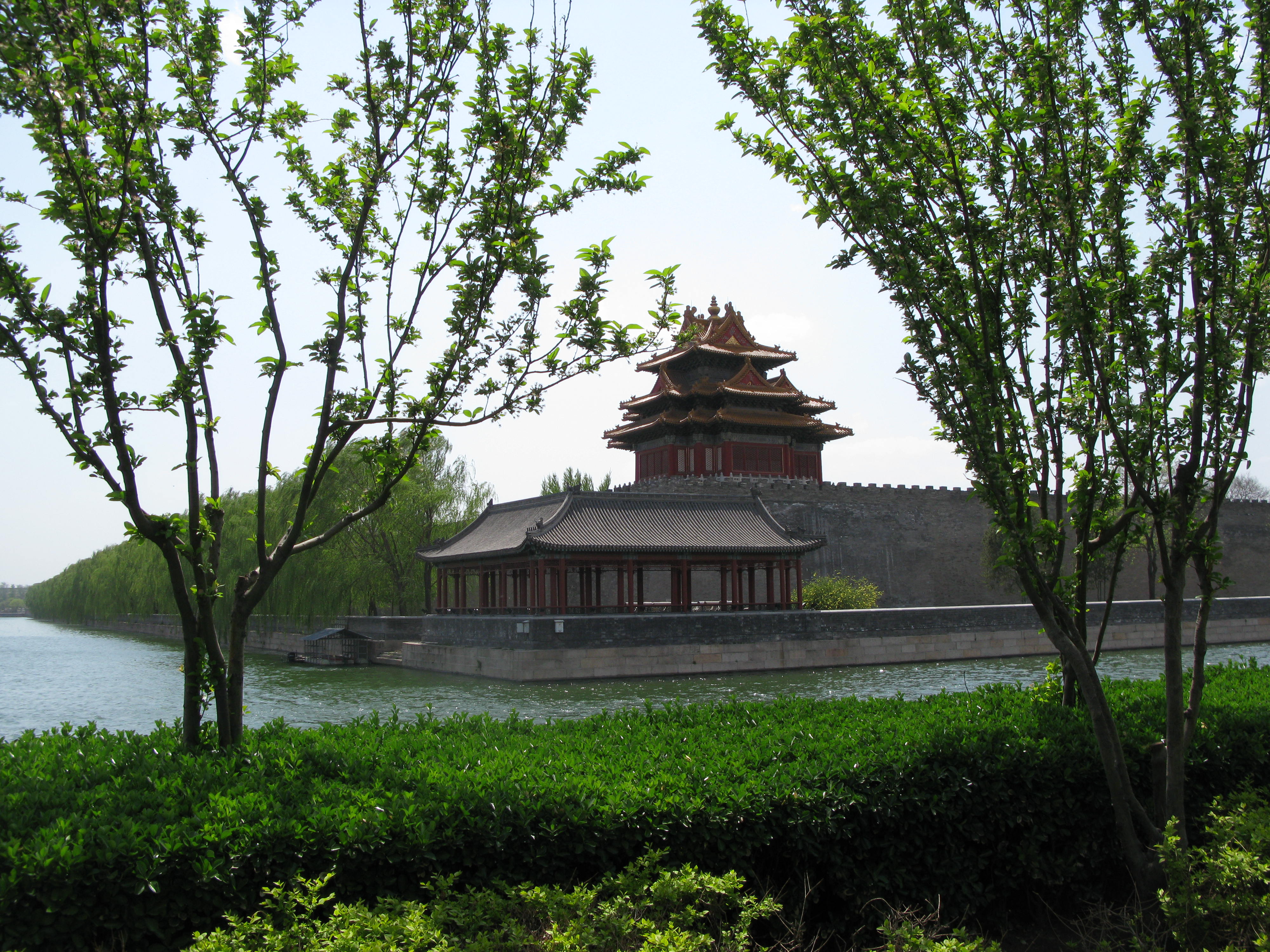
By the time we’d walked through this massive palace, each part more beautiful than the last, my legs were giving out and I was ready for a more restful activity! We found the coach a street or two away, on the far side of the moat which surrounds the palace, and were off for the final jaunt of the day. Shattered by this time. Walked miles….


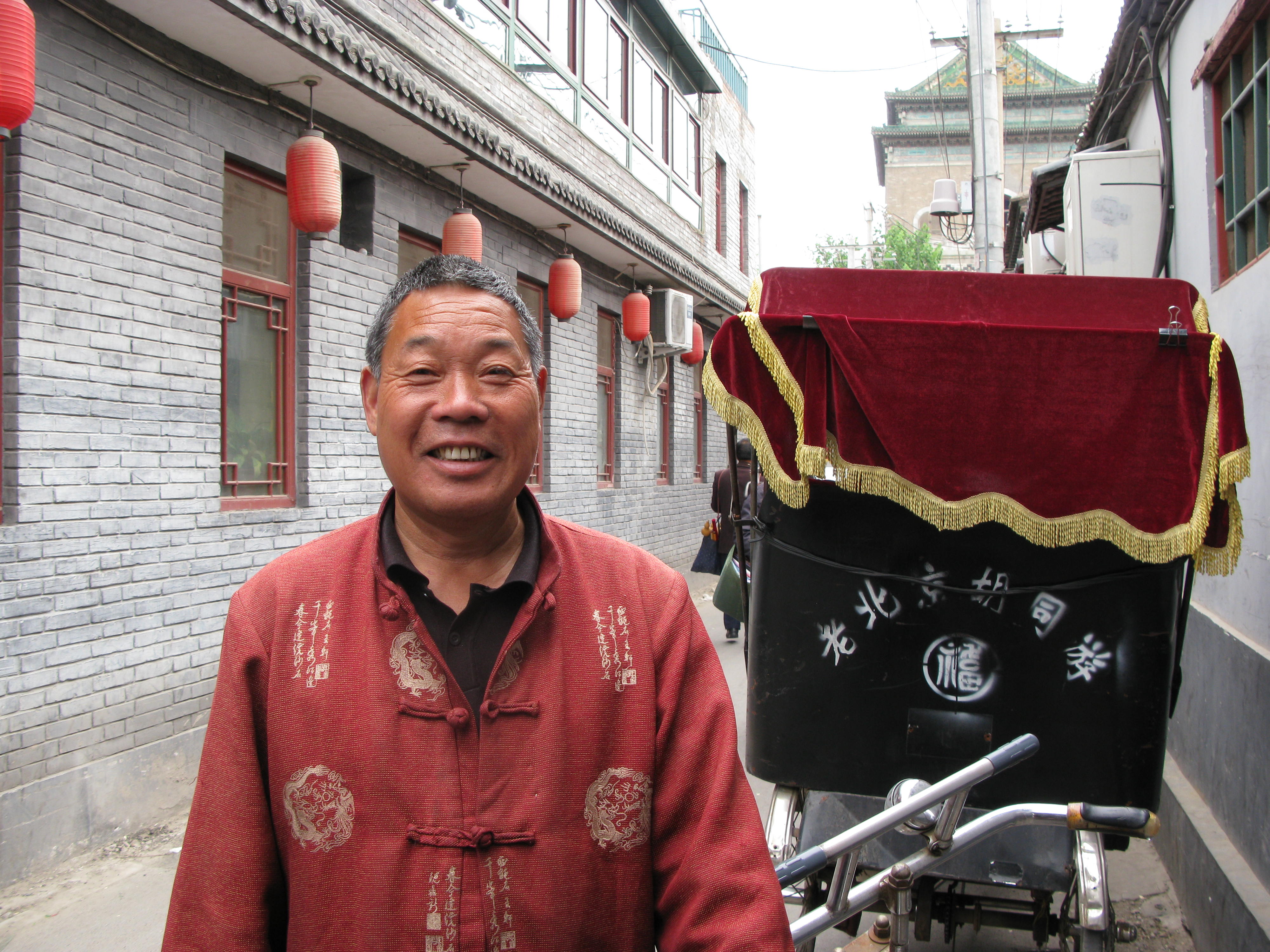
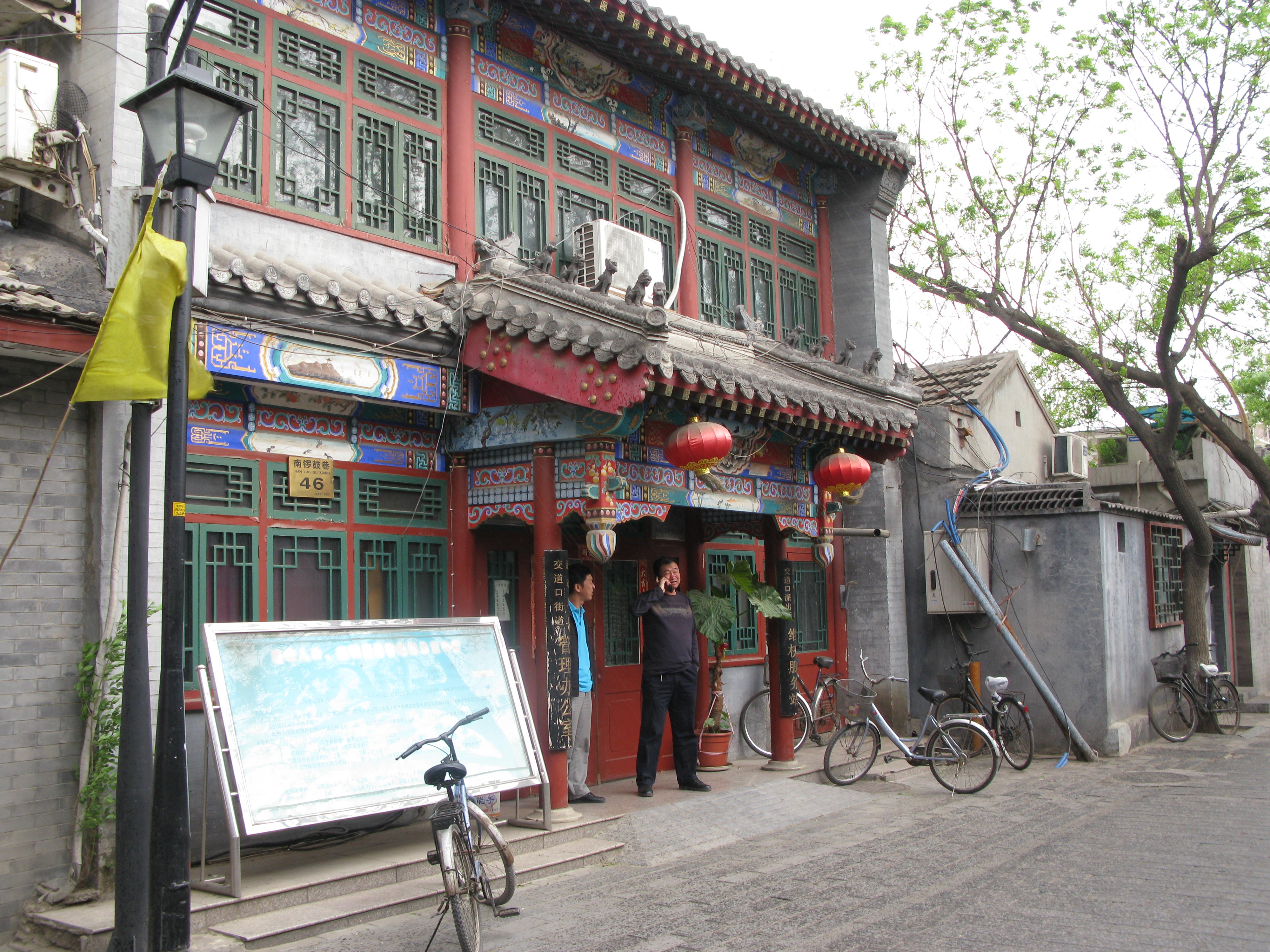
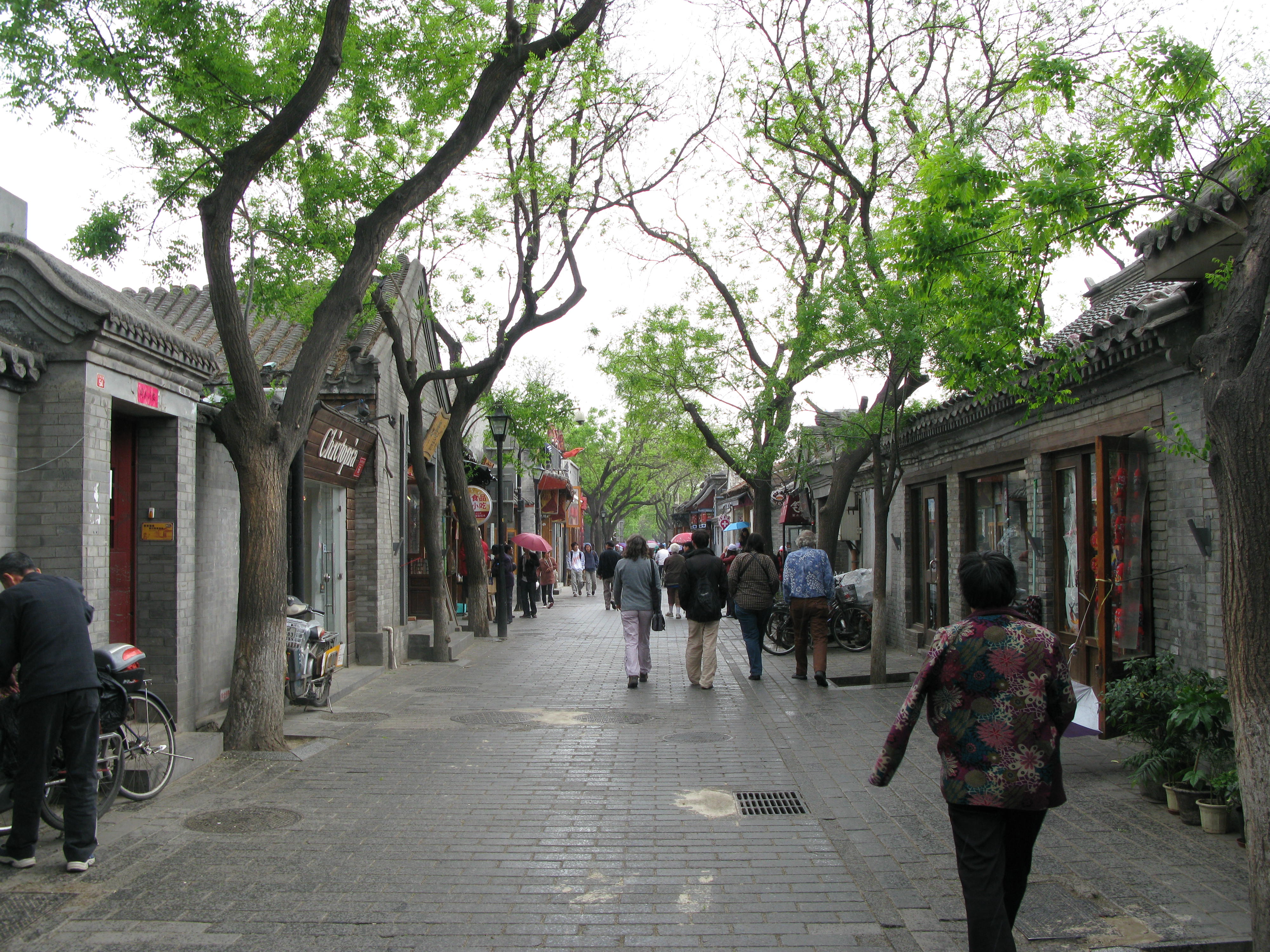
And so, on to the next part of the tour, which was pretty leisurely – in twos, haring around the Hutongs of Beijing in a rickshaw. Such fun! Under a canopy behind a pedal bike – just like the samlors of Bangkok when I was a child. The Hutongs are the lanes of Beijing, usually lined with shops, barrows – anybody selling anything. The particular area we went along is one of the last real traditional Chinese communities left in the city. Many hutongs have been razed to the ground in order to modernise the city. That means building high rise offices and flats. Similarly, the ancient city walls were destroyed to make way for more traffic-friendly ring roads. Let’s hope they halt this programme of expansion before more of old Beijing is lost. We paid a visit to a fairly ramshackle house in this area and talked with the owner, who described his house, family, way of life and the price his house would fetch nowadays. About the equivalent of £2m! Then we were taken to a new area which is being developed as a new shopping precinct – but very attractive and keeping to the scale of the old hutongs.

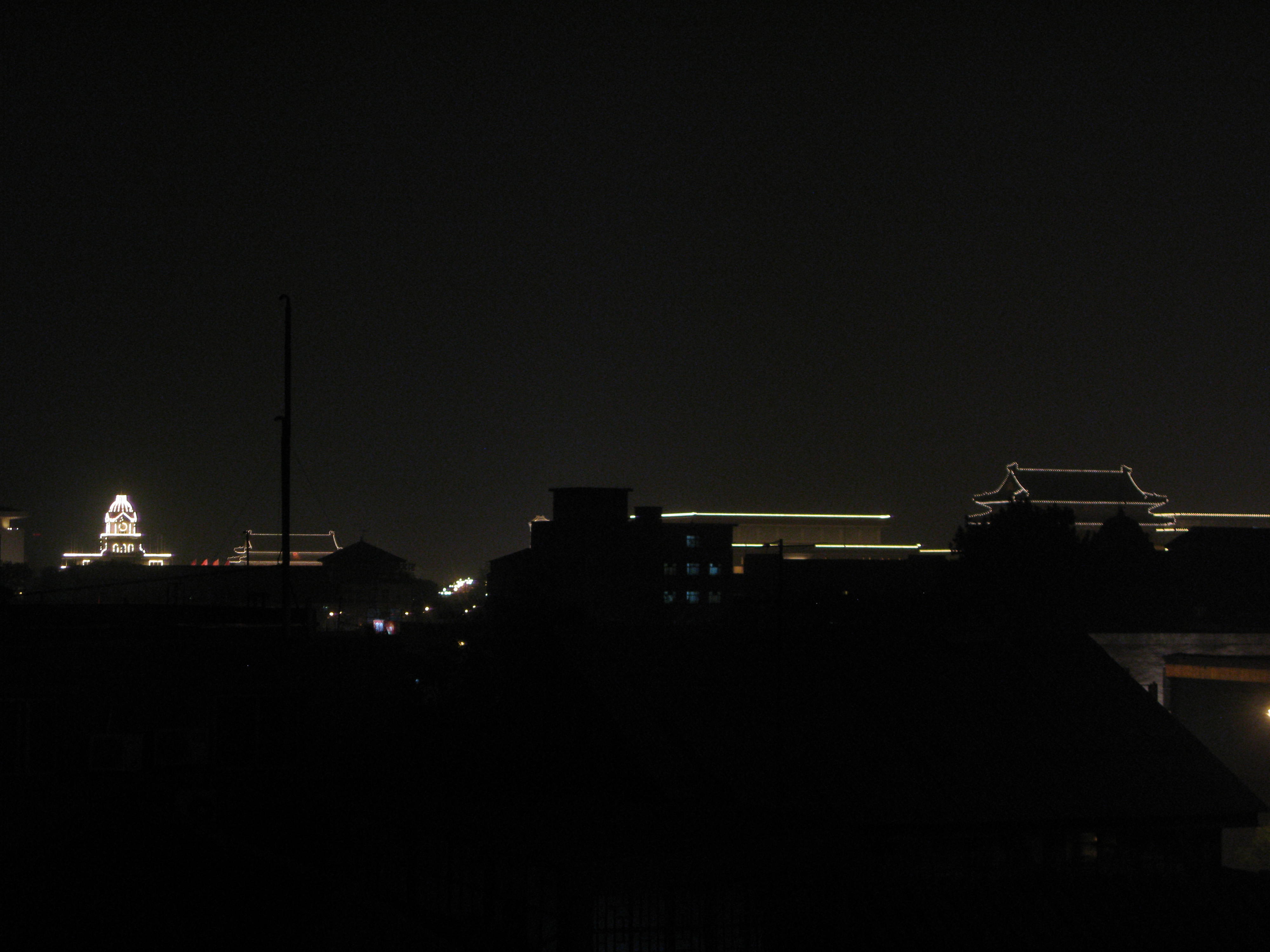
Very relieved to get back to the hotel after such a busy day. I took some photos from the bedroom window of Tian’anmen Square lit up at night. Very pretty, and so glad we’re in such a central position. You walk out of the door of the hotel and are in the midst of the bustle of this lovely city. And there’s a 24-hr indoor ATM at the end of the street!

Last Lap to Beijing

Please ignore the strange numbers and notes at the start of paragraphs; they are to help me identify photos to add when I can get uninterrupted wifi access.

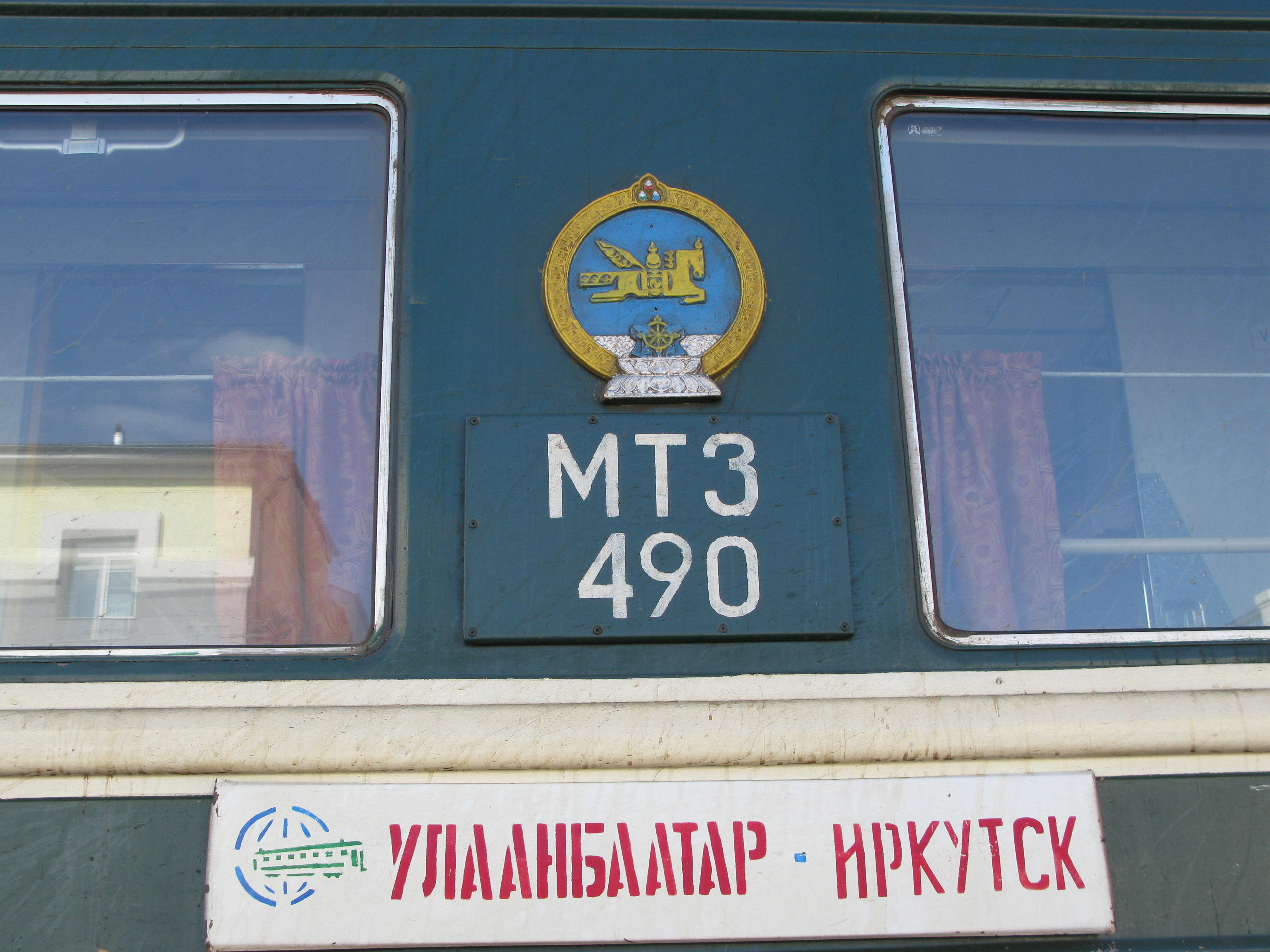
This was the last part of the Trans-Siberian (Trans-Mongolian…Trans-Manchurian) rail journey, from Moscow to Beijing. Having experienced the Russian part of the trip, then the short bit in Mongolia which was considerably friendlier (!) we were looking forward to the last section: from Ulaan Baator to the border with China, then change of staff (and wheels) on the onward journey to Beijing.

After returning from the Ger to the Golden Gobi Hostel, I did some last minute shopping at the State Department Store before going with some others to a very local restaurant, where I had fish and chips, Mongolian style. Very tasty but odd. Don’t know what fish it was…. what do they have in Mongolia, a land with no coast and precious few rivers..? Actually, they don’t have any vegetables either… so where did the chips come from?


The next morning, up bright and early and after hugs and goodbyes to our lovely hostel owners – particularly Ogie (the shower invader) who couldn’t do enough to make our stay perfect – we were off to the station, me lugging my large bag with the wheels too close together, making it tip over all the time, crammed rucksack and a large shopping bag full of food supplies and water for the journey. Assuming (correctly) I wouldn’t find anything to eat on the train I’d travelled from Moscow with nuts, seeds, muesli bars, apples, oranges, cuppa soups, Dairylea triangles (bought in Estonia) and crispbread. Anyway, after the challenge of getting myself and all this baggage on and off buses, and onto the right platform, then onto the train, along a narrow corridor and stowed away under seats in our 4-berth compartments – we were off.


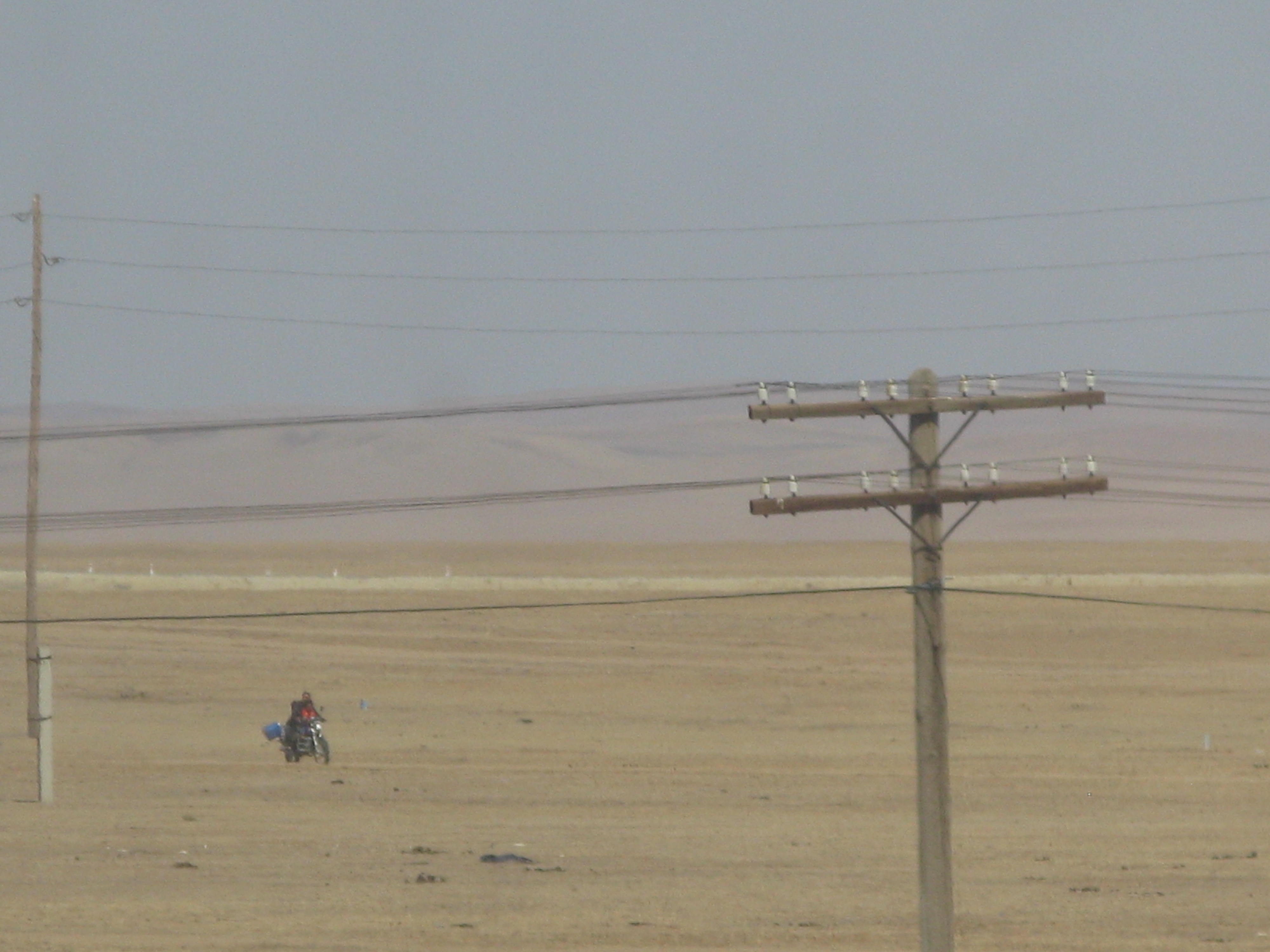
So on Easter Sunday there we were, sitting on the Beijing train on the last lap of this journey. How to describe travelling across the Gobi Desert! It’s just emptiness as far as the eye can see, and at this time of year, utterly barren. For some of the way there was a road running parallel to the train tracks, and to the telegraph poles and wires at the side of the rails. For much of the way there was nothing. Over a few hours we caught sight of a lone motorcyclist on the road, odd handfuls of cattle or sheep and a ger or two. The faintly undulating landscape changed over time to an absolutely ‘flat to the horizon’ scene. Not the sort of place you’d want to be caught out in without water.


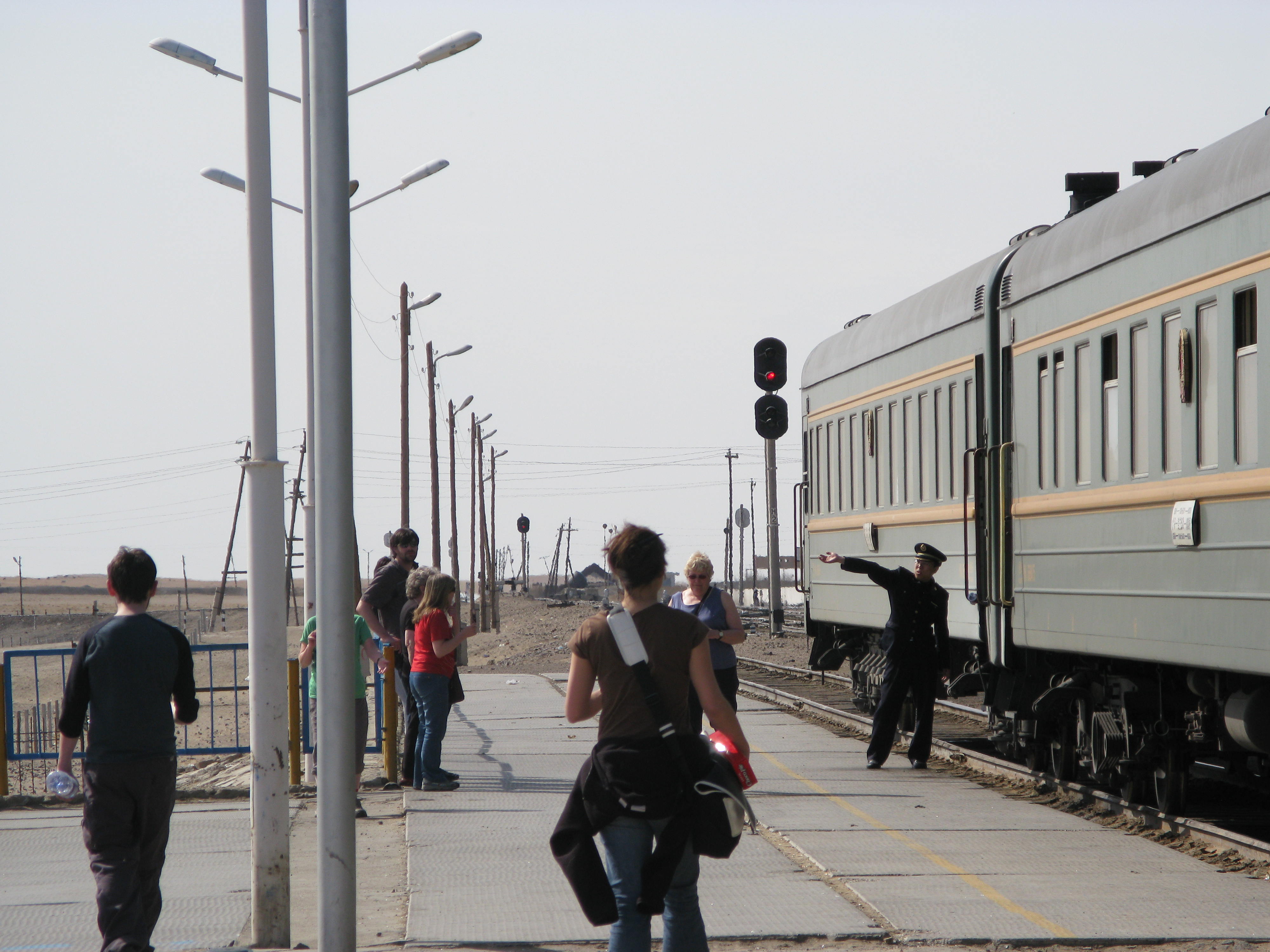
Just endless miles and hours of emptiness, save for one or two dwellings or stations with imposing facades where we got off to stretch our legs and buy ice-creams. The trick is to buy anything that is chocolate and looks like a Magnum. Those who bought white ice cream on sticks complained it tasted of goat.


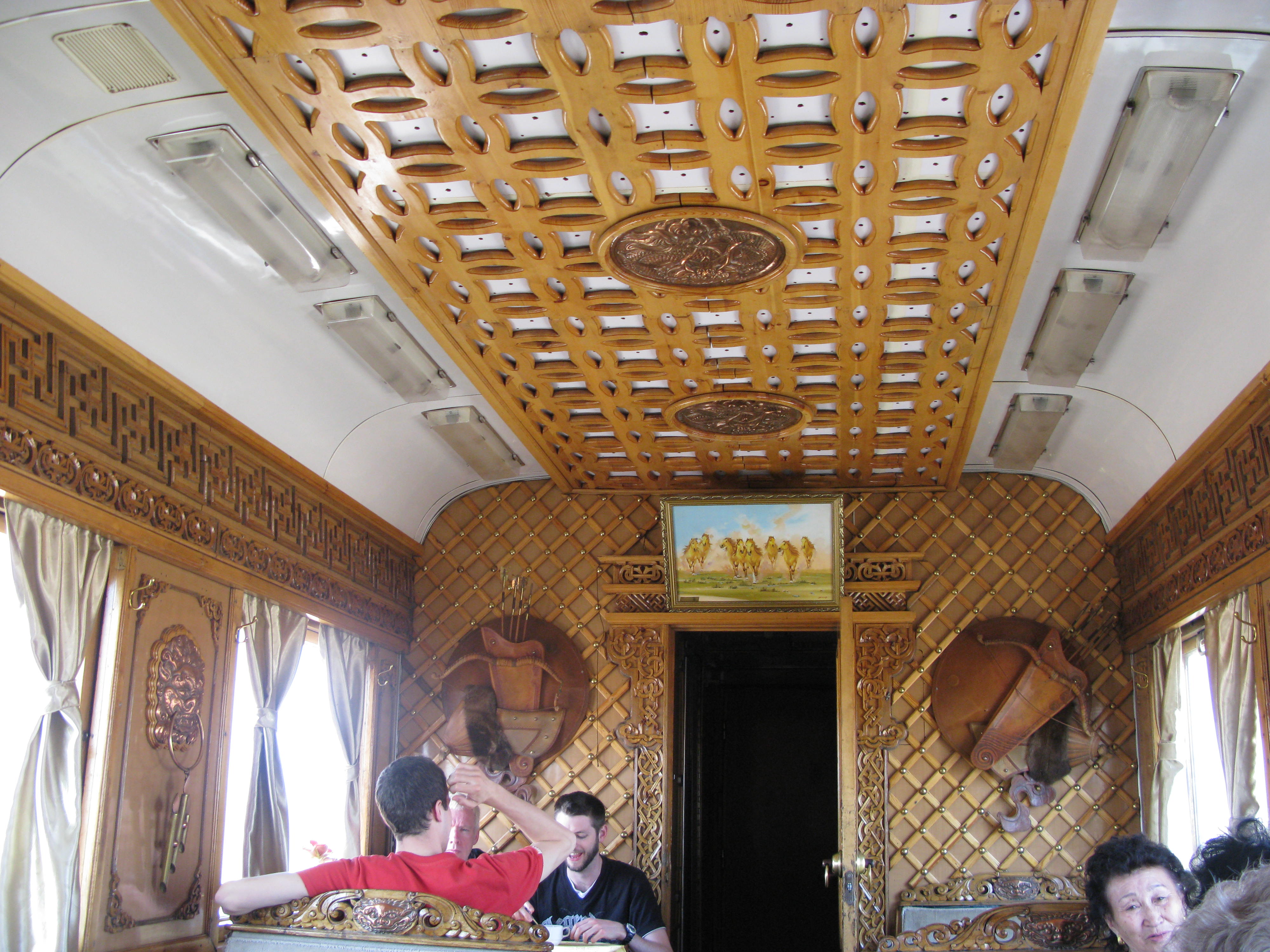
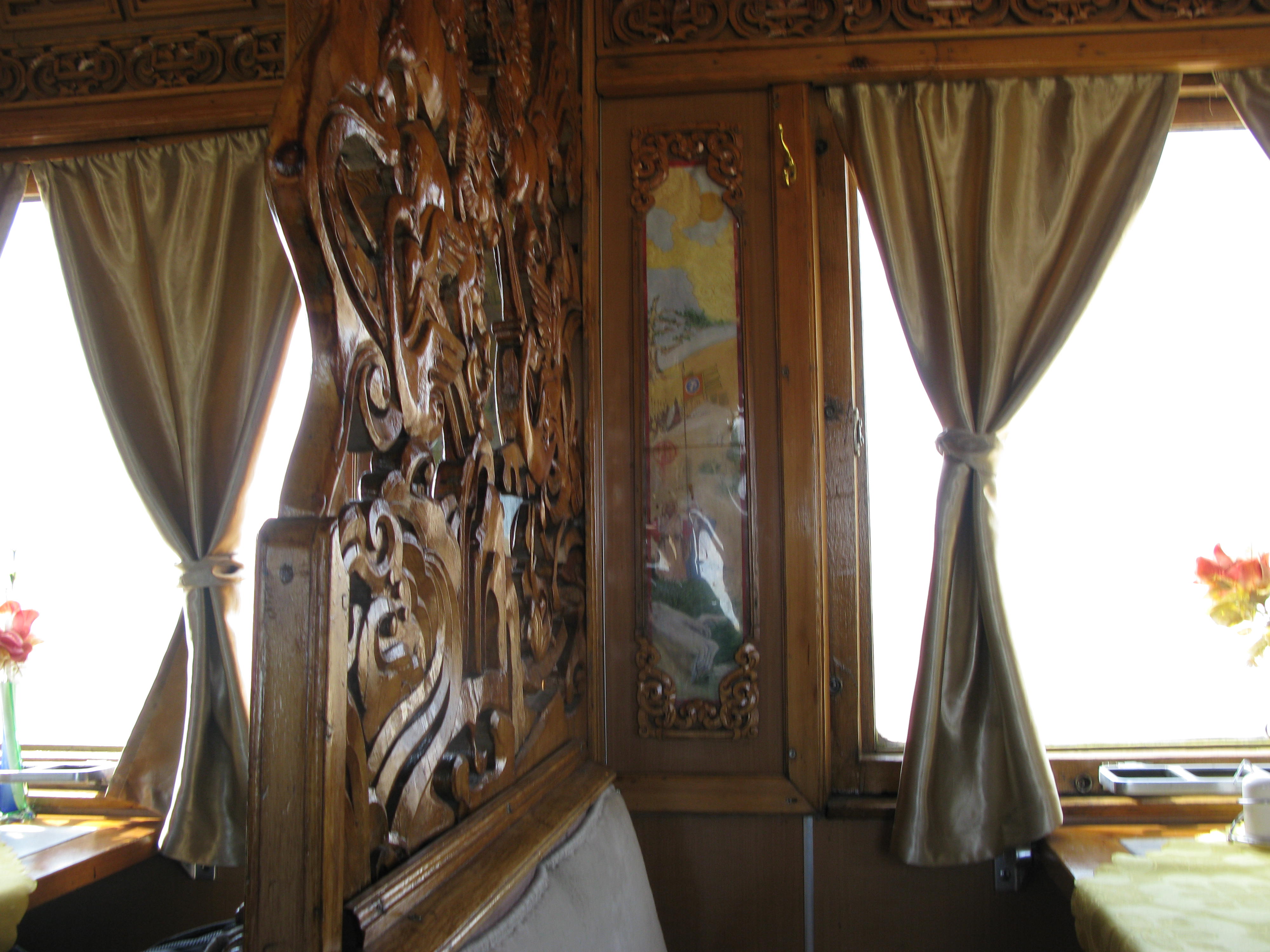
But on the train it was another story! In order to get a bottom bunk I’d changed compartments and was sharing with Tony and Sandra from Austria, and Andy and his guitar. So I lay on my bunk and read, or played cards with Sandra, and listened to the soft strumming from the bunk above me. Lovely! But the big surprise was the Mongolian dining car. After the dire experiences of the Russian one, and the complete absence of a dining car between the Russian border and Ulaan Baator, we just weren’t expecting the grandeur of this one. The décor was beautiful, ornate and quite over the top, with local weaponry dotted about. The menus were fantastic, with colour photos of all the food. Unfortunately they didn’t have everything on the menu – and no prices. So when you went to pay for your coffee and tiny side salad you got a bit of a shock! And it didn’t last long as it was changed at the border to a Chinese car, very restrained décor after the Mongolian one, but they gave us free vouchers for breakfast and lunch.

And then at 7 in the evening we were at the Mongolia border. I’d lost my customs declaration which had been stamped on entry to Mongolia (later found it hidden inside my Kindle..when did I do that?) but it didn’t seem to matter and we moved on through No-Man’s Land to China. The most amazing thing: as we left the last Mongolian station, at intervals the border officials stood to attention and saluted the train as it passed. This happened all the way to the start of No-man’s Land. A few miles down the track we approached the first station on Chinese soil and we were again greeted by officials on the platform, standing to attention. I guess this train is such an institution that it now receives huge respect along its route. Anyway, it made us feel like VIPs. Dirty and grubby ones. Sandra and I bemoaned the fact we couldn’t get our fingernails clean – one look at the train and they attracted filth. I even dug out a spare toothbrush (I took about 6 from the planes) and scrubbed with that – 30 minutes later, filthy again. Sorry, I digress.

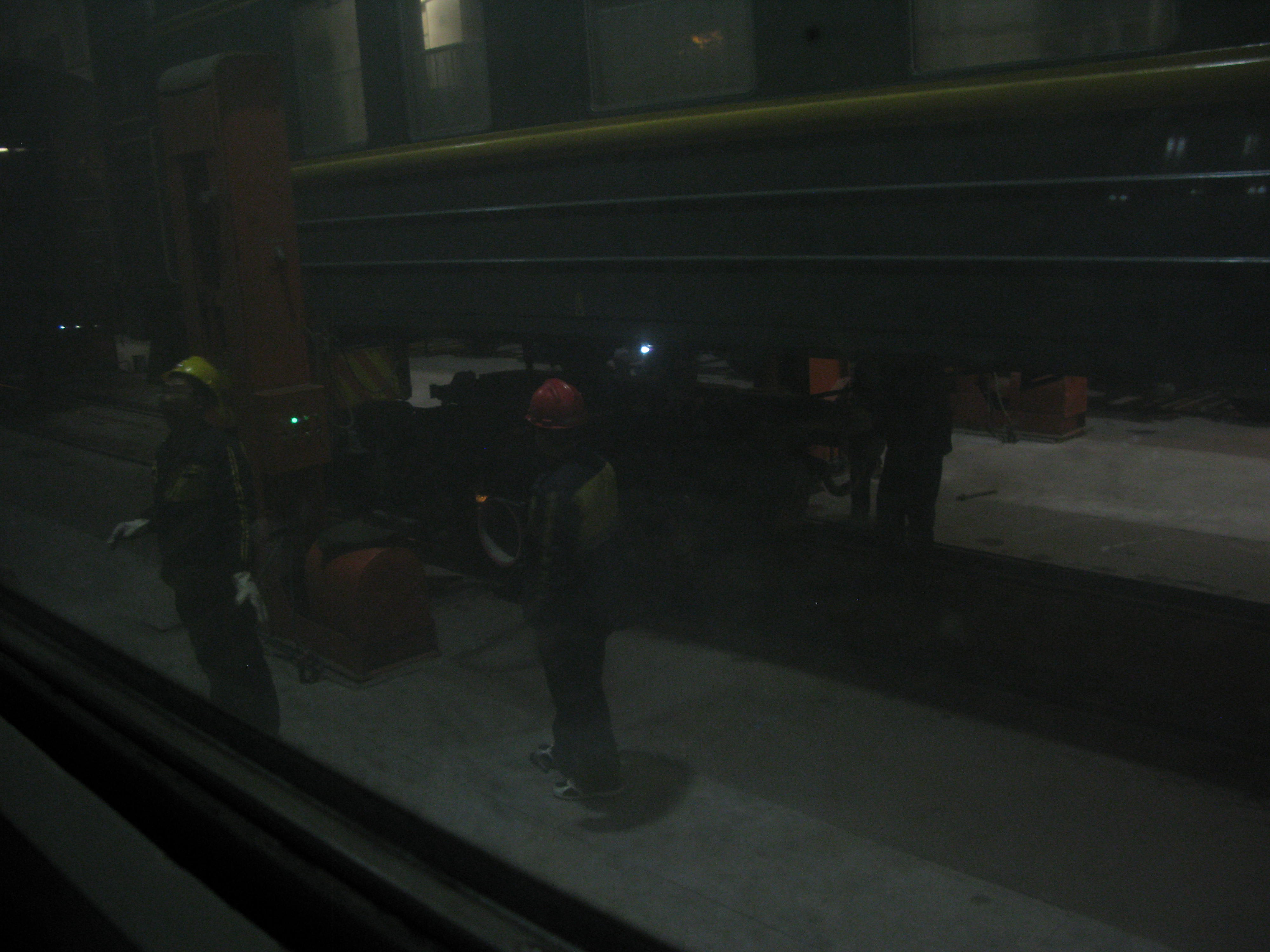
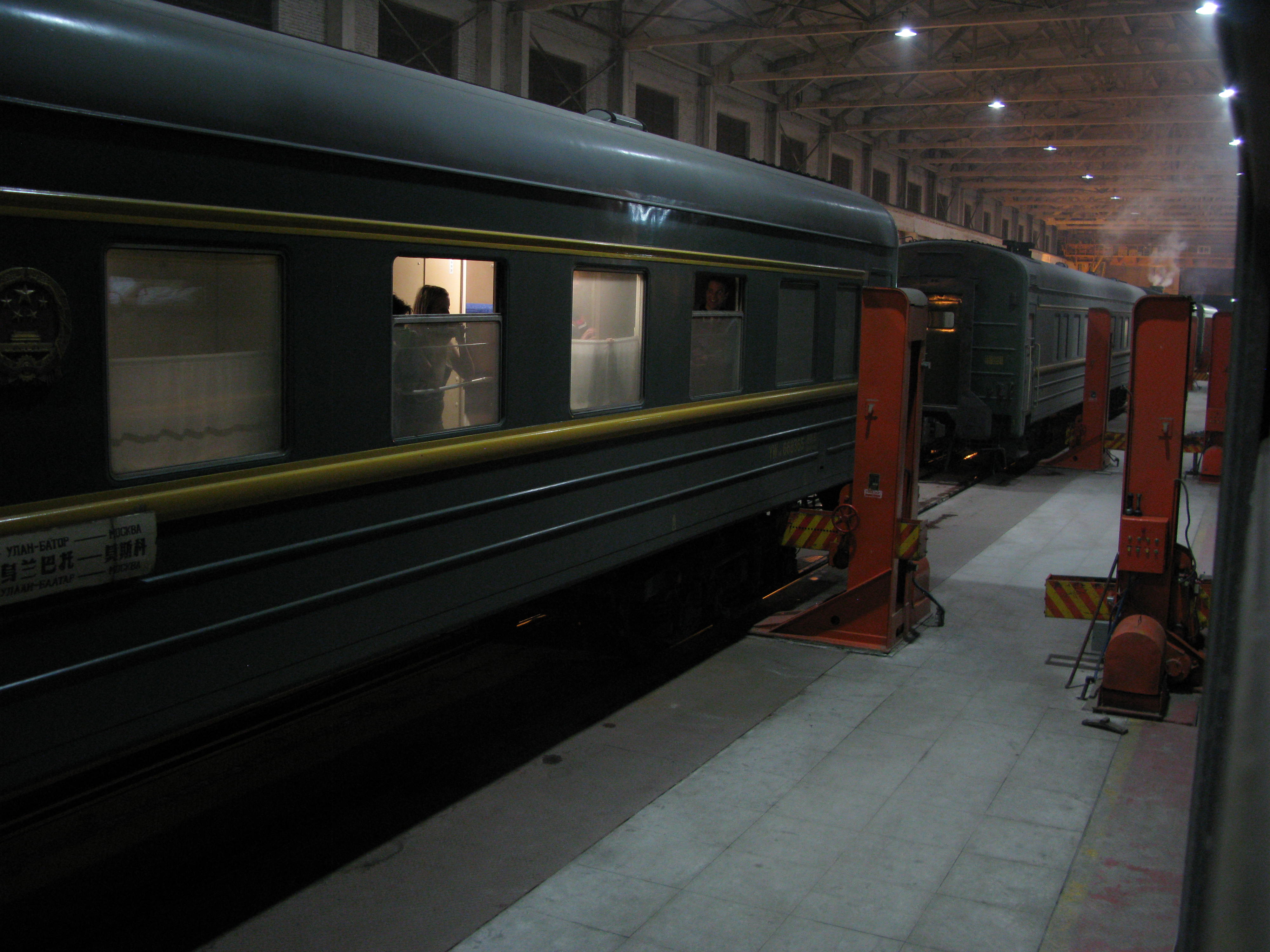
So by about 9.30 in the evening, there we were sitting in a stationary train in China, waiting for our passports to be returned. We knew this would be a long stop as the entire wheel systems have to be changed on entry to China, and this can be a lengthy procedure for a train with ten or more carriages. The wheels which took us through Russia and Mongolia run on a very slightly narrower gauge than China – only a few centimetres in it, but enough to make it totally incompatible. They advise you not to get off the train at this point, as it could be a long time before you can get back on. We were shunted up the line – then back to the station but at a different platform. This happened twice – at one stage I saw the faces of two of our group on the platfrom as the train drew slowly away from them. They said they weren’t worried but I don’t believe them. Even when stationary at a platform, you were being violently shunted around as carriages were disconnected and taken off to the wheel-changing shed. We finally got our passports back, customs came and went, checking under our seats and in the roof space between ceiling and outer shell for illegal immigrants. Then were were shunted off again, then back to the station on another platform. No way you can get bored on this train.

And so it continued for about 45 minutes, until our carriage ended up on rails, separated from the rest of the train, in a hangar-like shed. Sets of different gauge wheel systems were stacked at the sides, and in the centre, serving two sets of rails, were red hydraulic lifts. We watched and took photos as another carriage (and its occupants with their noses to the windows) was lifted into the air about 1.5 metres above the rails, and its wheels exchanged. Then they watched and snapped away as we underwent the same process.


I was in my bunk soon after, reading, and fell asleep before the train was back on the new tracks with all its carriages, but according to others we were off again about 1am. I woke up to lovely views of mountains, layer upon layer swathed in cloud – you just know exactly where the inspiration for classical Chinese paintings comes from. And the trees! They may be almond trees, someone said, the tall spindly ones sharing their orchards with cherry trees in blossom. Lovely.


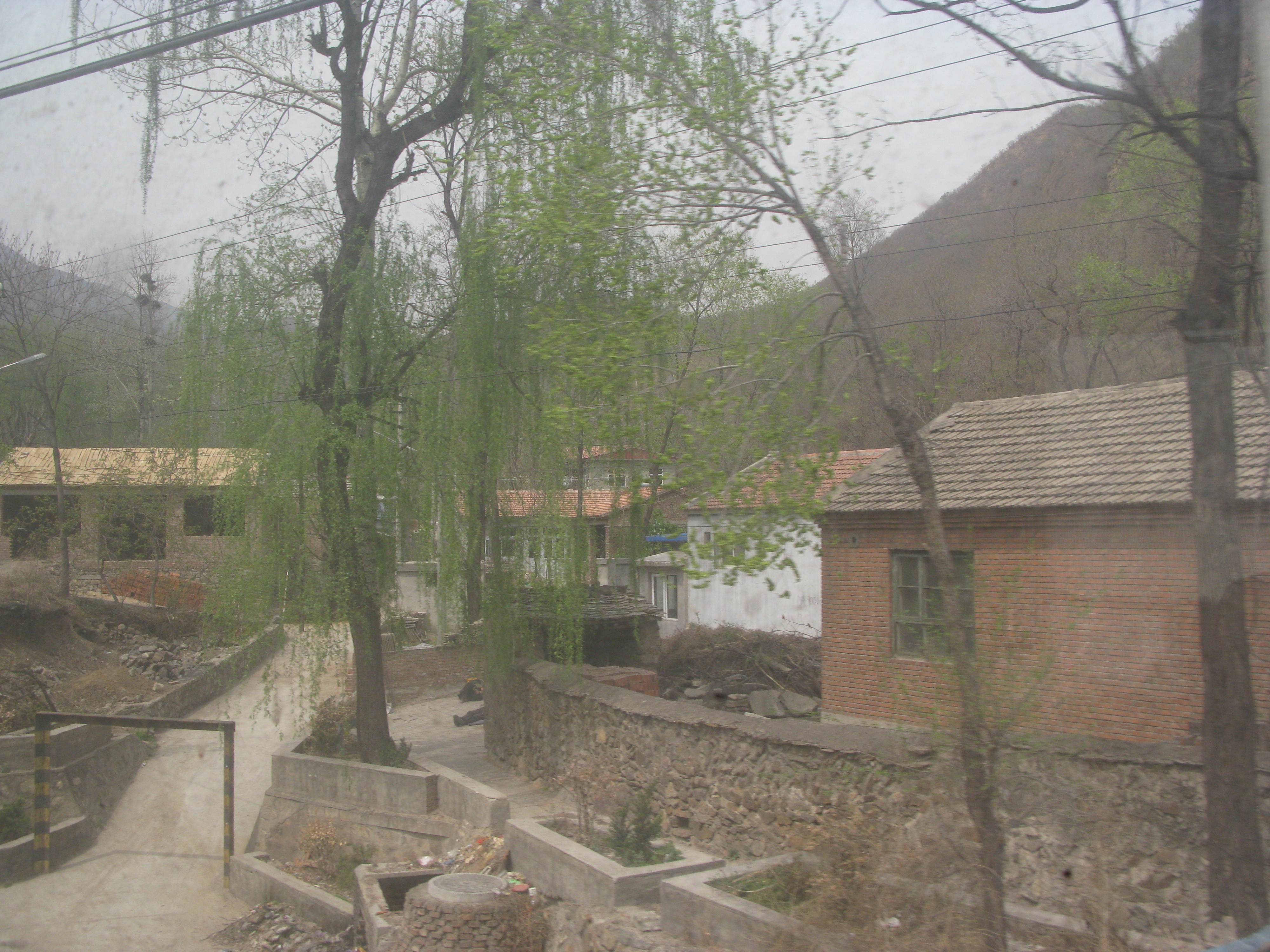
The industrial north: cooling towers and tall smoking chimneys interspersed with villages, rice fields and terraces, vegetable fields and orchards. And then we arrive in Beijing… slowly…as it takes us just over half an hour to reach the station from the outskirts of the city. Someone said it covers the same area as Belgium. It’s absolutely huge and sprawling. We were met by Gary, the Chinese guide who will accompany us for the next few days until we leave China on the ship to Alaska. A lovely man who made our whole trip memorable and who helped change me from a person who was not that fussed about China, to someone who loves it and can’t wait to return!

Not all Mongolians are fierce…

But this one was!

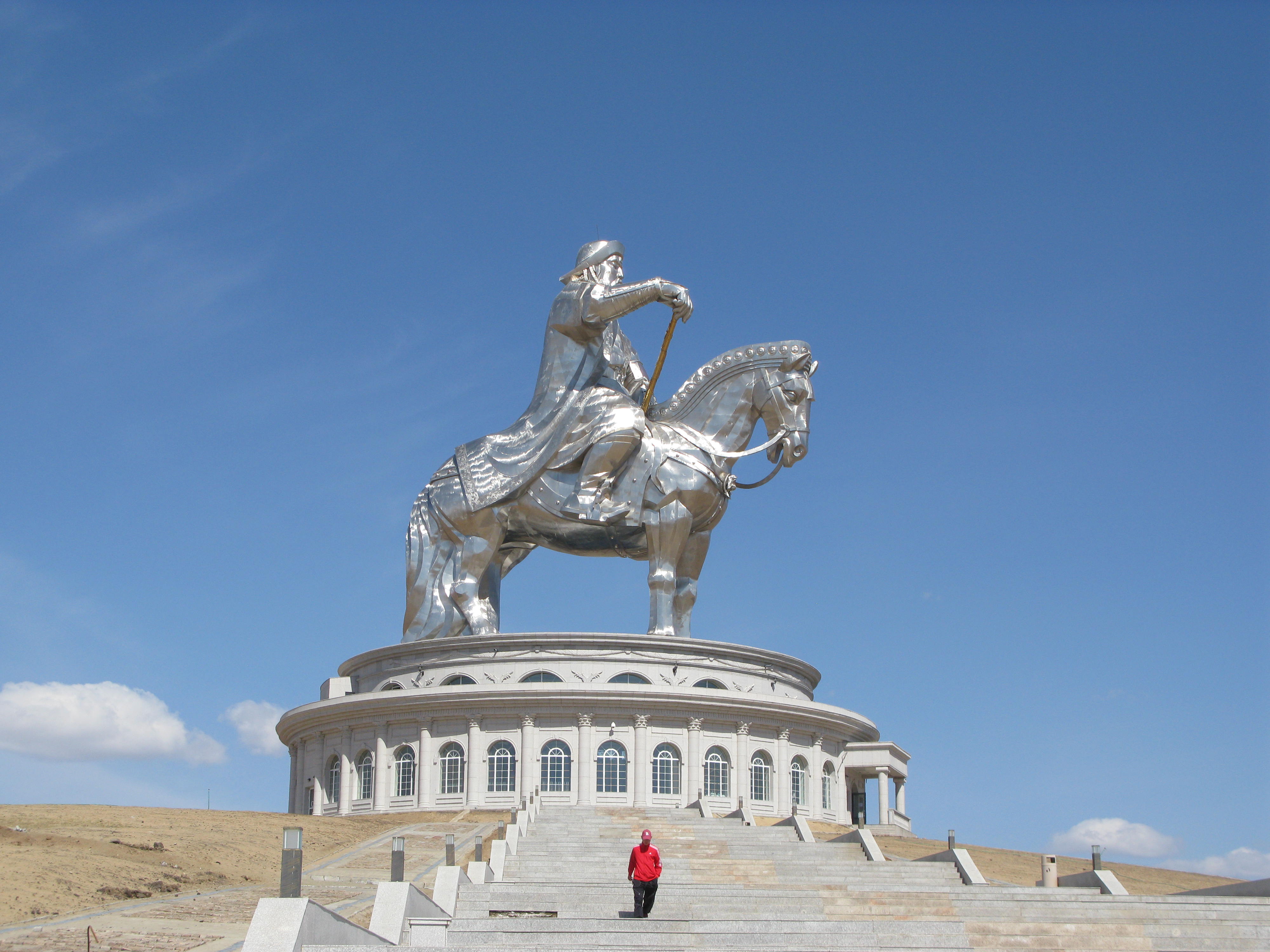
Can you imagine driving along a dusty road across a fairly barren landscape and then coming across this massive Ghenghis Khan memorial in the middle of nowhere! Mind-blowing. I was expecting something huge, but this took my breath away!

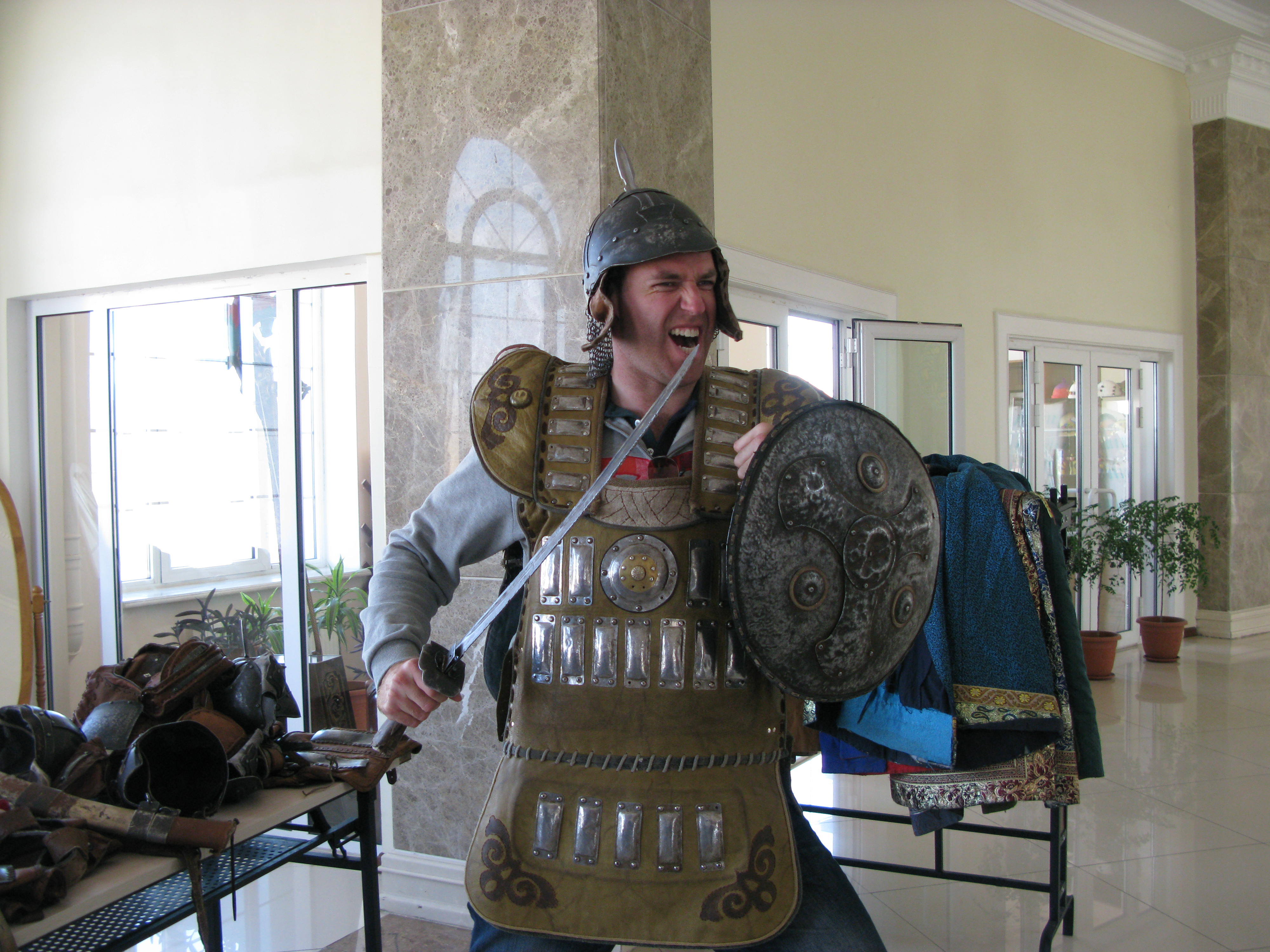
You can actually climb right up (on the inside – the lift was out of order so I didn’t manage it) and stand on an enclosed area in the horse’s mane! Inside, there was a huge ornamental Mongolian boot and a dressing up box for the kids – well, for one of the Ozbus kids anyway……I don’t think he would have survived long as a Ghenghis warrior with that grin on his face! The museum was very interesting; apparently Ghenghis Khan rested on this very spot and many artefacts have been discovered in the area. He is also shown facing to the north where he was born.

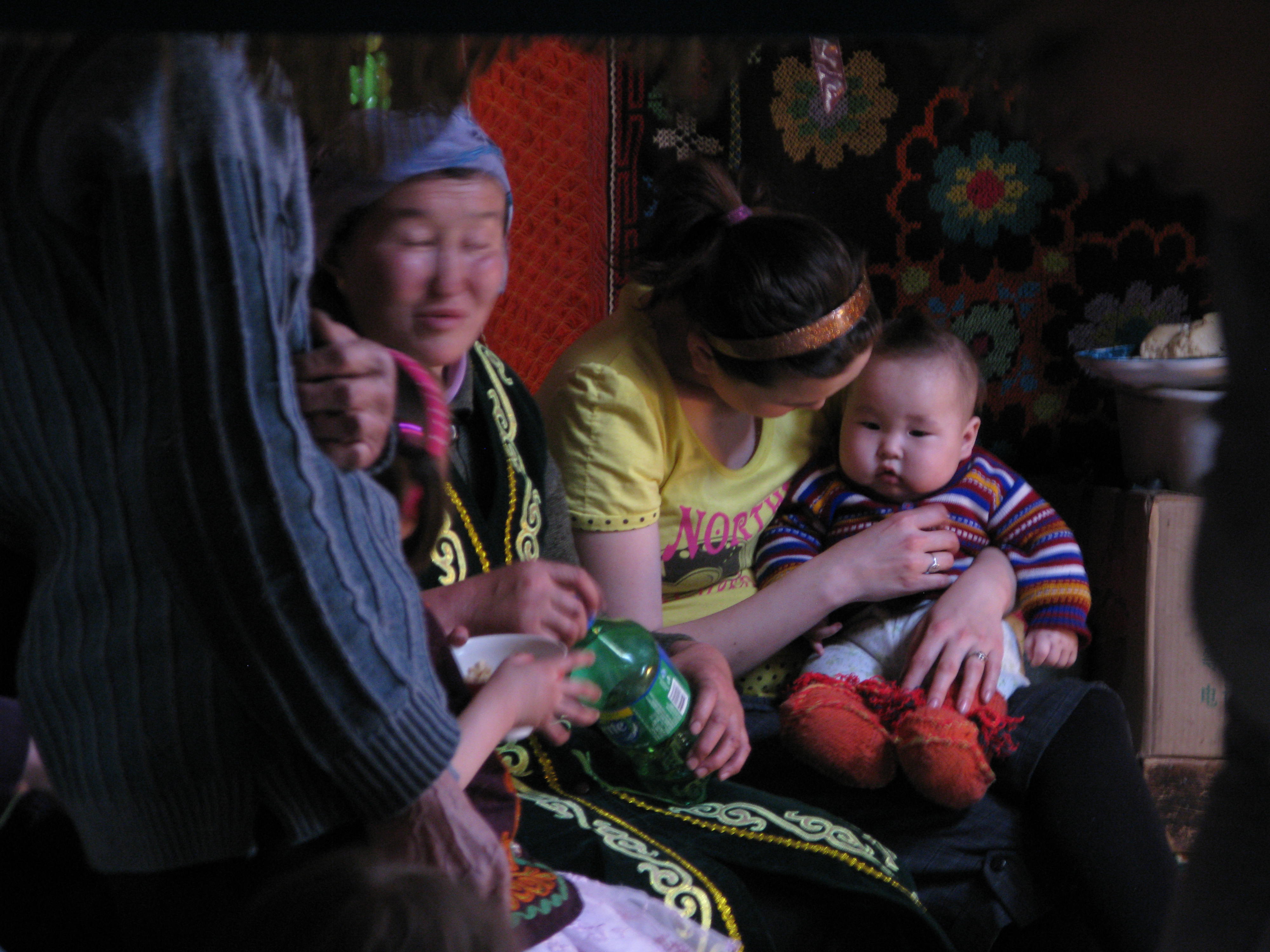
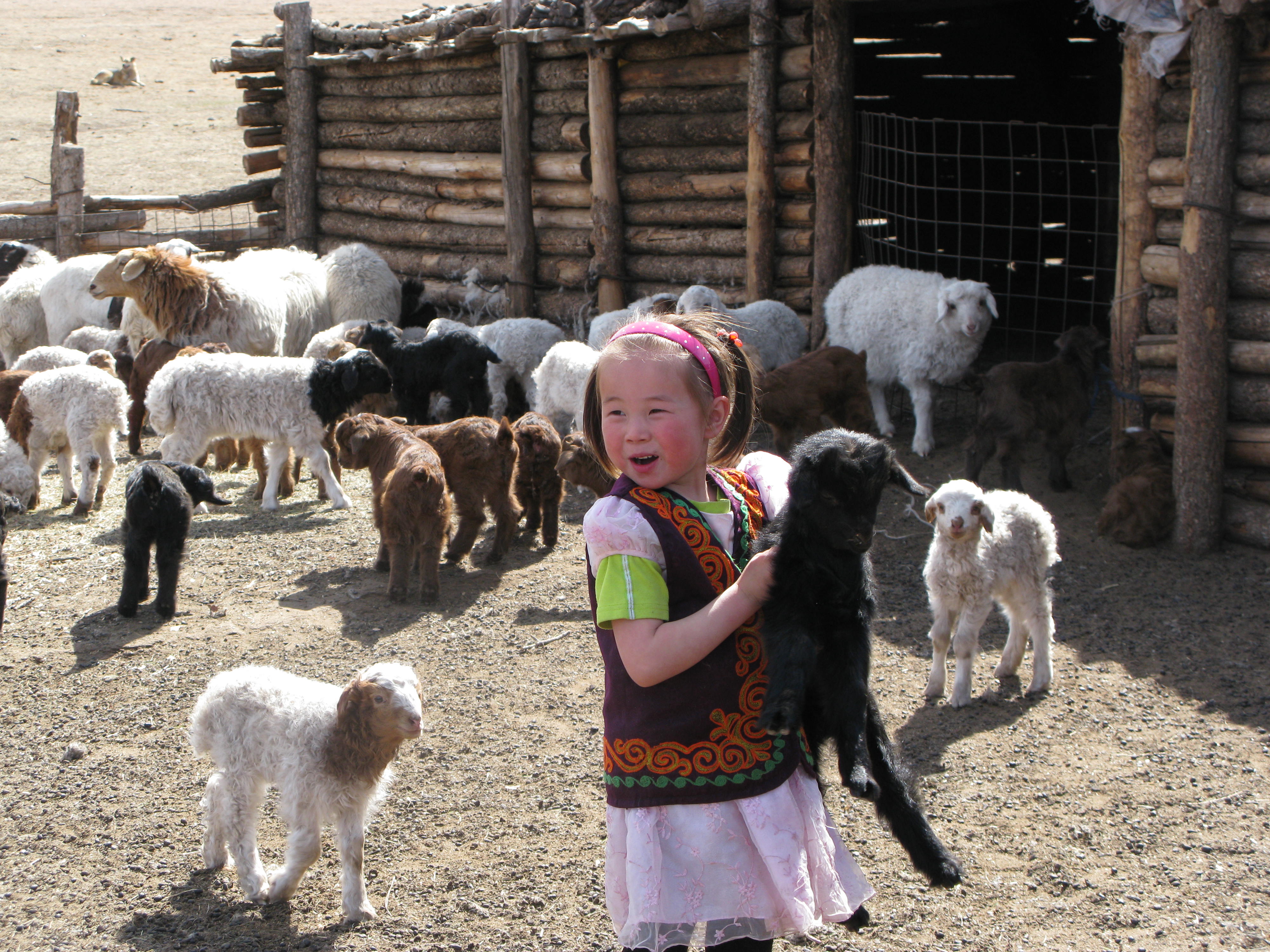
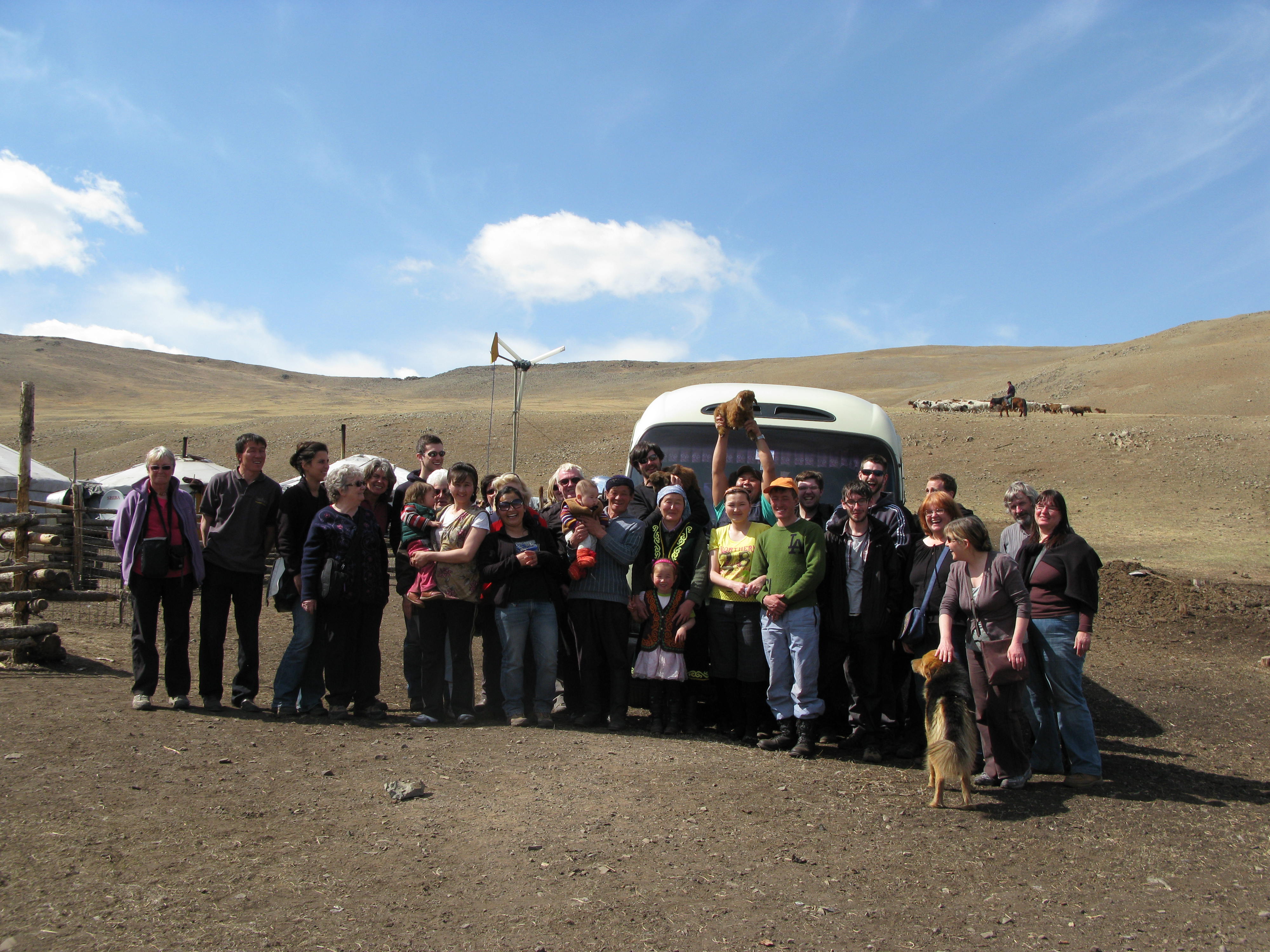
After leaving the monument, we headed back across country in the bus. No road, just a faint track across the hills, towards a nomadic family who showed us their way of life, their beautiful gers, their animals and their children! This is their winter camp, with the grandparents living there full time, with one of their sons and his wife and baby. Their other son, his wife and two children have moved to town living locally. But they were all there to greet us – we got there just in time as they were expecting within a week or two to pack up everything, gers included, and get on the move following the pastures with their animals. We had lots (too much) lovely local food and were treated to one of the sons playing his stringed instrument and singing local songs.

A Ger in Terelj National Park

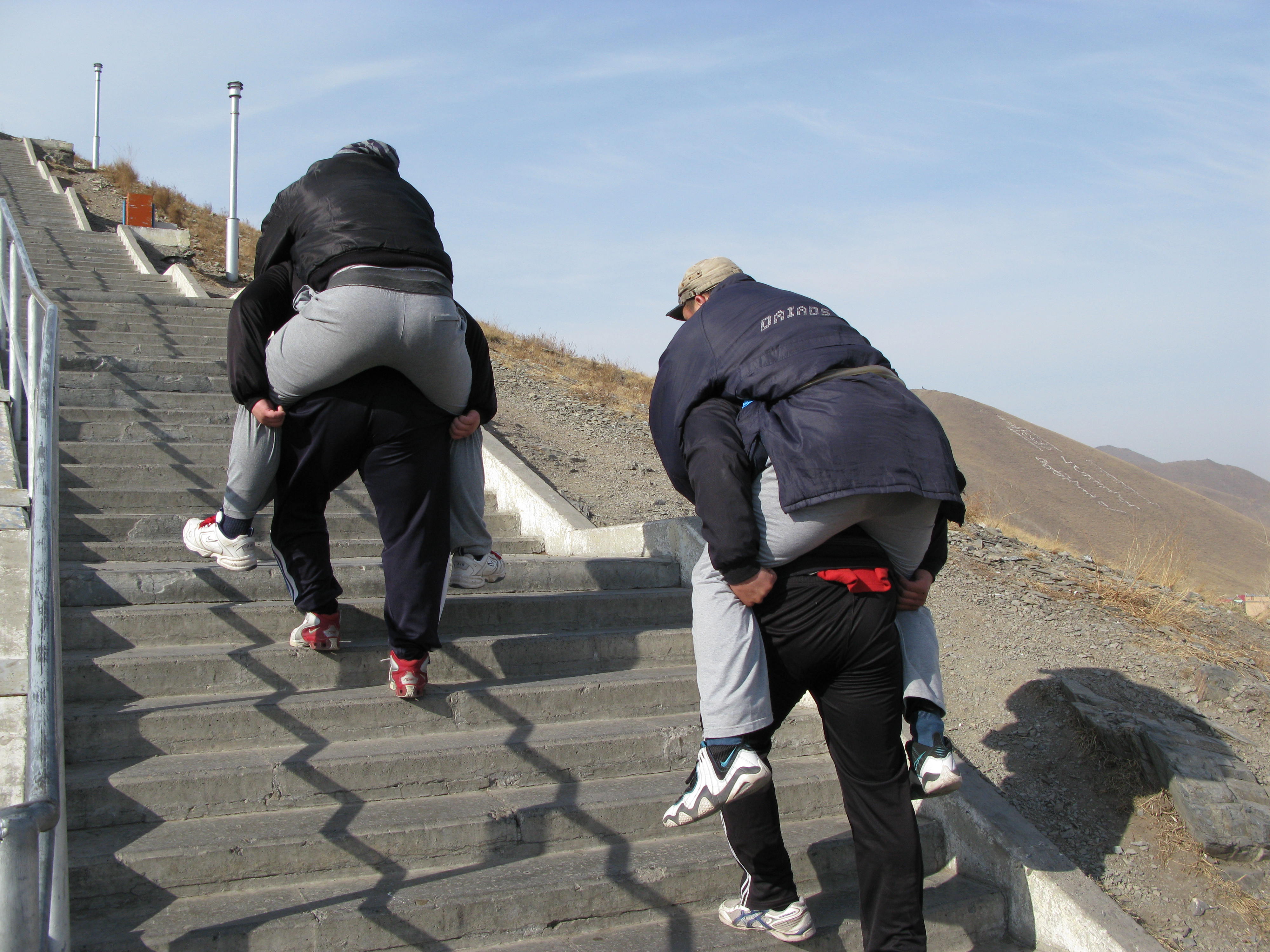
IMG_3738It’s now Friday 22nd April and we’re on the move again. This time, off to Terelj National Park to the east of Ulaan Baatar. On the way we stopped at the memorial to Russian soldiers, up a great number of steps, so I didn’t attempt it! But those who did…! Well, there were these Mongolian wrestlers who used the steps as part of their training routine! I spoke to some of them who told me they were from the Mongolian National Wrestling Squad and had taken part in the Beijing Olympics.

Their routine:

  • running individually up the steps
  • carrying each other up the steps
  • jumping with both feet together from step to step

Crazy.

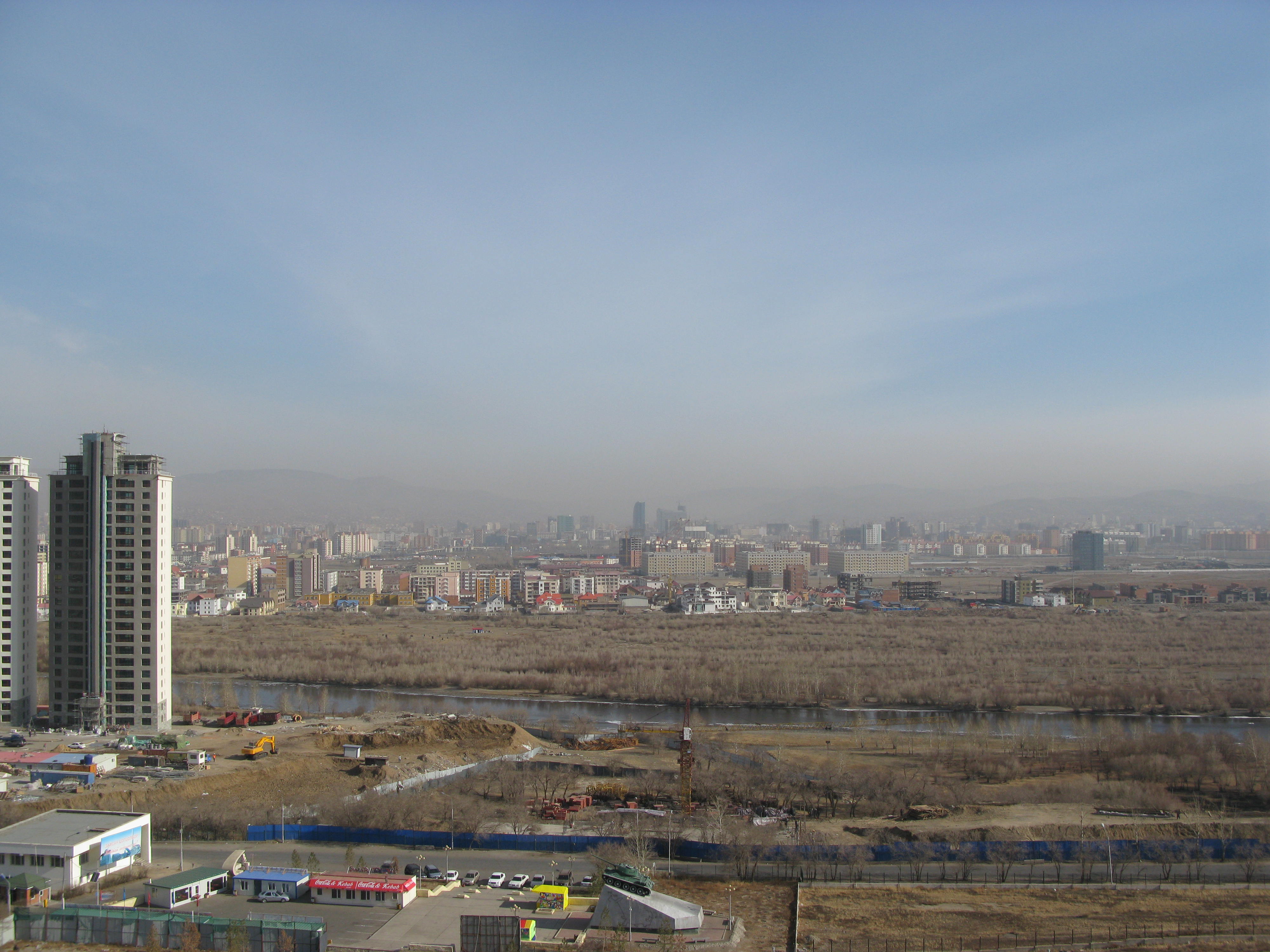
Everyone on the bus after this was wracked by coughing after seeing from a great height just how smog-filled and dusty Ulaan Baatar is. Now we understand why people were wearing masks yesterday.


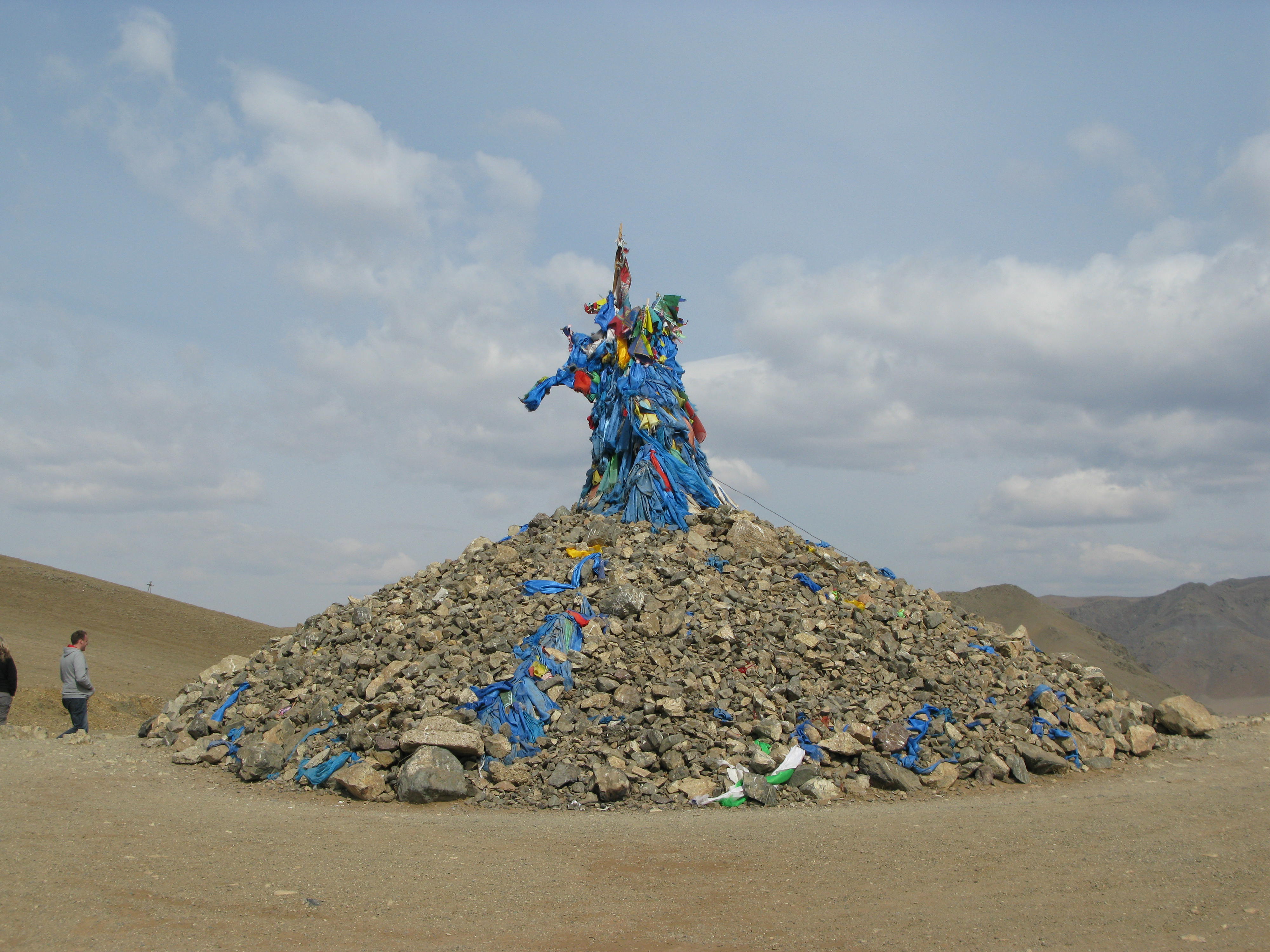
Terelj was just beautiful, little settlements here and there, a river of ice flowing (?) through an arid landscape at one point. We passed many groupings of gers, some of them occupied by nomads, others purely for the tourist trade. For people like us. We stopped at a large stupa, did our three-times-clockwise round it and I collected glass from broken bottles which had been rounded and smoothed by the sandy soil. Like beach or sea glass – just Mongolian Stupa Glass!

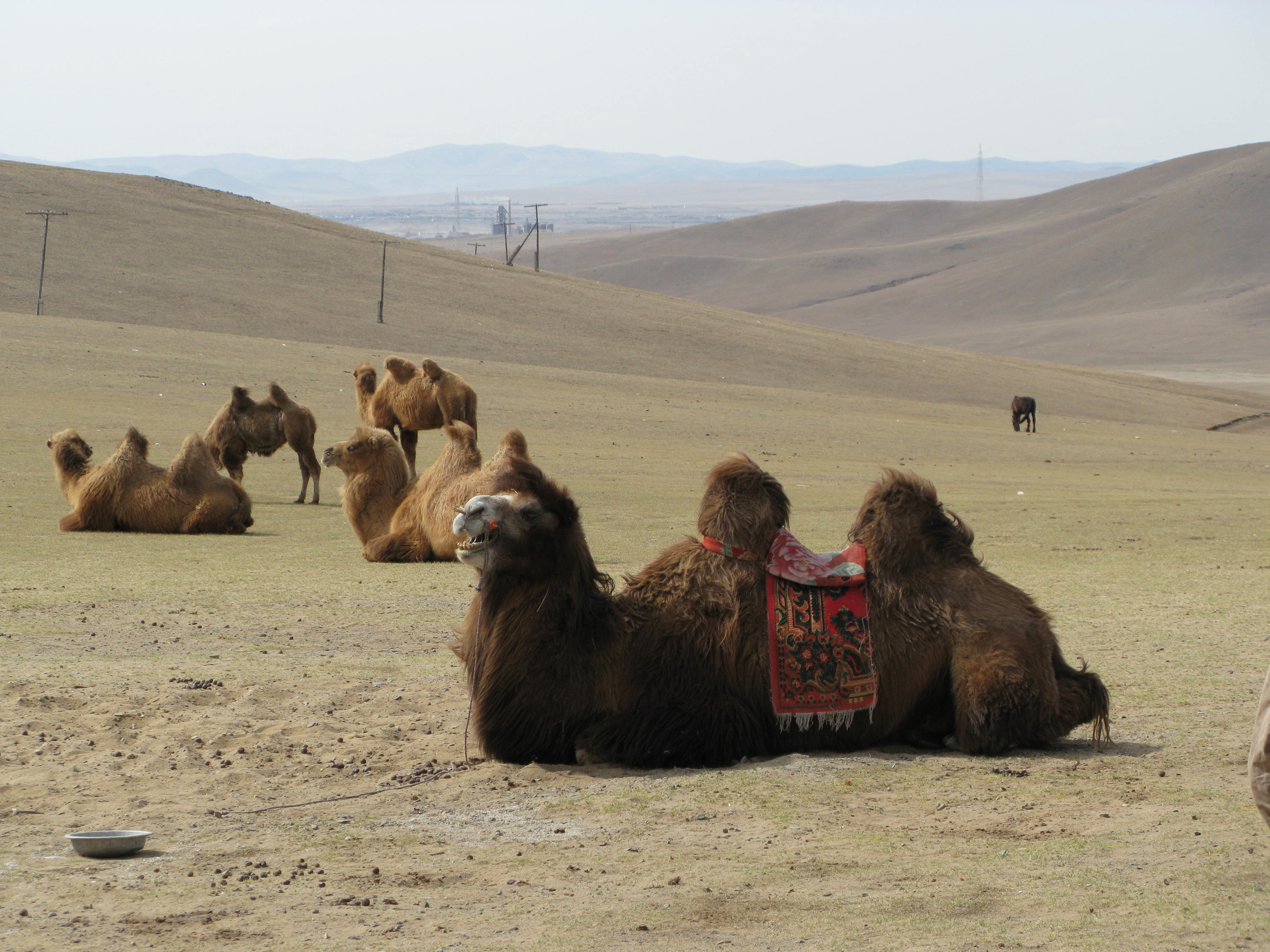
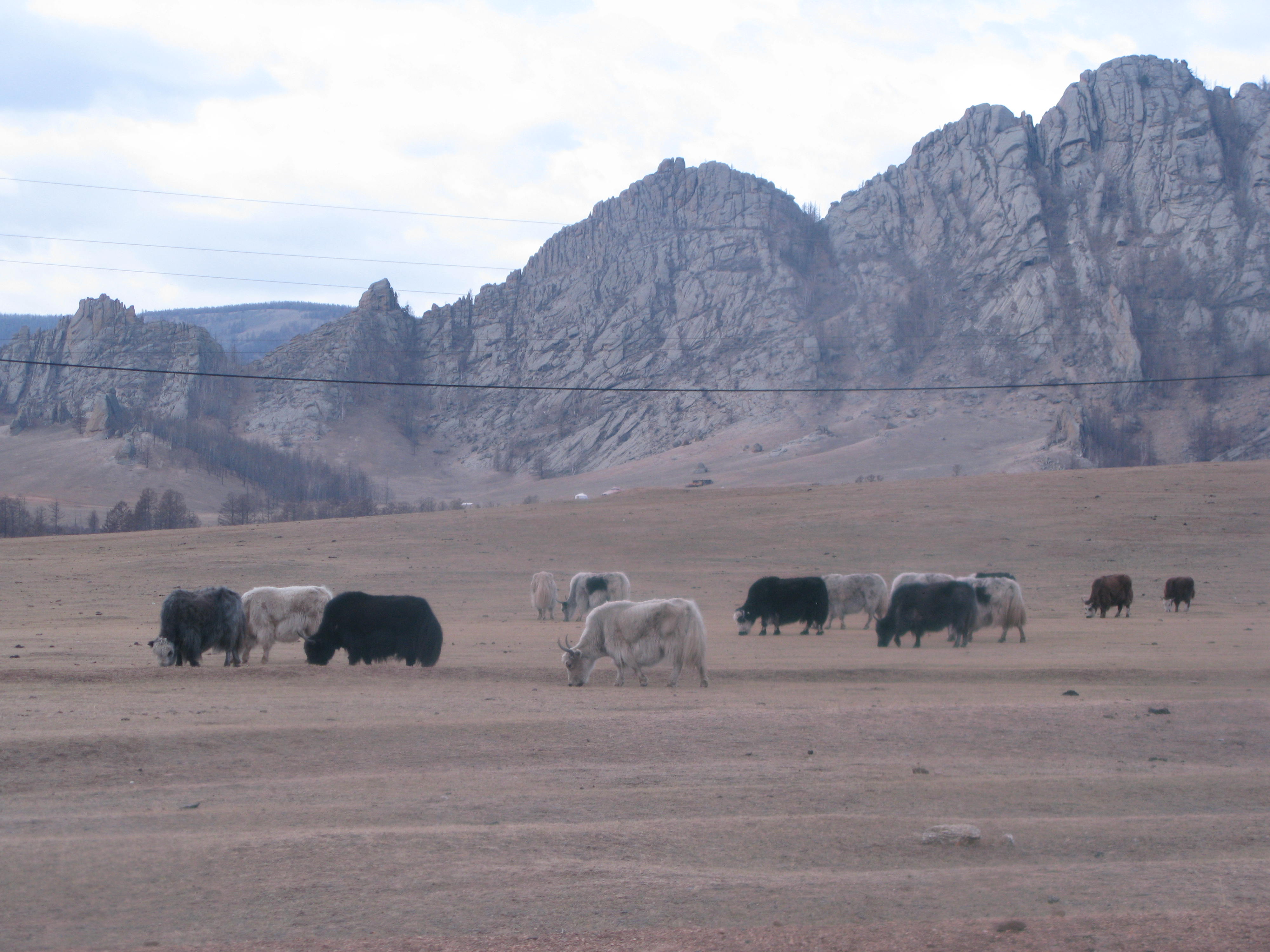
On the way we saw eagles, dromedary camels, yaks… How they survive here in the winter beats me – everything seemed arid. Winding our way through valleys between the hills and the rock formations, we eventually reached our ger camp.

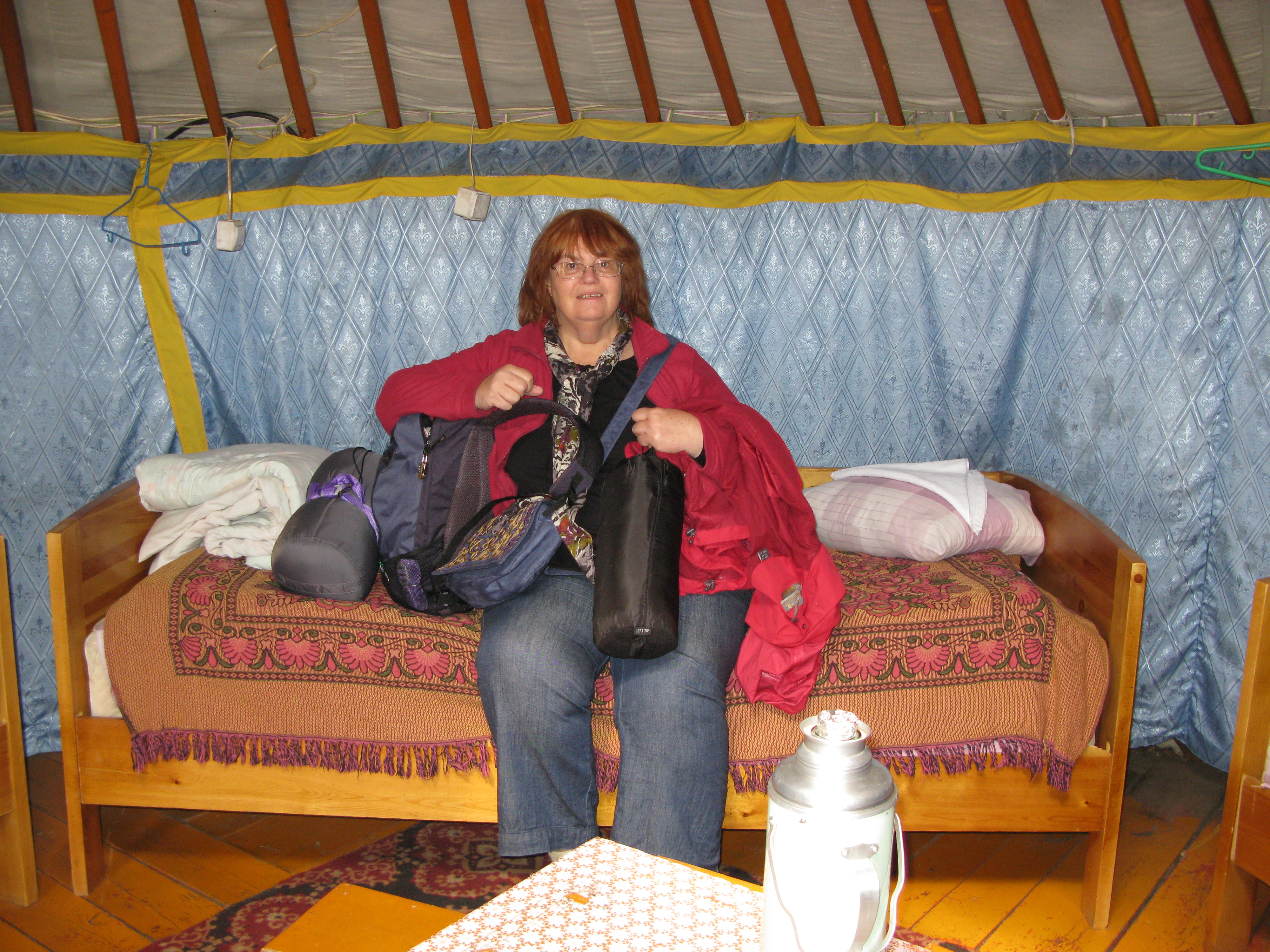
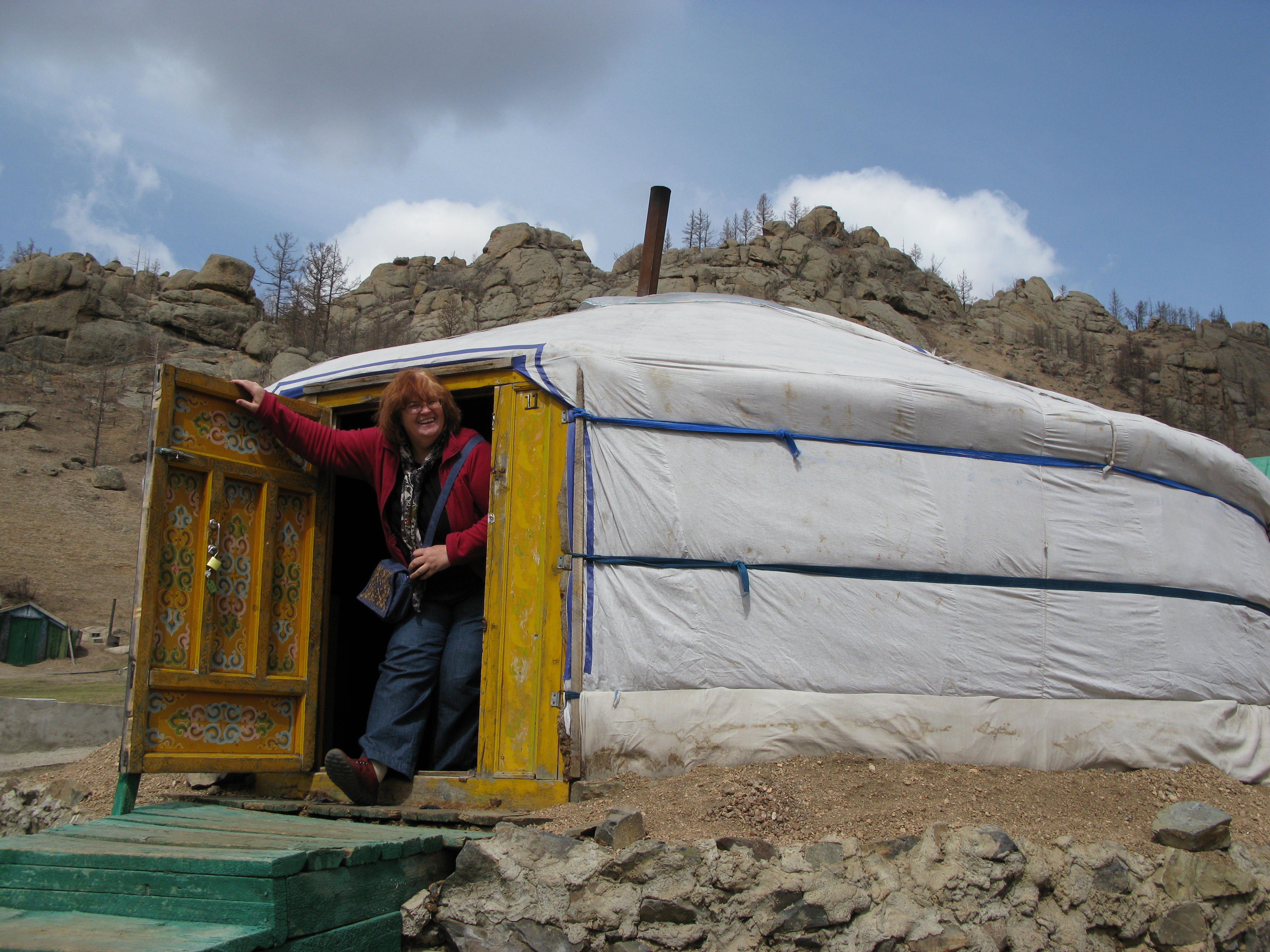
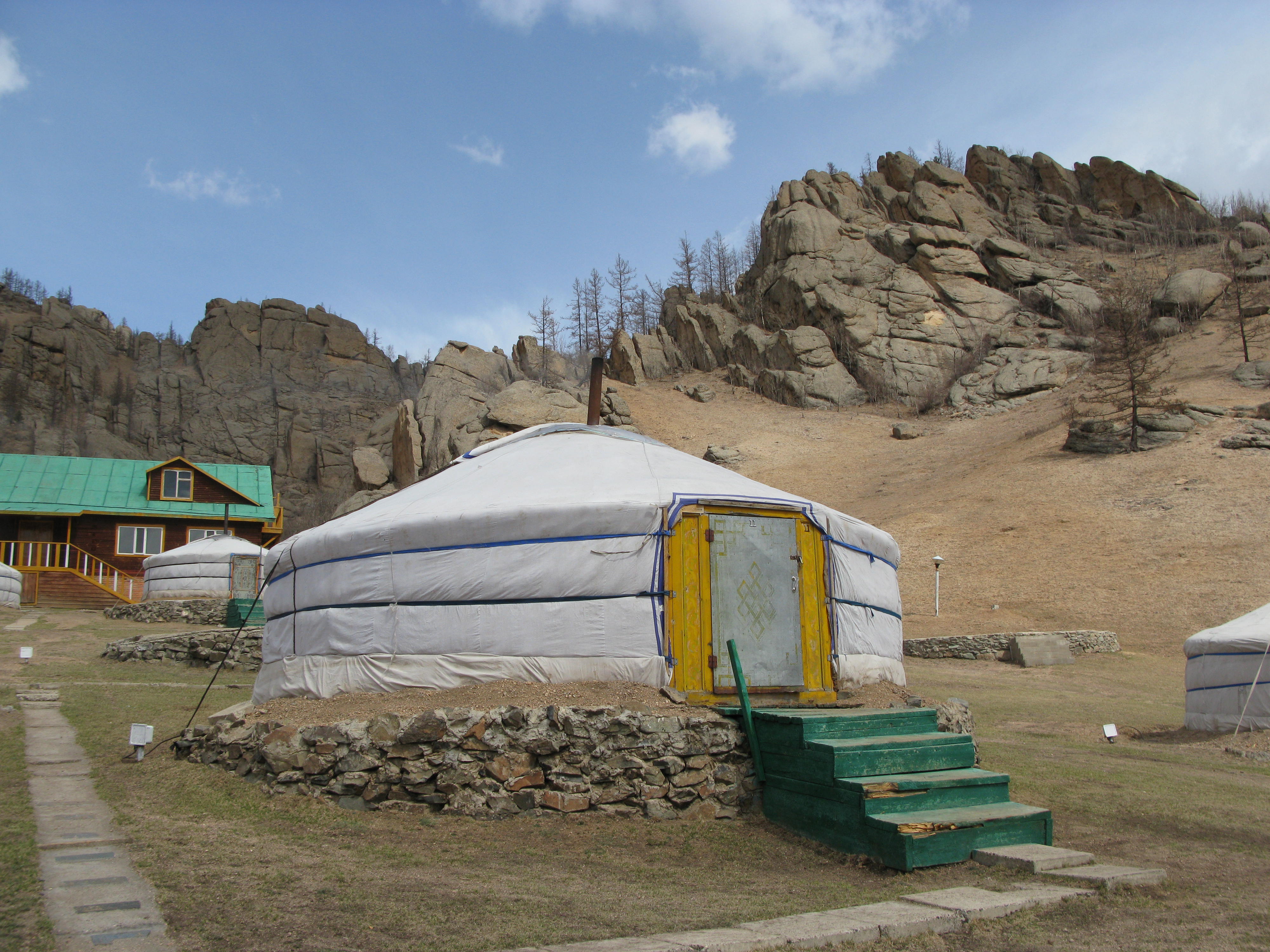
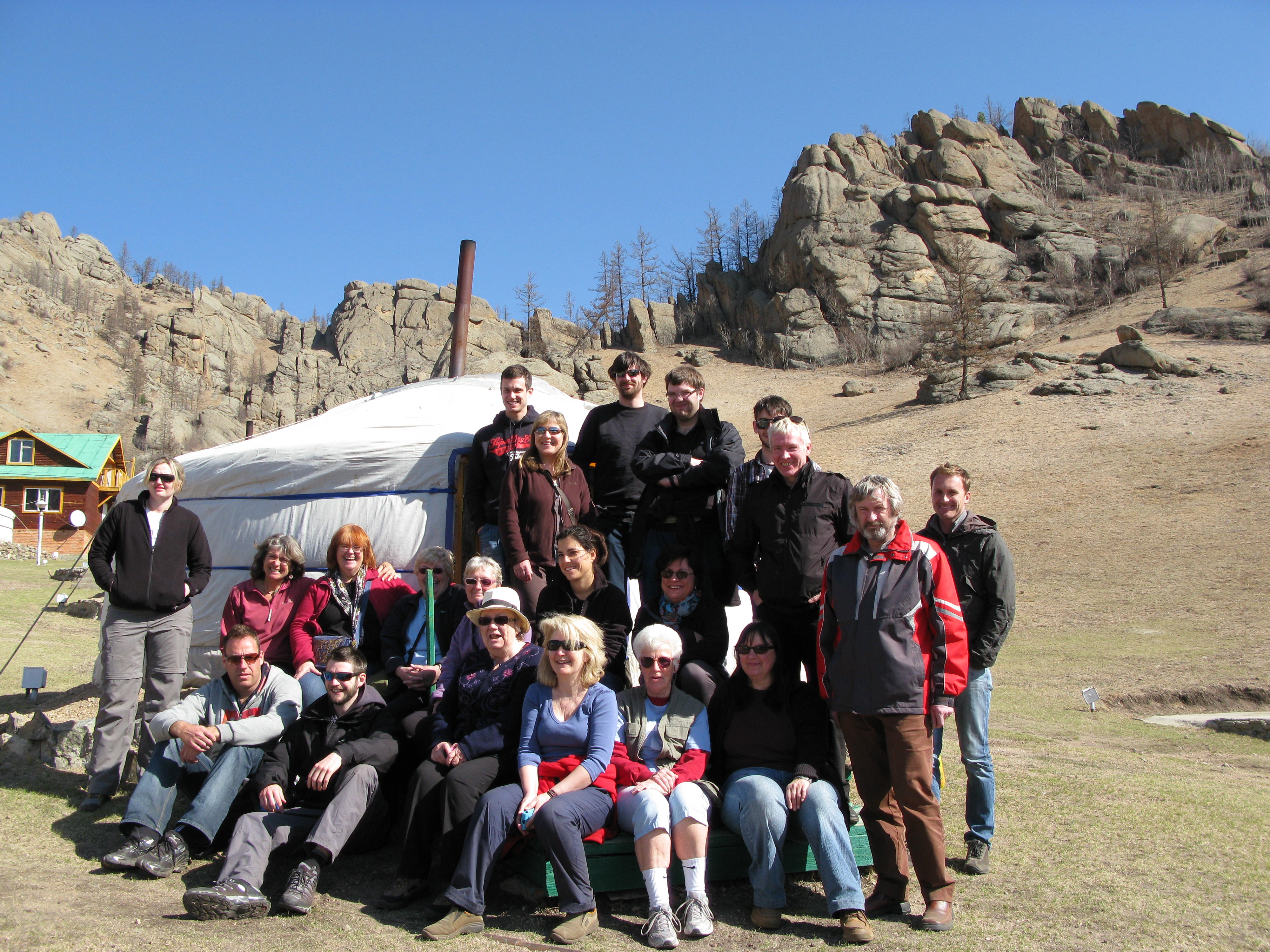
It was in the most gorgeous setting, a cul-de-sac of a valley surrounded by fabulous rock formations against which the wind had whipped the soft-powder-like soil. There were a number of gers here, some occupied by locals. Pat, Ann, Linda and I shared a four-bedded one: lovely comfy beds, two duvets – so no need for the sleeping bags some of us brought. It was so inviting that 3 of us settled down for a rest and fell asleep! I blame it on the altitude: 1700 metres above sea level.

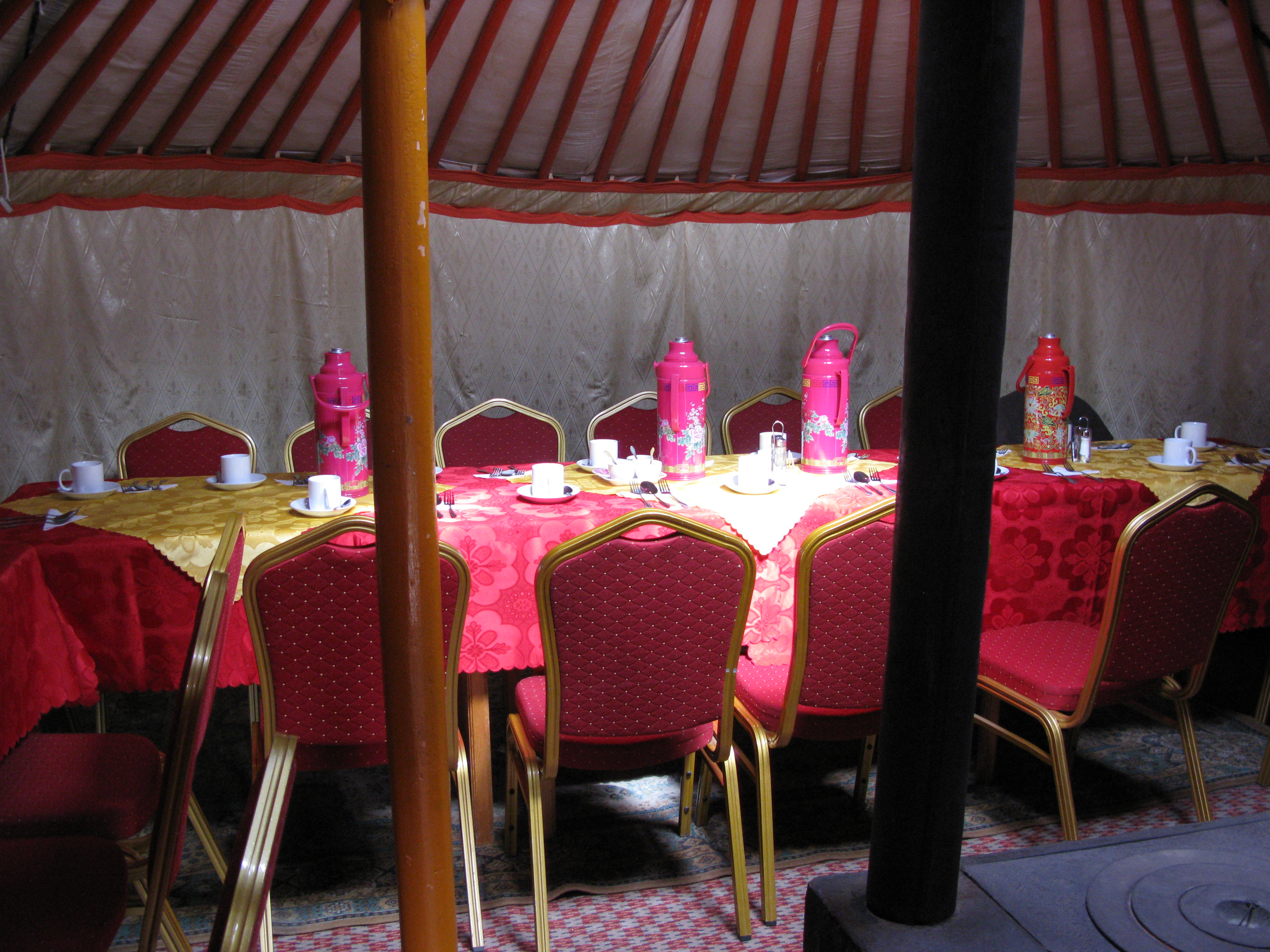
The dining ger (!) was gorgeous – so beautifully decorated, quite unexpected really. All in all, the entire place was so quiet, peaceful – and the air, though thin, was so pure after the city. There were a number of horses around, some manic dogs… and birds. Eagles, hawks, lots of crow-like birds. I went off for a walk, sat by another stupa and just enjoyed the fantastic scenery and the peace.

The next day, after a good night’s sleep and breakfast, we left. Altogether it was perfect – apart from the toilets! I cannot cope with squat toilets – with knees that tend not to bend more than 90 degrees. Enough said!

…and into Mongolia

19th April – Next leg of the journey – to Ulaan Baator

At 9pm we were off, back to the station, down the steps, up the steps and onto the train. This time we had lovely Mongolian attendants who were friendly and helpful. It made such a difference – as did the cool temperature on board.

Well, a reasonable night’s sleep, then the usual activity on board: photographing out of dirty windows..! There was no dining car this time so we were confined to our compartments – not so bad for such a short journey. We’d been warned that the border crossing could take hours, but personally I didn’t expect 5 hours at the Russian border (the first three of which we sat in the station and no one appeared….lunchtime?) followed by another two hours 17 kilometers down the line at the first Mongolian station on the line. One of the highlights of the Russian border crossing was the female officer in mini skirt and killer heels; and another was the sniffer dog they brought on the train – a poodle! There was a lot of knocking on compartment walls and unscrewing wall panels in the corridors – and lifting the carpet and opening up a floor cavity – before we were finally allowed to get on with the journey. And all this time, no photos allowed. At least not on the Russian side.

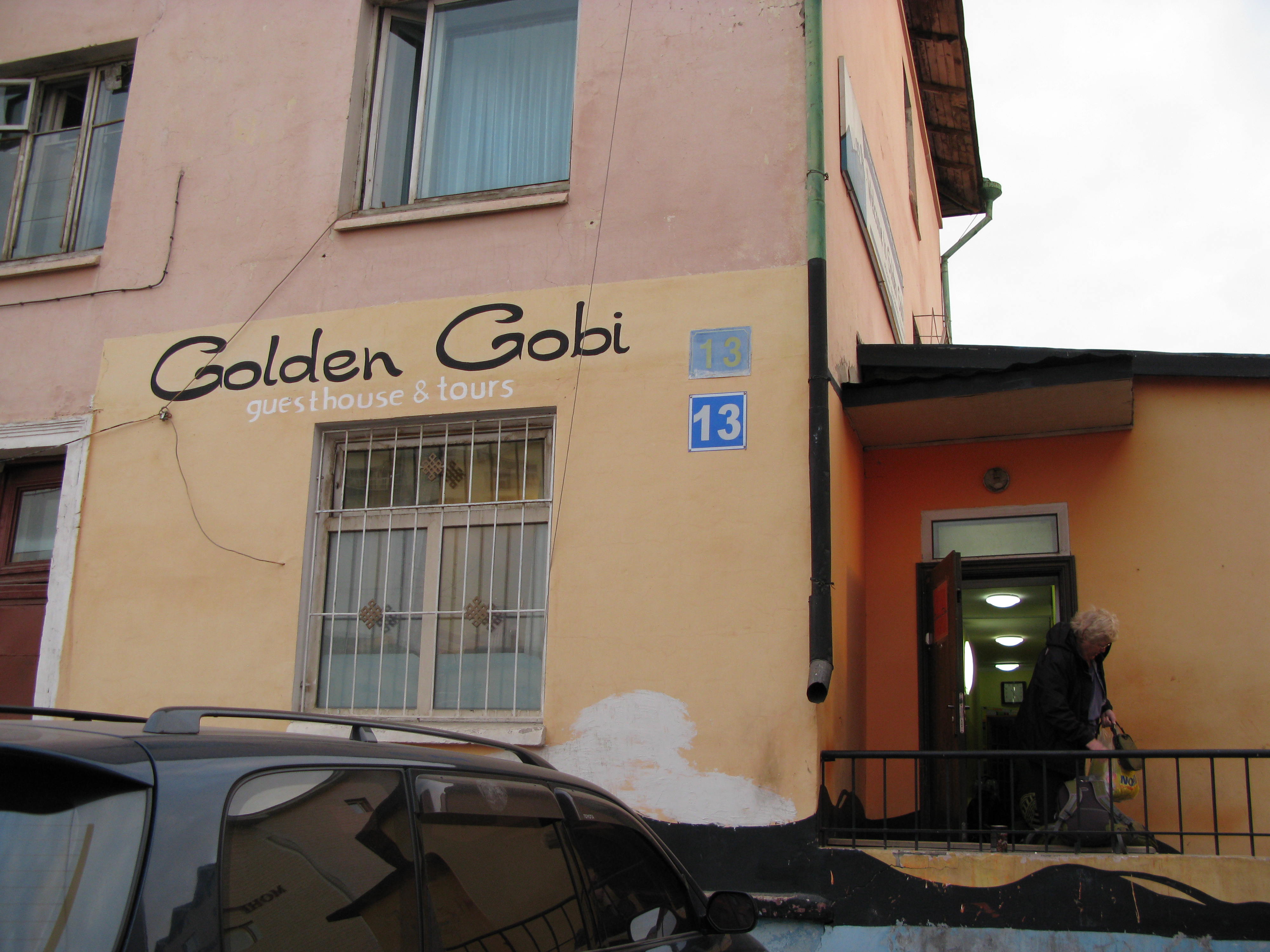
After the stifling heat of sitting at border stations, we now had paralysing cold when we tried to sleep. I ended up getting fully dressed and making coffee in the early hours. The samovar was still bubbling away! We finally arrived in Ulaan Baator at about 6am, were met by lovely hostel owners – the Golden Gobi hostel – and taken there, given breakfast, showers and a bed to relax on, before the tour which they’d arranged to a local monastery. They really were the best hosts! While I showered, behind a simple curtain at the foot of the stairs, with a shower missing its showerhead, one of the family who run the hostel asked if all was OK. I replied that there wasn’t a showerhead but I was doing fine with the hose, whereupon she asked if she could see…I replied I was showering! and she commented: ‘I’m a woman too,’ before walking staright in. What can you say!

So this is the fabled Ulaan Baator!
Land of Biggles’ adventures! Now I’m showing my age…for those that don’t know, Biggles was a pilot – I think in the first World War – who had adventures all over the globe. One book I remember reading was ‘Biggles in the Gobi Desert’ or something similar. It fired my imagination and I always thought the Gobi and Mongolia were places I’d never get to – so far off the beaten track as to be virtually impossible. But here I am!

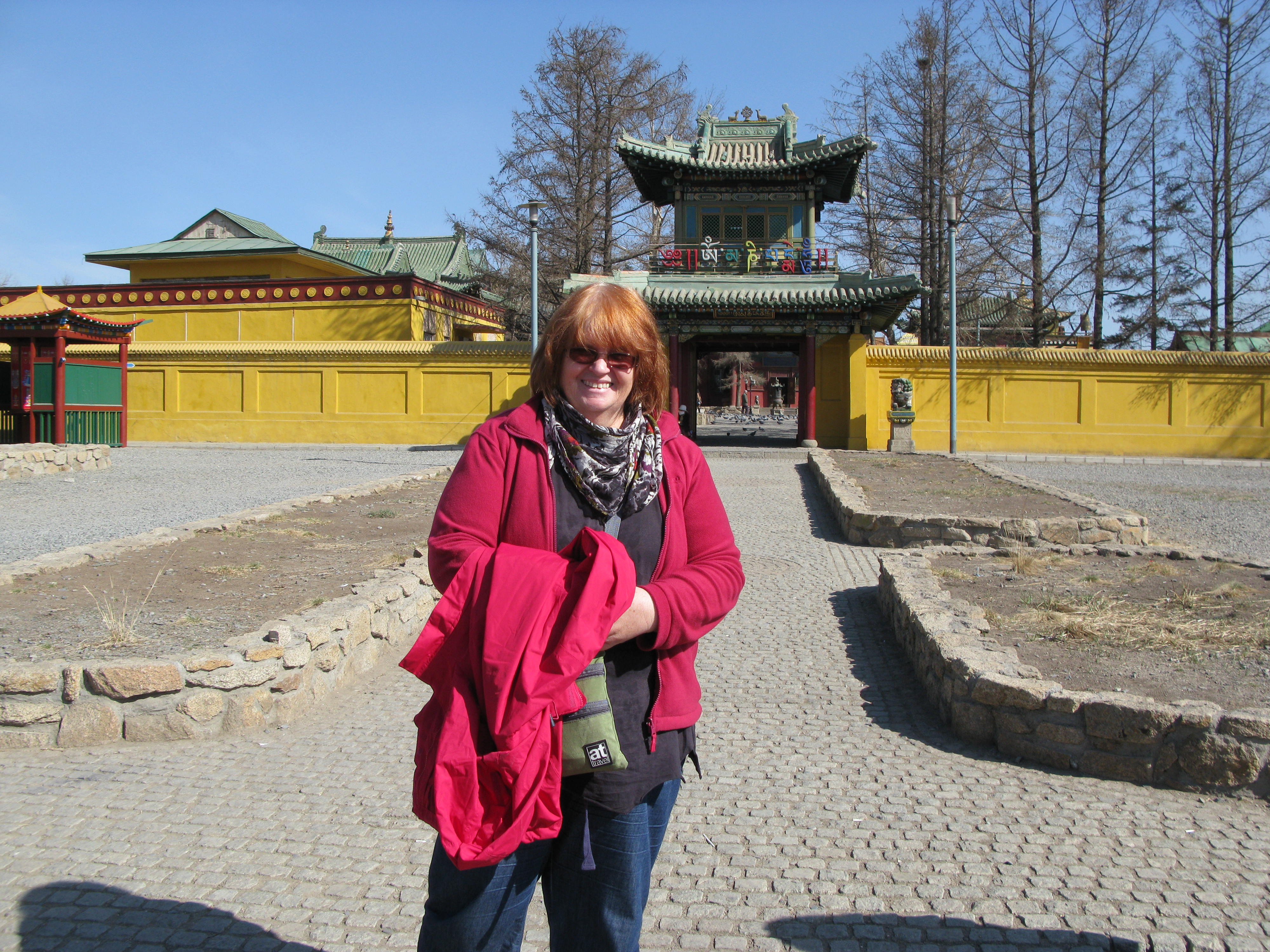
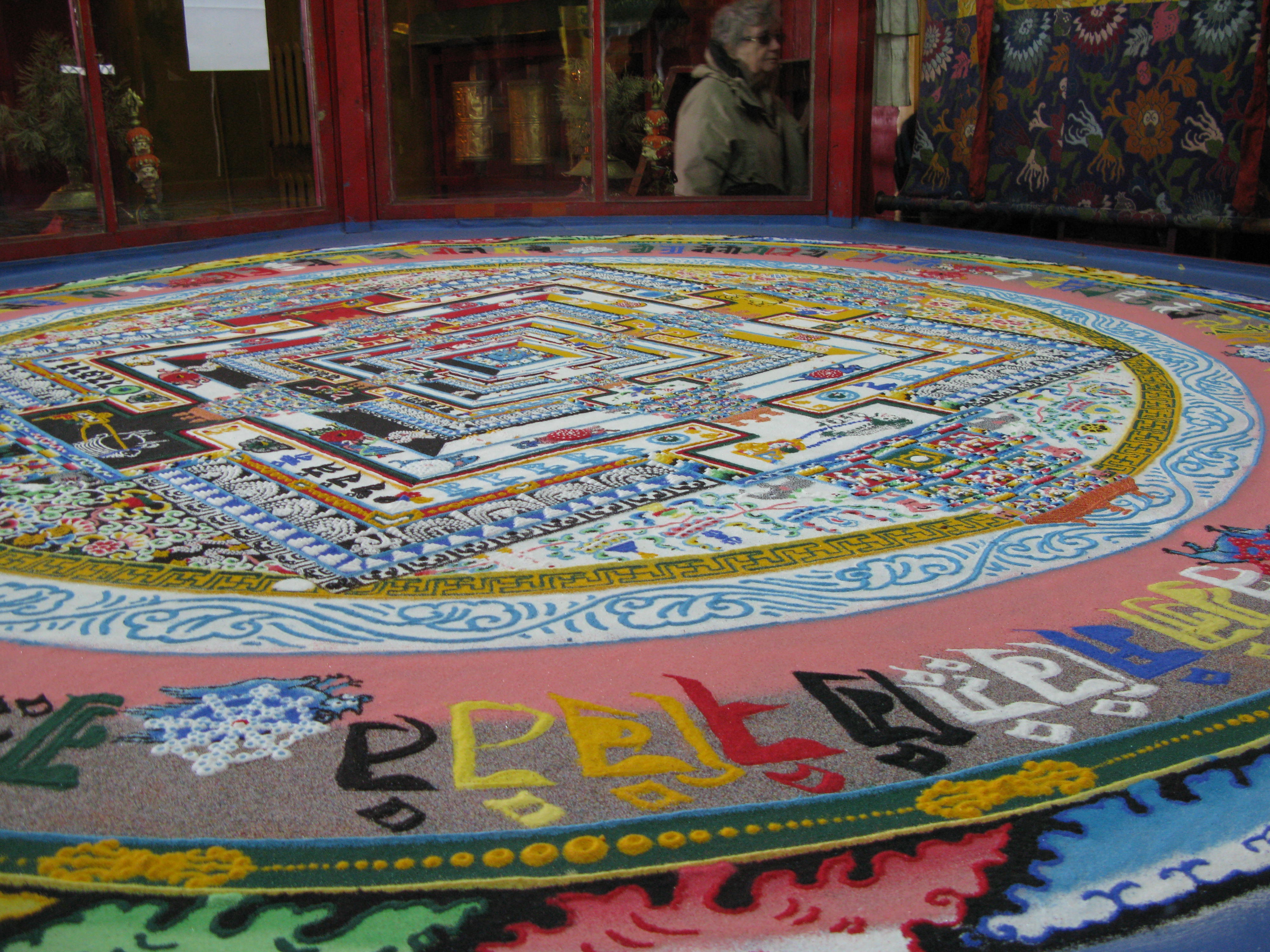
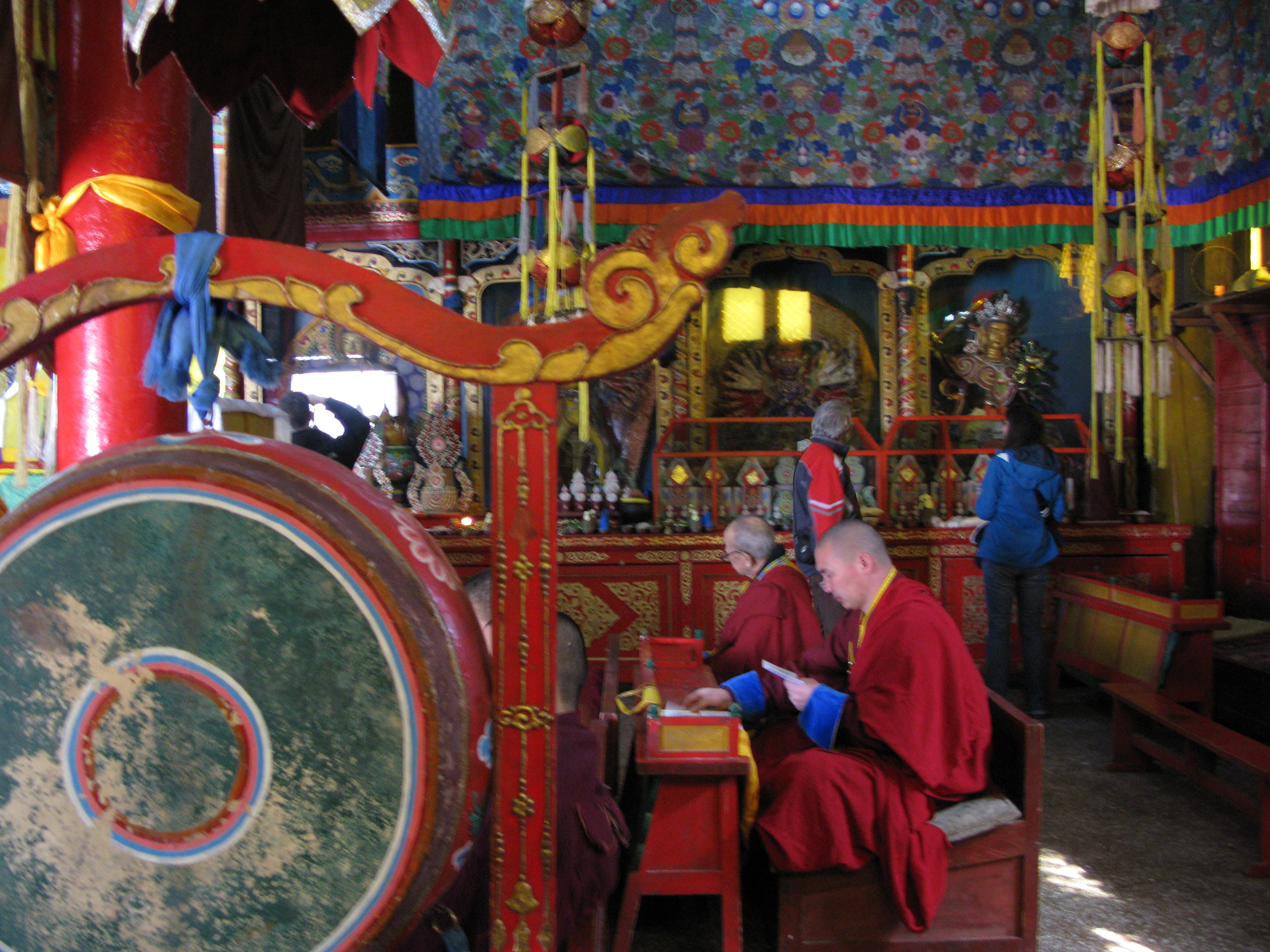
Our tour to the local monastery – a beautiful spot, with traditionally decorated buildings and temples, people worshipping, boys chanting in the temple, monks scurrying to and fro, pickpockets doing their business, children selling seed for the pigeons. We had a very good guide who answered all our questions and made sure we got the best out of the experience. We saw a magnificent golden Buddha and the best, most complex Mandala I have ever seen. I can see what sort of influence Buddhism has had on the Buryat people who moved north from Mongolia to Russia – mixing their faith with a helping of more pagan shamanism.

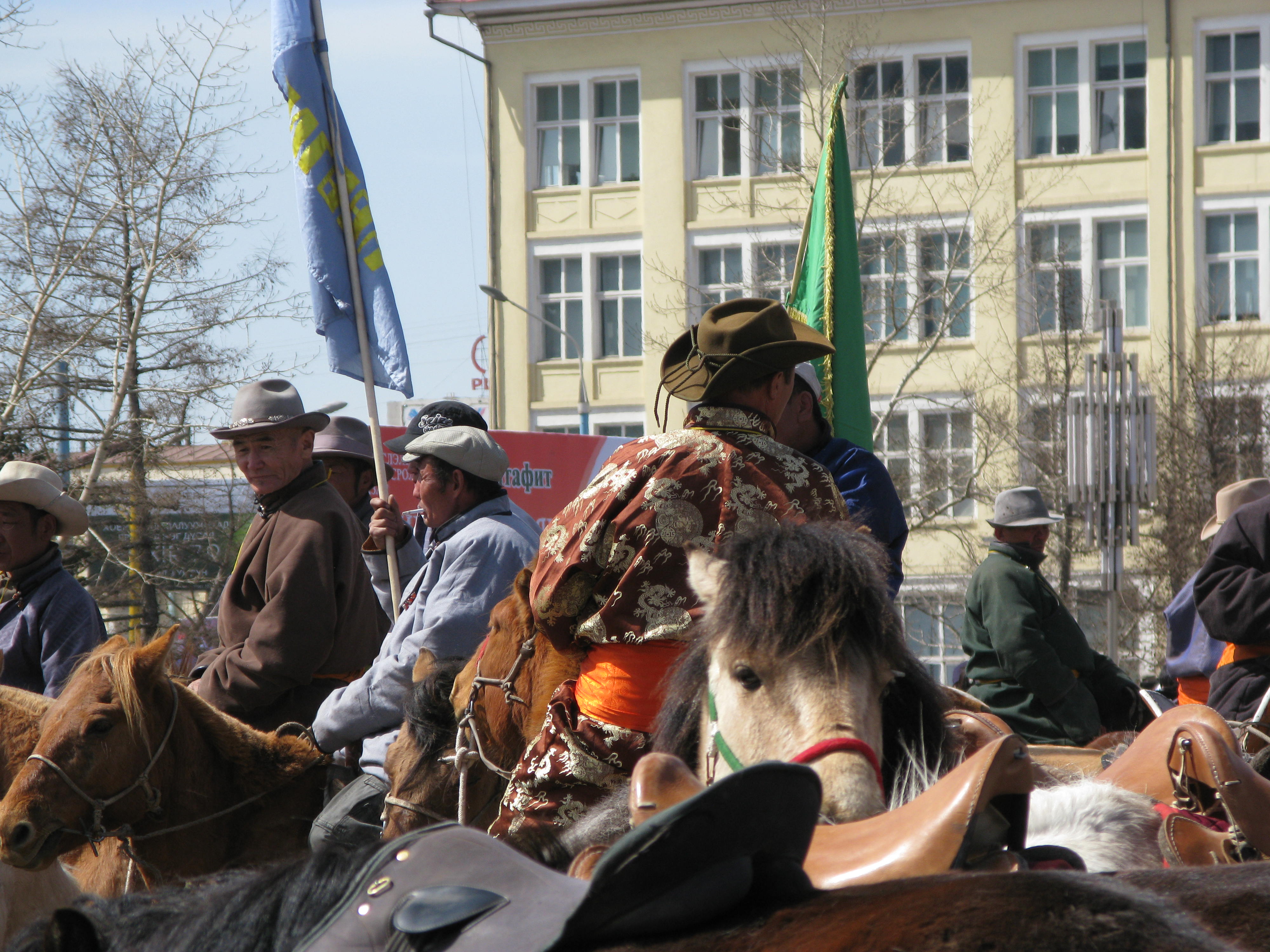
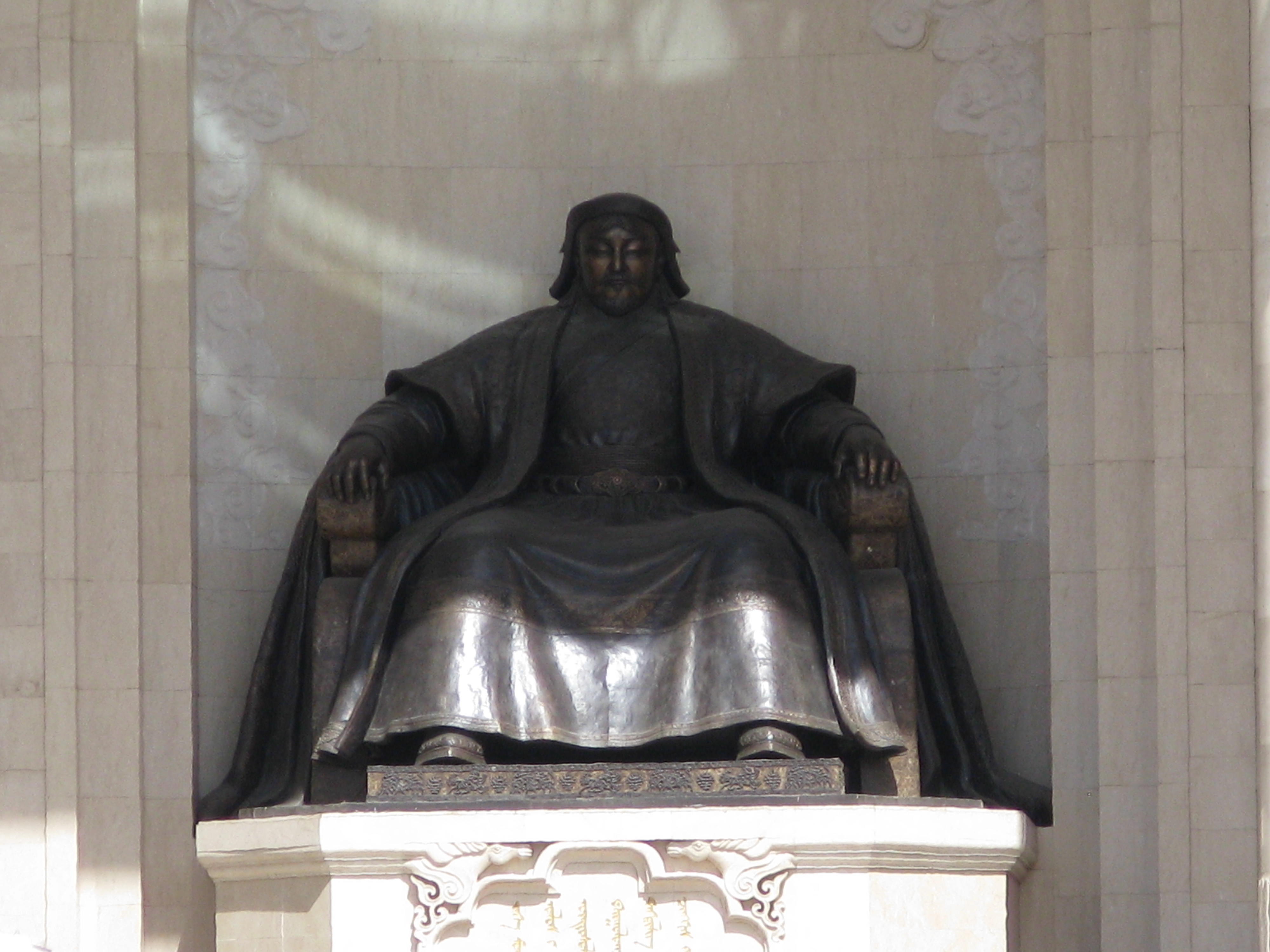
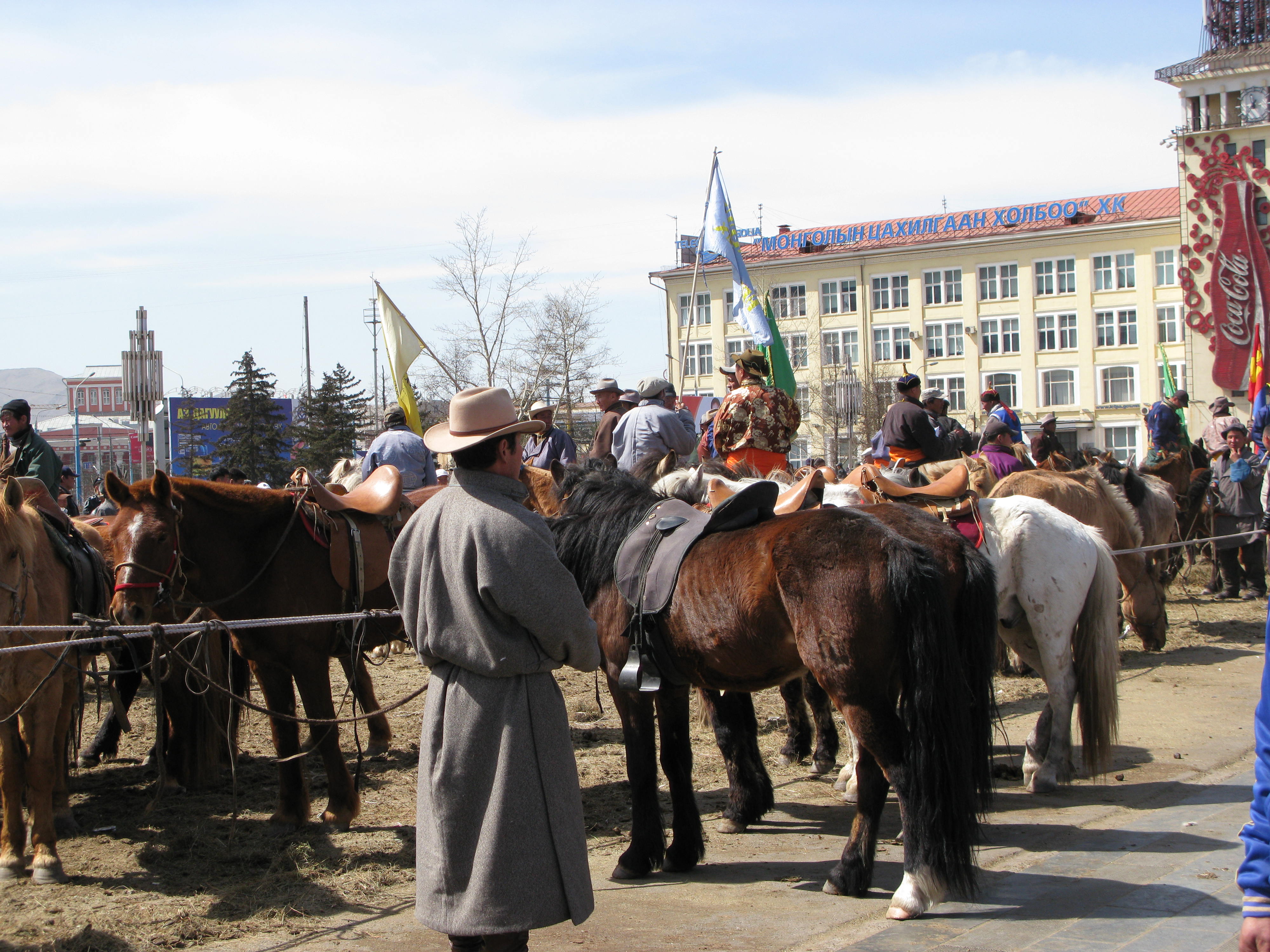
After leaving the monastery, we spent some time in Suhbaatar Square with its massive statue of Ghenghis Khan dominating the area. While we were there, we witnessed a peaceful demonstration of nomadic Mongolians, complete with their Gers and horses, raising awareness of the lack of government support given to the nomadic people who provide the entire population with all their meat and dairy products. Apart from banners and flags, they did not proclaim their case, remaining dignified and proud. They would stand around in small groups, talking earnestly; a few policemen stood at the perimeter, but also looked peacable and friendly.

The day ended with lunch in a nice restaurant, a bit of shopping in a tourist shop and then in the State Department store near the hostel, and another meal in the Green Olive. I’m amazed that I can get food in a country I was told was all mutton – but apparently they ship in all their vegetables from China or Russia. Nothing grows in the sandy, fine dust of Mongolia. Just grass and crocuses as we found out the next day at the Ger in Terelj National Park.

Lake Baikal and Listvyanka

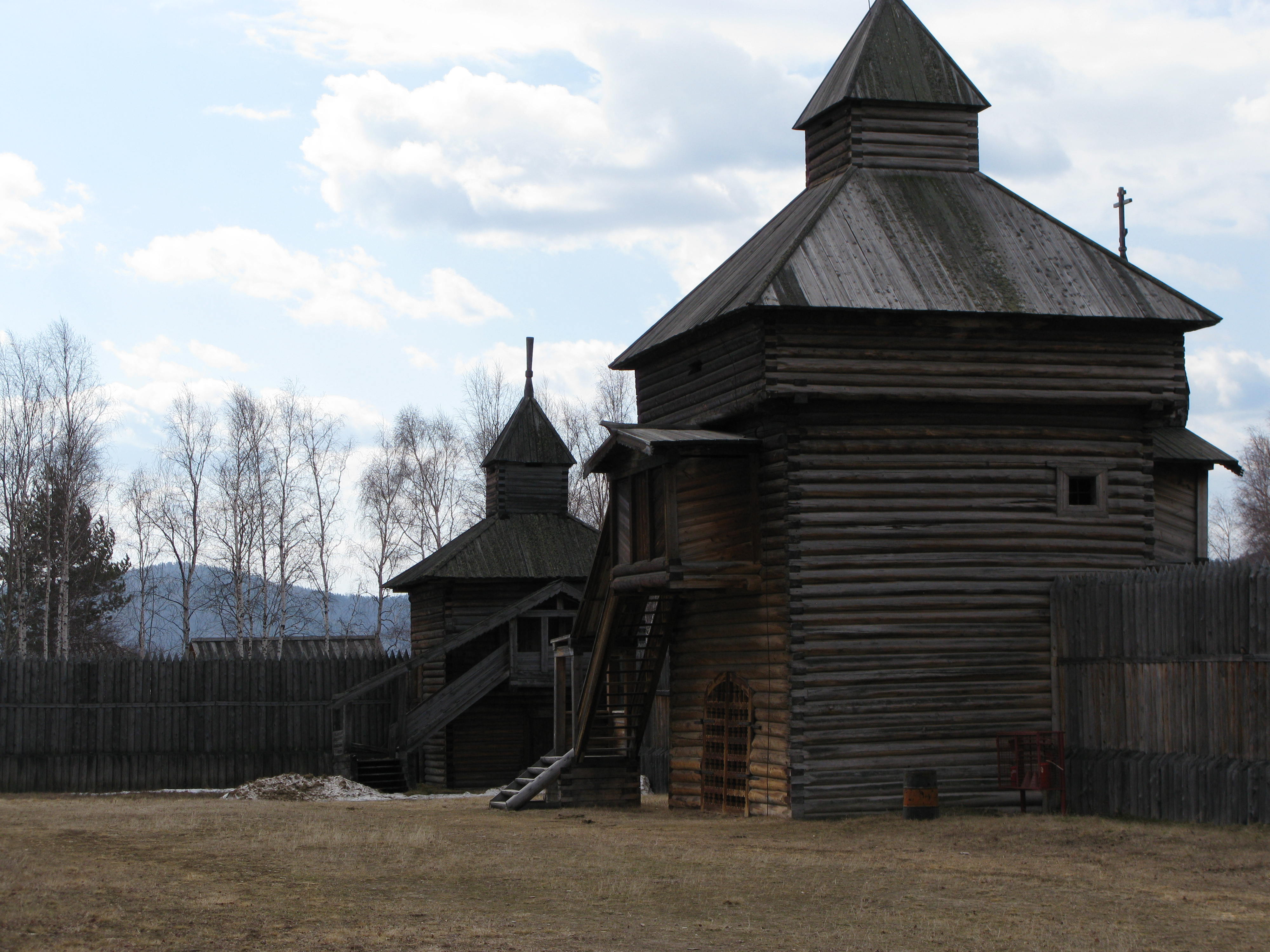
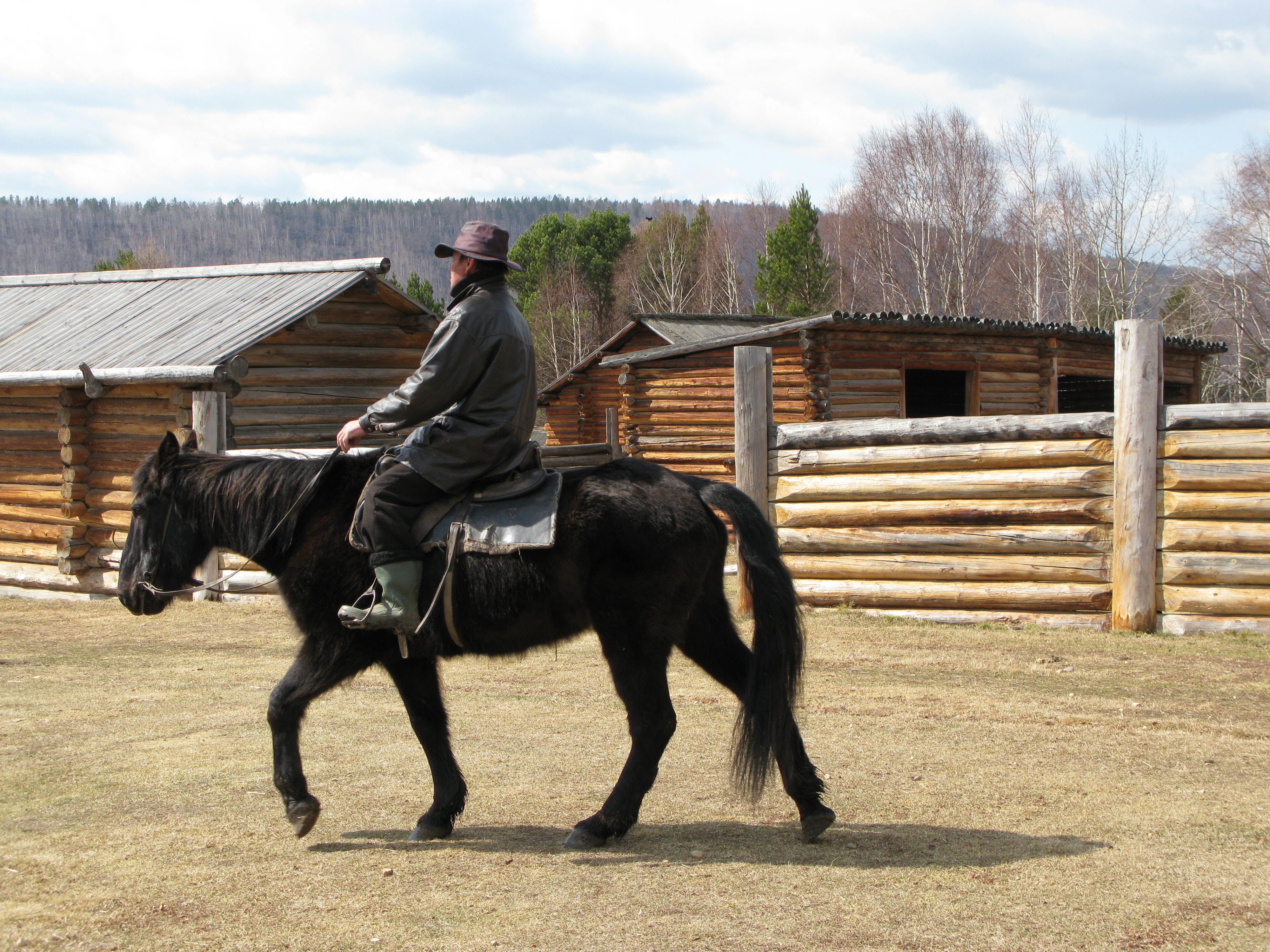
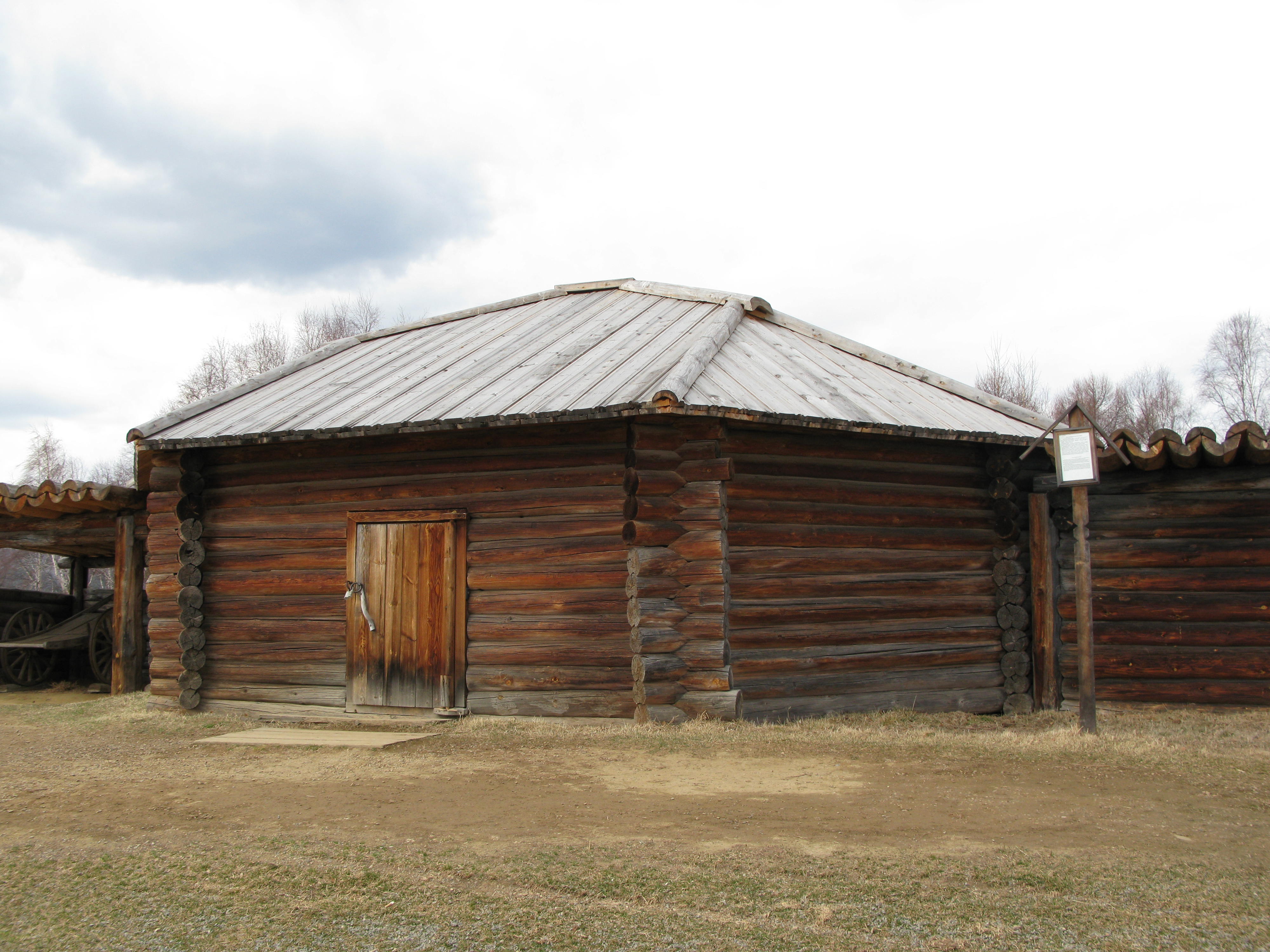
Kasia and I were up and off to Baikal by 11 o’clock after walking round to the cash point. Alena picked up her brother-in-law, Alexander, on the outskirts of Irkutsk and after about 40 minutes we reached the museum of Russian life and architecture, set on the bank of the River Argana after it flows out of Lake Baikal. The outdoor museum houses many different traditional wooden structures which have been transported to this site from various places in the region. There are fortifications, wooden homesteads, churches and a Baryat Yurta amongst many others. And a lone horseman riding by!

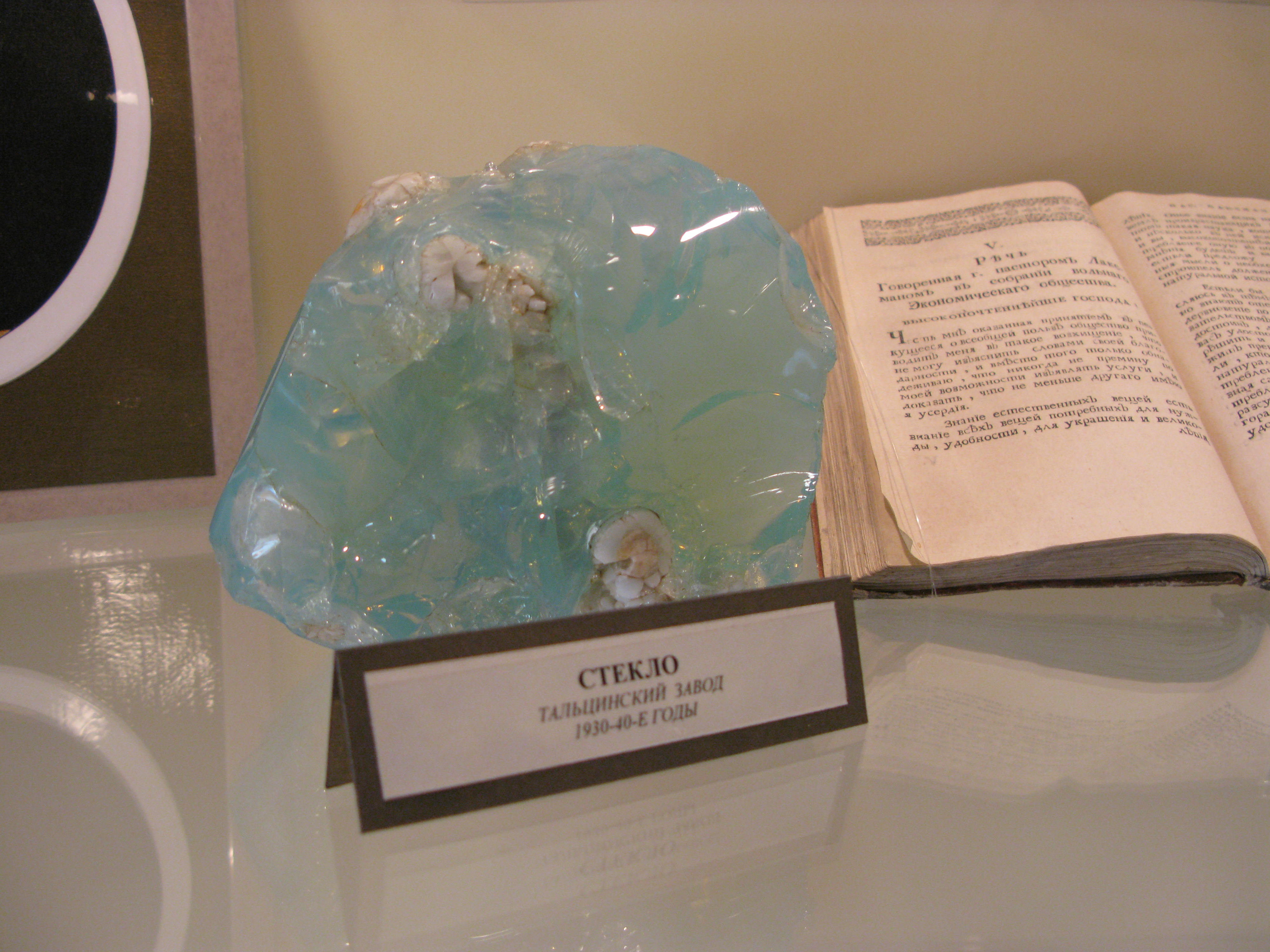
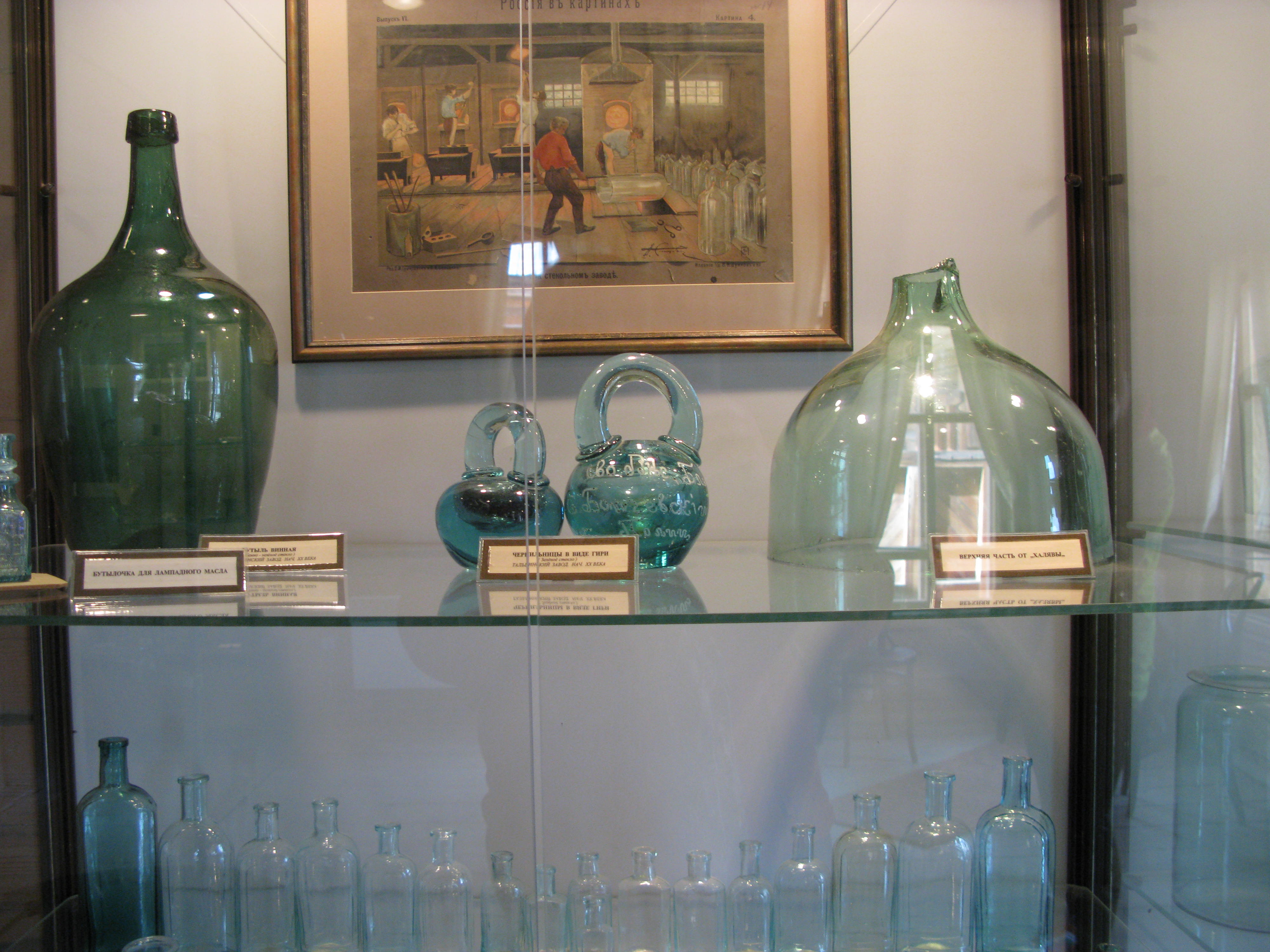
What I found most interesting is that all this has been assembled on the site of an old glassworks – and the first thing we saw was a museum dedicated to this! I was taken by a large lump of beautiful blue glass which had been found in the ground – it just shone! And then the history of the glassworks and cabinets full of pieces which had been either produced there recently (until it went bankrupt and closed) or had been found in the ground, some dating from a couple of hundred years ago.

Baryat Yurta
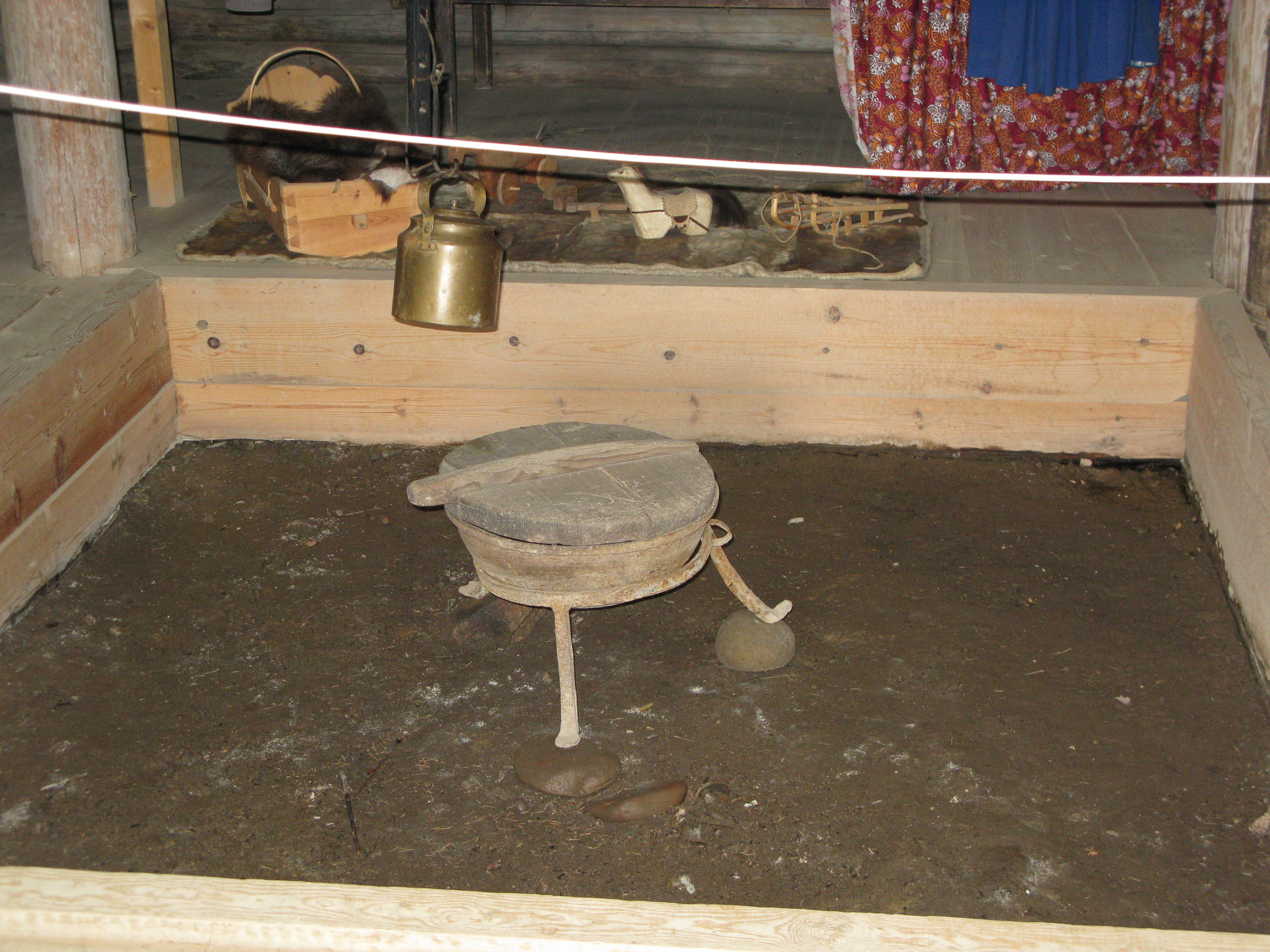
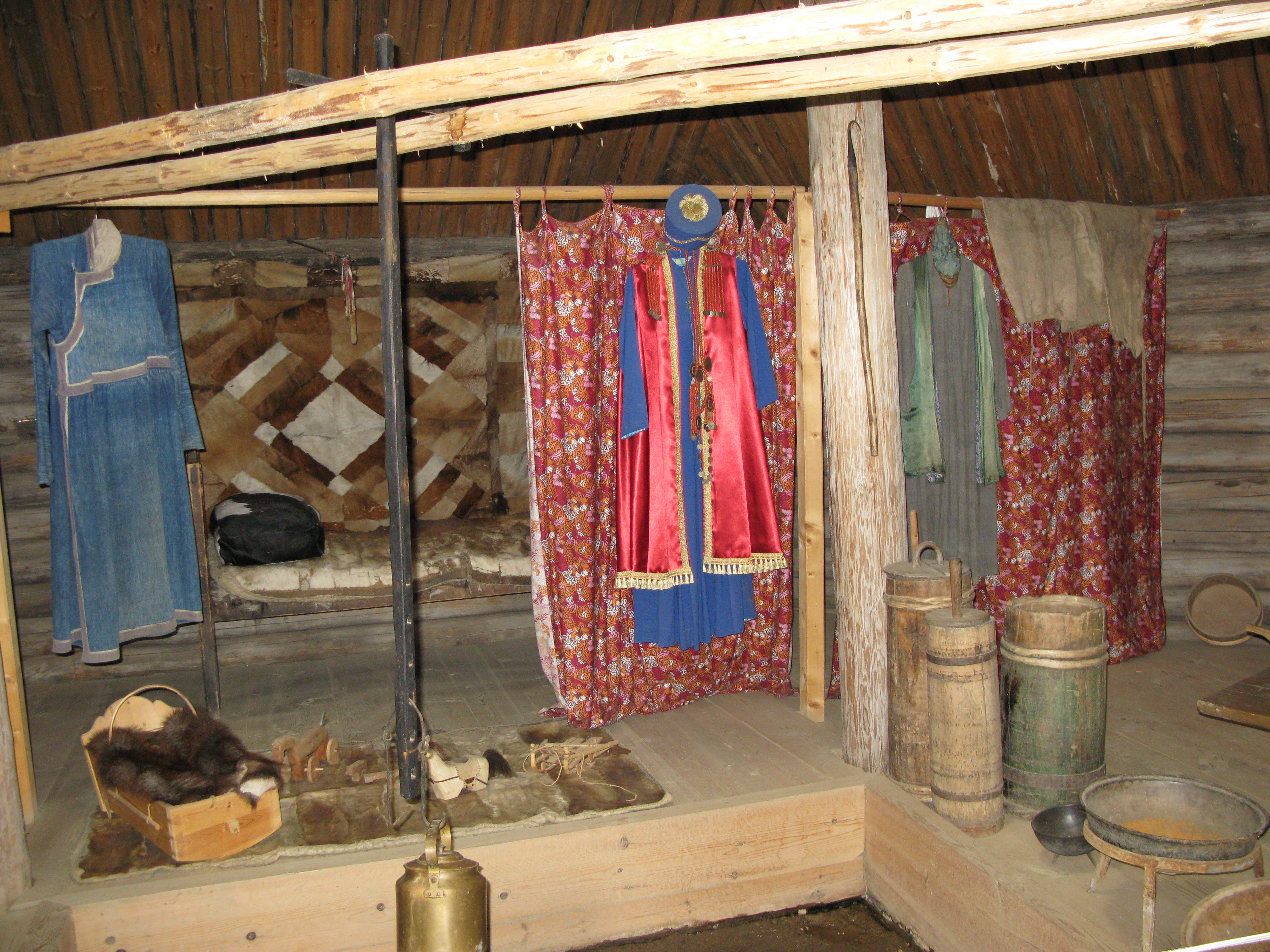
One of the buildings we saw was the Buryat Yurta, and Alexander, whose grandmother was Buryat, explained the layout: the yurta, (or yurt or ger) is round to reflect the skies above us, according to shaman direction. Inside, in the centre is a dugout square pit, with a fire in the centre. This is the spiritual and holy heart of the home. The pit is large enough for people to sit on the edge, perhaps 3-4 on each side. At each corner there is a large pole which supports the structure (in some tented yurtas these are absent, but there in spirit) and these four poles divide the inside space into organised areas. The first pole on the left as you enter is the hunting pole, and all items connected with hunting, fishing are kept here. The second pole denotes the men’s area; the third denotes everything to do with dairy – milking, churns etc. and the final fourth pole, to the right of the entrance, is the women’s area, also the cooking area. Between poles 2 and 3 is the sleeping area, with females on the right, towards the female area, and males on the left, by the men’s area. A wonderful practical arrangement.

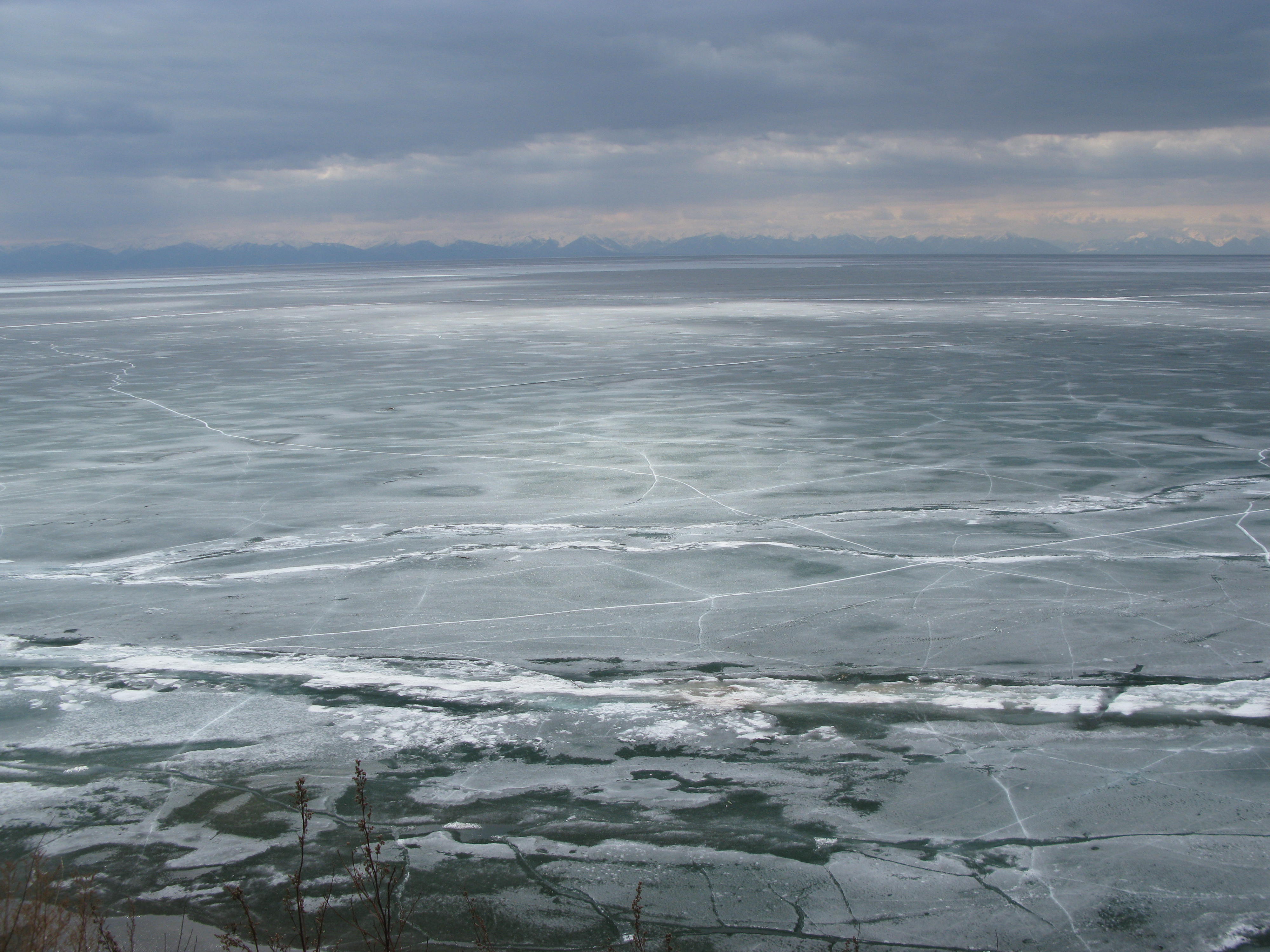
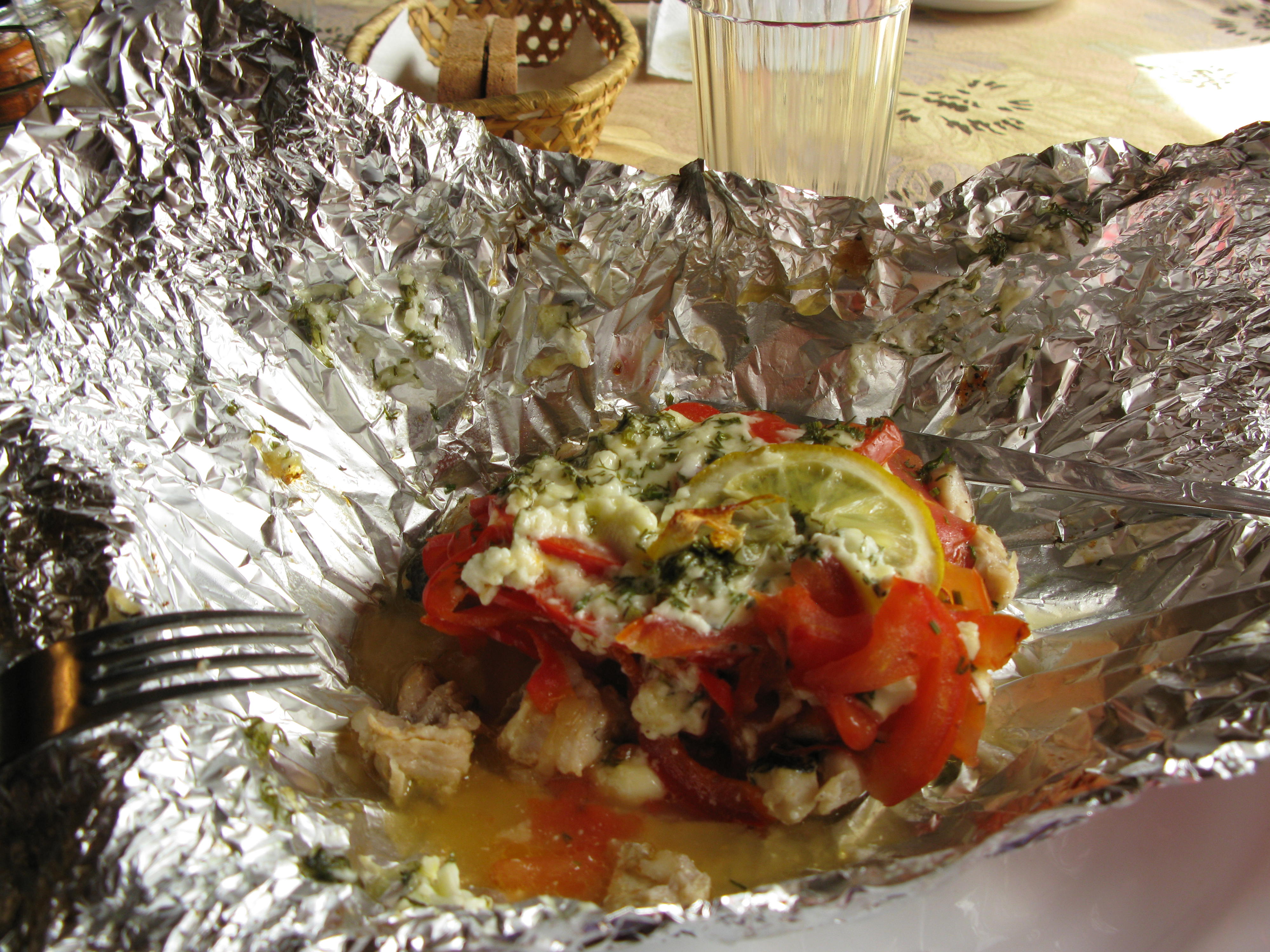
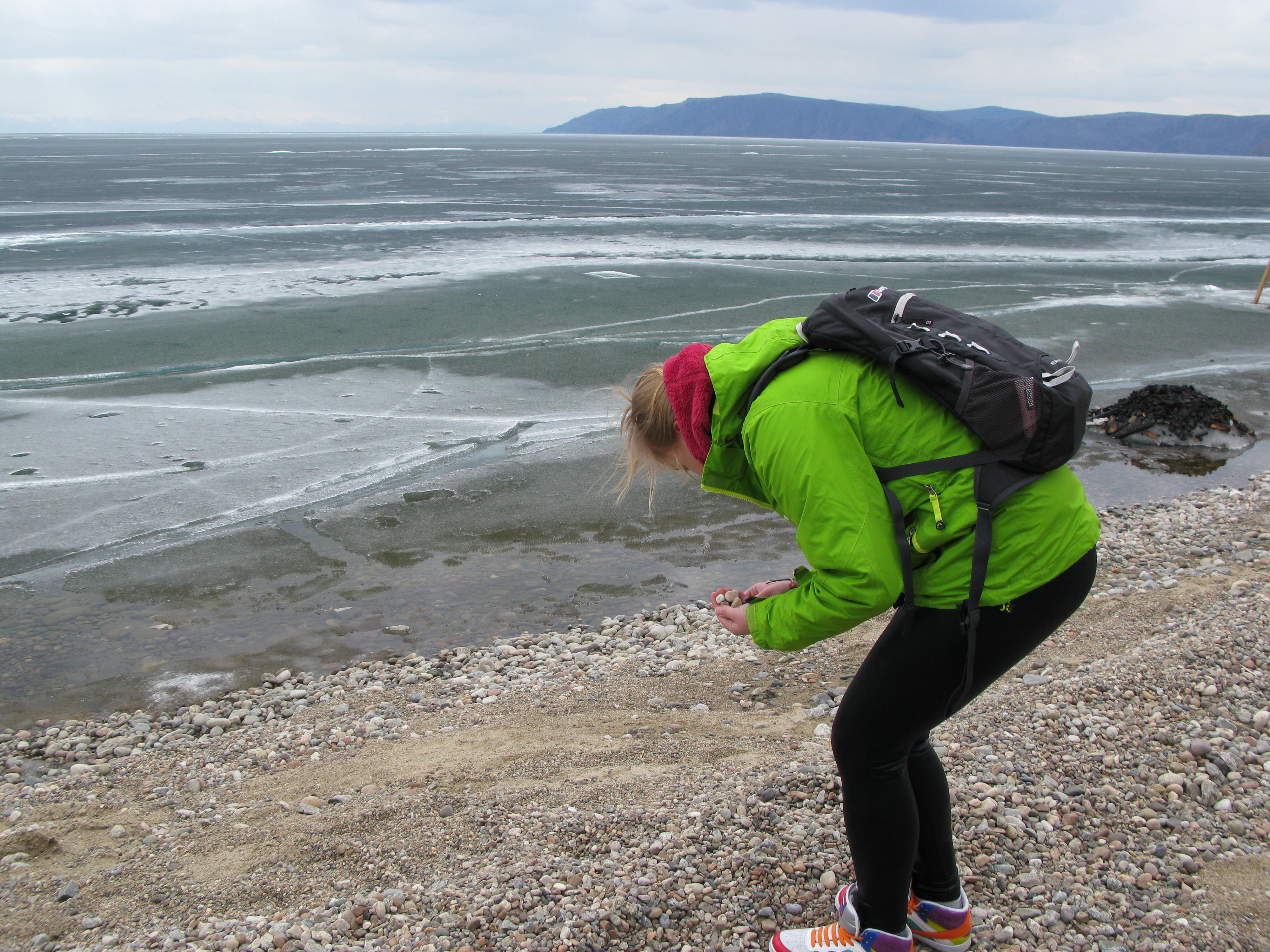
Frozen Lake BaikalOn our way to Listvyanka, there suddenly came upon us the most amazing view as we came to the point where the river leaves the lake. There ahead of us lay frozen Lake Baikal and on the far side, an impenetrable range of snow-covered mountains. Until you see it, you cannot imagine the scale of this lake – almost 400 miles long and 40 miles at the broadest point. After the Caspian Sea, it is the largest lake in the world. It’s also the deepest and contains one-fifth of the world’s fresh water. And to see the entire lake frozen as far as the eye could see….! Just a little bit of thaw at the edge of the shore… which meant you couldn’t step on to it safely at that point. Talking of shore, after a great meal of local fish, covered in onion, thinly sliced red paprika and tomato with sour cream and dill and lemon, all steamed in foil..Mmmm, I went on to the beach and found a bit of seaglass… then another. Then I was joined by Kasia who helped to find more. Later in the day, after showing Alena my spoils, she went off and came back with pocketfuls! So I now have enough for lots of jewellery and have passed details of my website on to my two glass collectors! Another plug: objaydequirk.com!

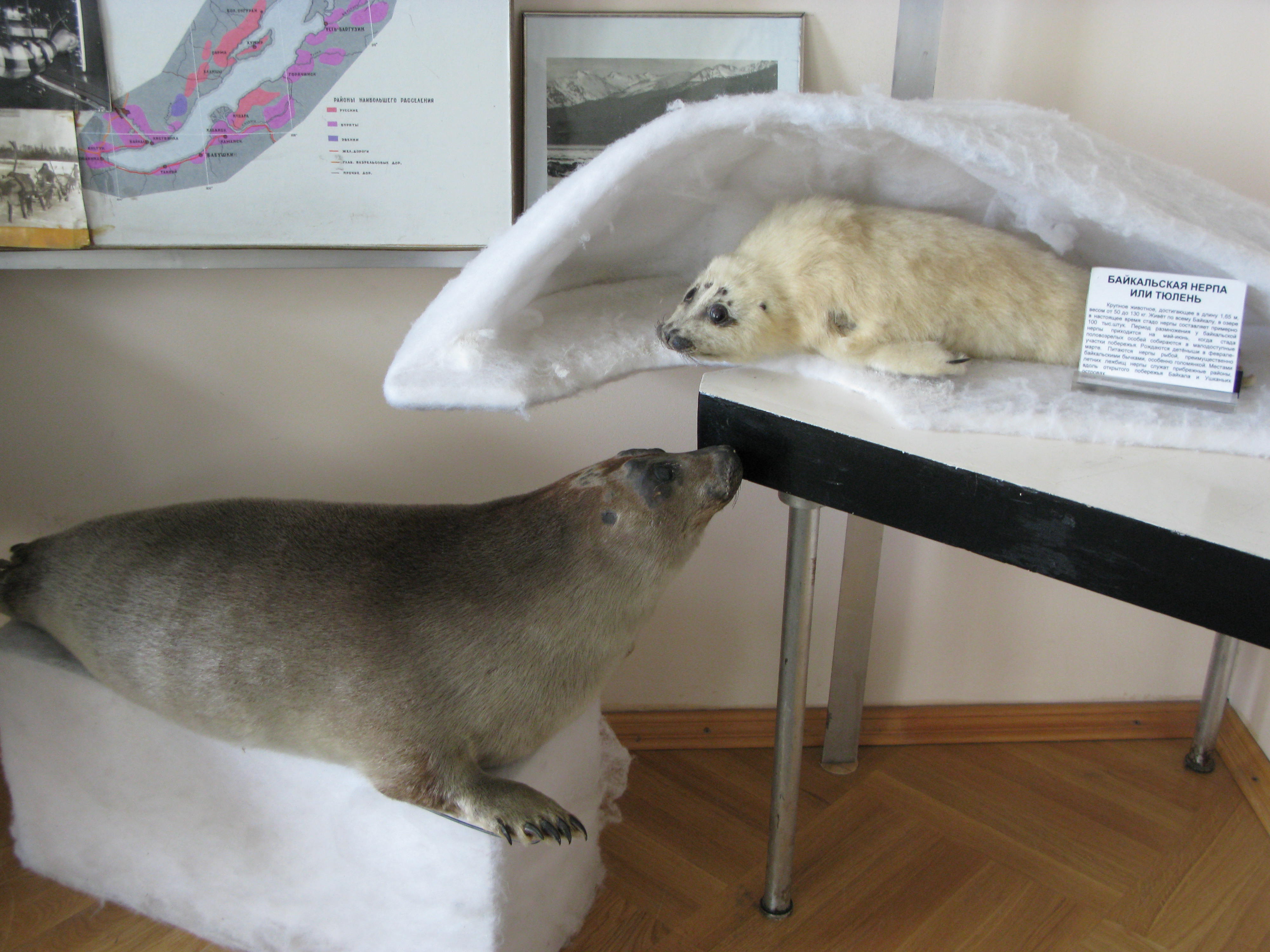
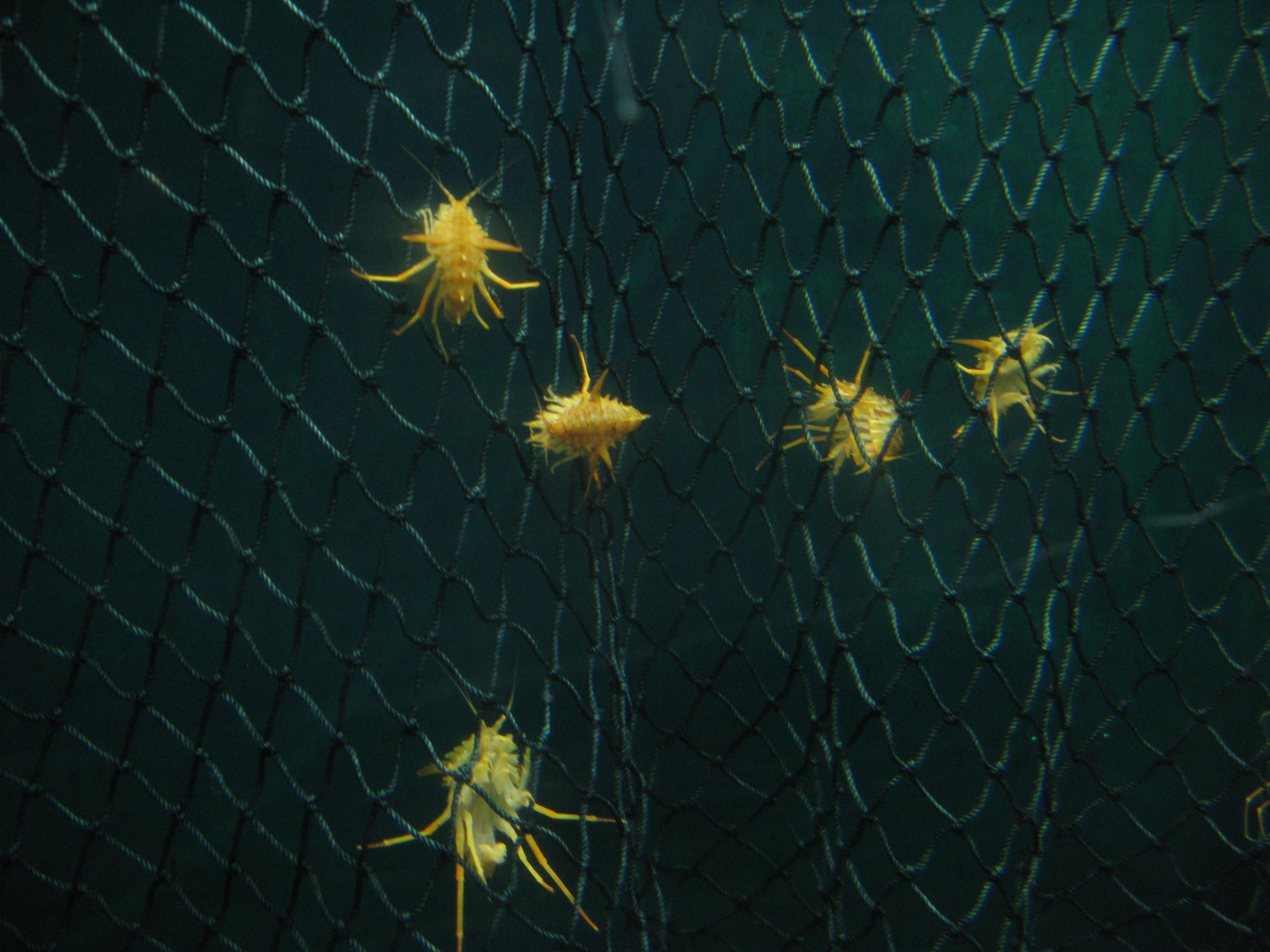
So what else did we do at the lake? We went to a great little market – selling lots of lovely jewellery made of local polished stone amongst other things. And to the Biological Research Institute (not sure of the name) where we saw lots of fascinating finds, lots of local fish – alive and in formaldehyde – and learnt about the various research projects carried out on the lake over the last hundred or so years. There are freshwater seals in Lake Baikal – whose ancestors must have made the long journey from the arctic circle, down two rivers, to the lake. We were also taken to several lookout points and shown various aspects of the lake and surrounding countryside. Olkhon Island is one of the special shamanic sites at the lake, but having said that, there is evidence of shamanic/Buryat influence all around. The southern and eastern parts of land adjoining the lake form the Buryat Republic, and it appears that though they were hard done by during the communist regime, they have retained their identity throughout. It seems the farther from Moscow, the more independent people have been able to remain. At a cost of course, but they have not lost their culture. And shamanism is now openly practised once again.

A great day out. We set off for Irkutsk to find the rest of the group already there and getting ready for the next stage of the train journey: Irkutsk to Ulaan Baator.

Irkutsk – what a delight!

We arrived in Irkutsk at 09.50 and managed to scramble off with all our luggage – many thanks to Ross who carried my large bag. By this time I was feeling pretty ill, for two nights I’d been unable to sleep lying down due to breathing difficulties but had managed a fairly good last night on the train by putting my pillow on the table and sleeping hunched over it. Time for a doctor.

There were two minibuses waiting to transport us to our hostels – ours (women) is over the river near the city centre. Two dorms – one with four bunks and one with seven. And a private double room. Alena runs the hostel and is married to our guide, Leonid, who makes all the arrangements this end for Ozbus. Leonid explained that being a Saturday it would not be easy to find a doctor. An ambulance would come if I had a fever – but I was rather worried that this would put me in the system and maybe cause complications, so when he asked if I wanted to talk to a pharmacist, I agreed. Having had erythromycin before I reckoned I should ask for that and Leonid researched it online, got the correct Russian name (which I can now read fluently..!) Then we went to a local pharmacy – and they asked for a prescription. However, when they heard my hoarse voice and saw my Ventolin, and realised I was asthmatic, the problem of no prescription disappeared. Except they didn’t have any in stock. So they phoned around and eventually a pharmacy outside Irkutsk was found with just two packets of it – and they were prepared to sell me one packet. An hour later, Leonid took me – and a few of the others who wanted the ride – to this place, I got the medication and took it right away. That night I slept right through, lying down!

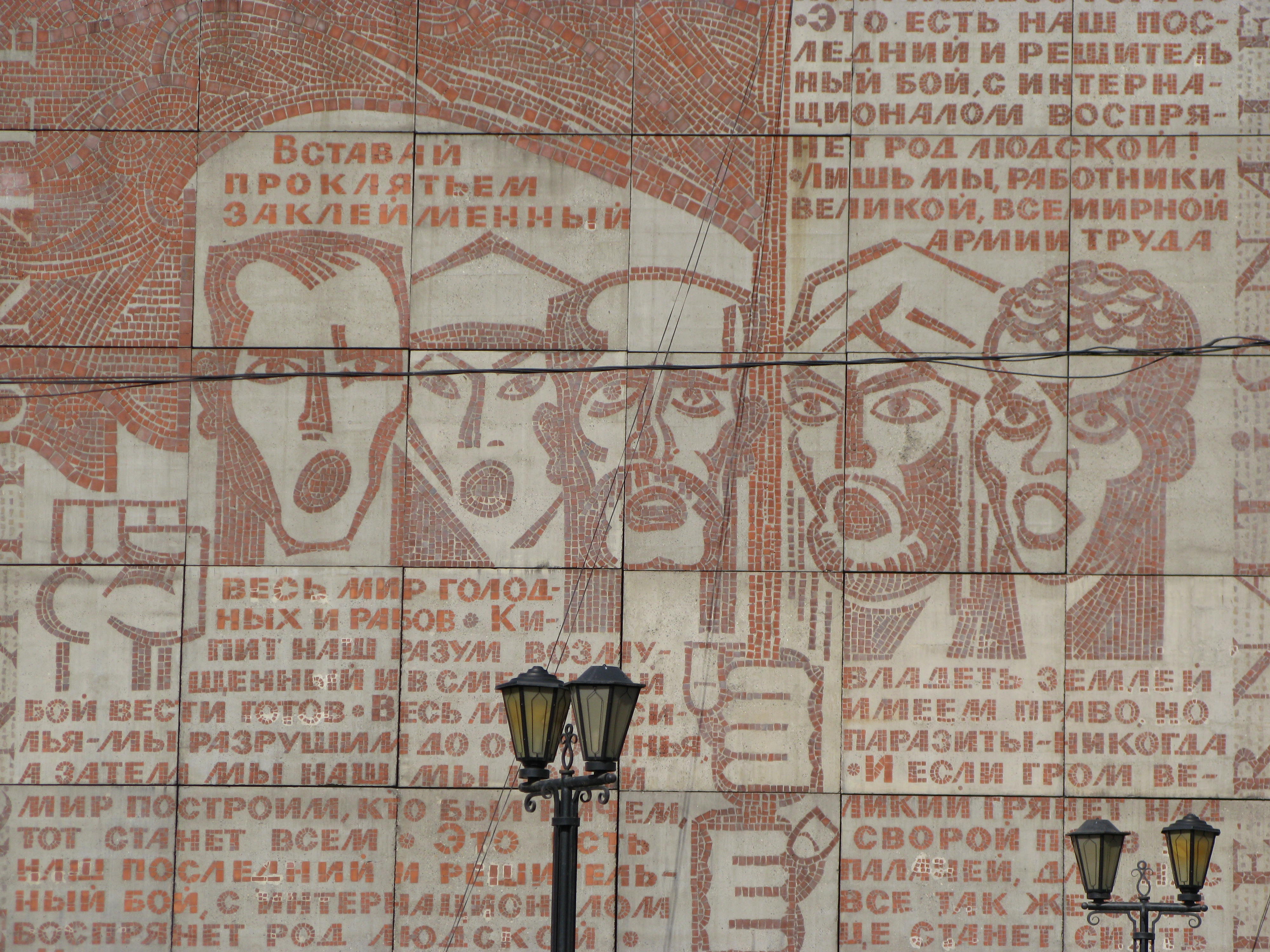
Leonid gave us a great tour of the city on the way back, taking us over the dam which holds a huge volume of water back from the city. Many, many rivers flow into Lake Baikal, but only one flows out: the river Angara, which flows west from the lake through Irkutsk before turning north and finally reaching the sea in the Arctic Circle. There are Arctic seals in Lake Baikal – migrated there from the sea. Amazing! When you look at the distance on a map it’s just incredible. Leonid gave us a history lesson on Buryat people, shamanism and lots more (his grandmother was Buryat). A great trip. Then he dropped us off in town where we hit the shops – and I finally bought a pair of flip-flops. Essential footwear in hostels. Those of you who got/get beautiful cards from me – they were bought here in Irkutsk. I haven’t sent them yet as I can’t find the post office and also don’t have envelopes…they’re sold separately! We walked around a bit, found a lovely cafe where we were surrounded by law students who wanted to practise English! One of the photos I took is a mural on a wall, depicting people from all races singing: they want work, not war.

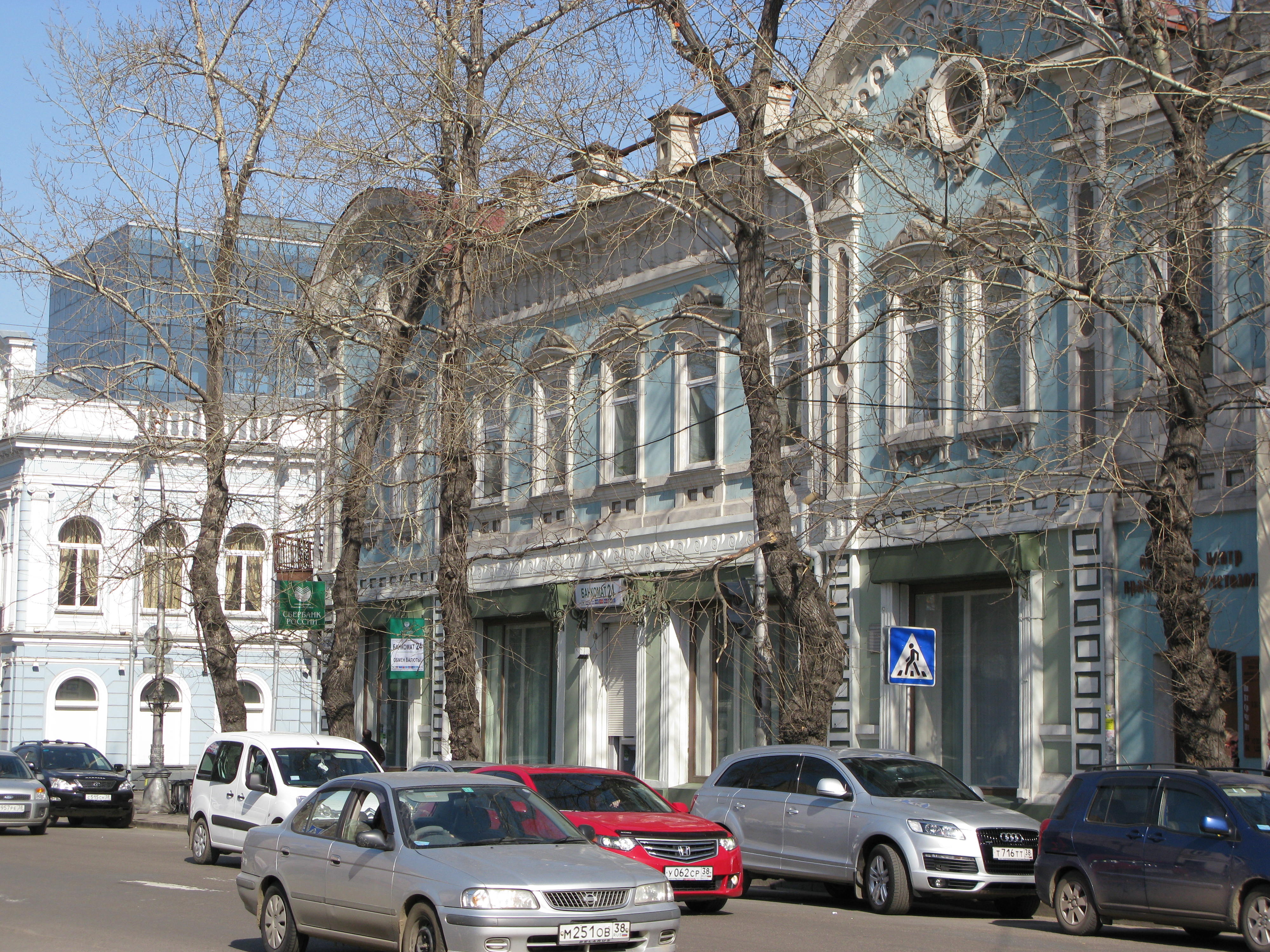
After looking a bit at the sights, and taking loads of photos (spot Spiderman!), we found an Italian restaurant and had an early evening meal before returning to the hostel. We walked back via the civic centre – beautiful buildings and a park which will be green in a couple of weeks apparently. At this point I was still planning to go with the group to Lake Baikal and Olkhon Island, but after hearing it was a 6-hour drive on some tarmacked and some unmade roads, then at least a half-hour walk over the ice before another drive on the other side… well, I was a bit unsure. Anyway I had a good night’s sleep and left the decision till the morning.

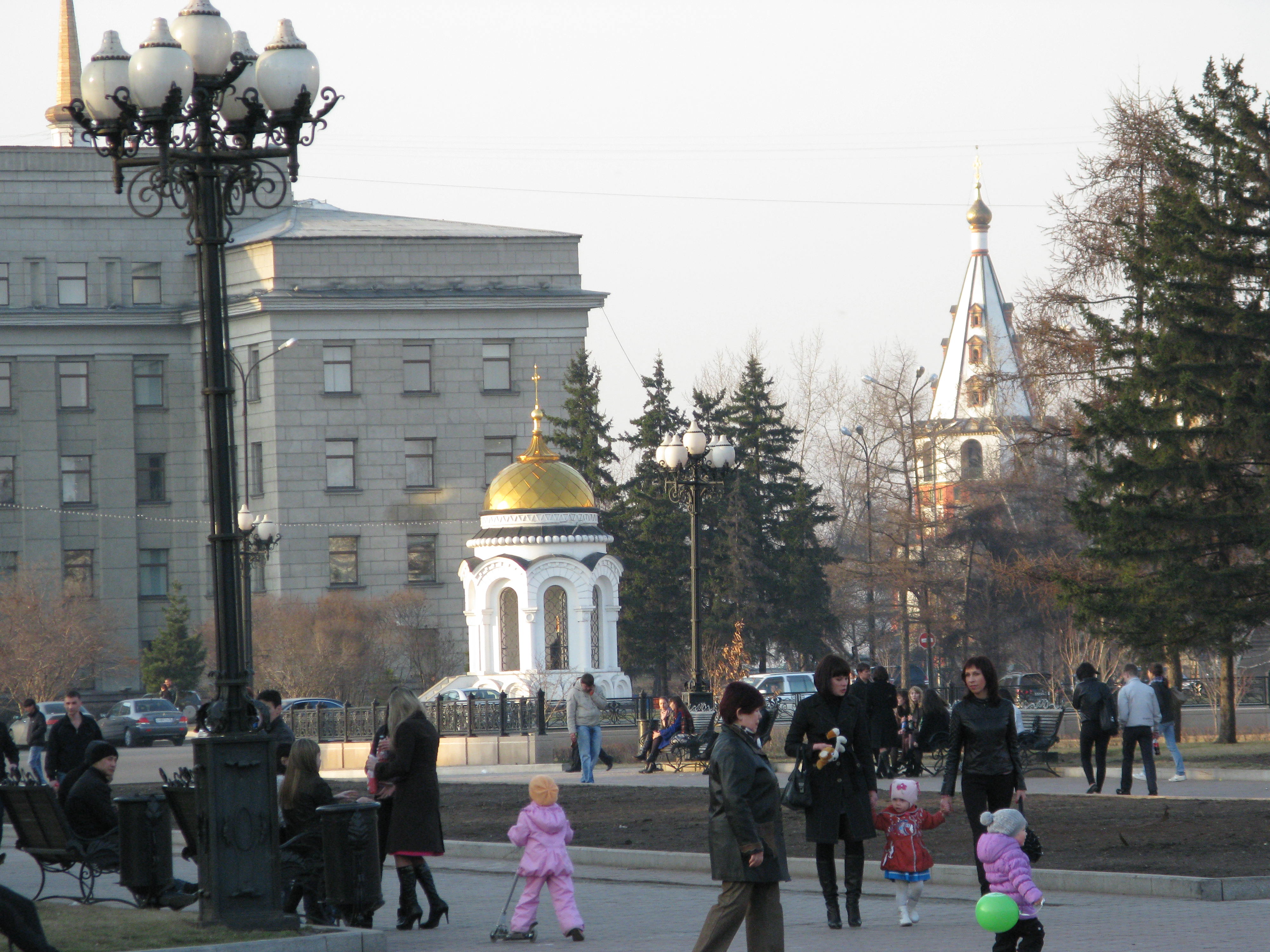
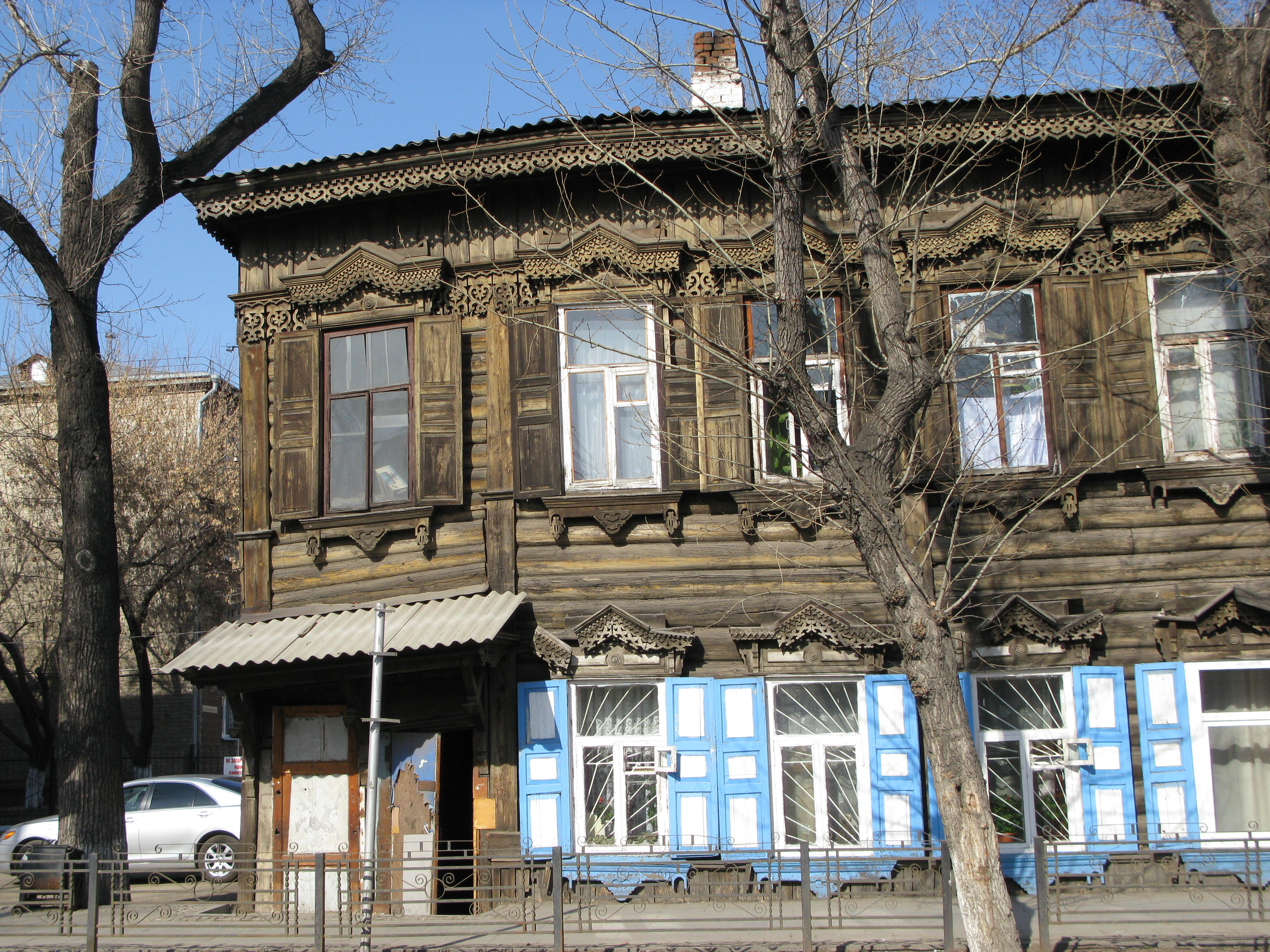
Next morning, I wavered about 6 times before finally deciding that while the antibiotics were working, I was too weak for the 3-day trip to the island. The half-hour walk over the ice to the island seemed bad enough, but with the thaw on, it was likely that would be unsafe for the return journey, so a longer ice-hike of 1.5 – 2 hours might have to be undertaken. Too risky for me in my feeble state – I mean, you can’t just stop for a rest on ice! So after negotiating to move into the private room and possibly have a day trip to Listvyanka on Lake Baikal, I decided to stay in Irkutsk. I took lots of photos of old wooden houses, typical in this area, while walking through Irkutsk yesterday. They are truly beautiful and I hope there’s a programme to save them from collapse and restore them. Listvyanka not only has houses like these, but a museum of Russian life in the area. Just what I want! So it looks like things have turned out really well. Having made the decision to stay, I then went to bed and slept till 3pm. Must have needed it. I had the hostel to myself – lovely, quiet, just a bit of space on this hectic journey! Even Alena had gone home, leaving me with her phone number in case I needed to contact her.

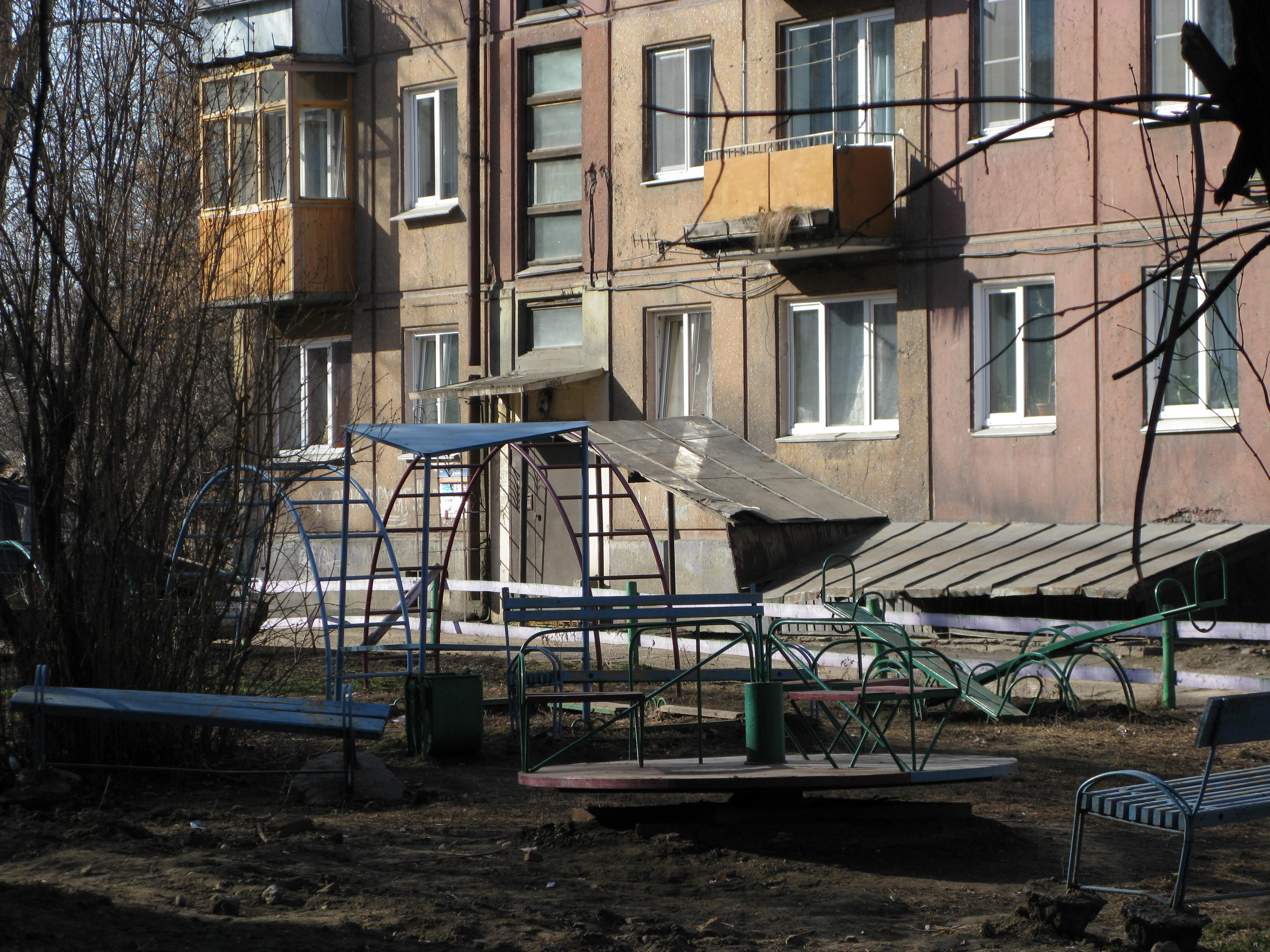
Today, Monday 18th April (already!) The hostel is still deserted – can’t believe I’m living alone in a house in Irkutsk, no one around, can’t speak the language. Just brilliant! I had a lazy morning, took a photo of the children’s playground outside the hostel and bumped into a girl with a backpack looking for the hostel, so I took her in, and contacted Alena to let her know. We then spent some time together – found a pizza place, did some shopping for the next train (toilet roll, fruit, 3 in 1 coffee) and then came back when the icy rain started. She’s decided to come to Listvyanka tomorrow, which is lovely. We’ll be back in time for me to meet up with the rest of the group before setting off on the train to Ulaan Baator at 21.50.

So now I’m going to eat the remains of my pizza which was kindly put into a doggy bag for me. Then bed. I’ve downloaded a book about Siberian shamanism onto my Kindle, so will read myself to sleep!

The Trans-Siberian train from Moscow to Irkutsk

It’s now Sunday April 17th (Happy birthday Maddy!) and a lot has happened in the last few days. So this will be a long post – or maybe I’ll make it two…

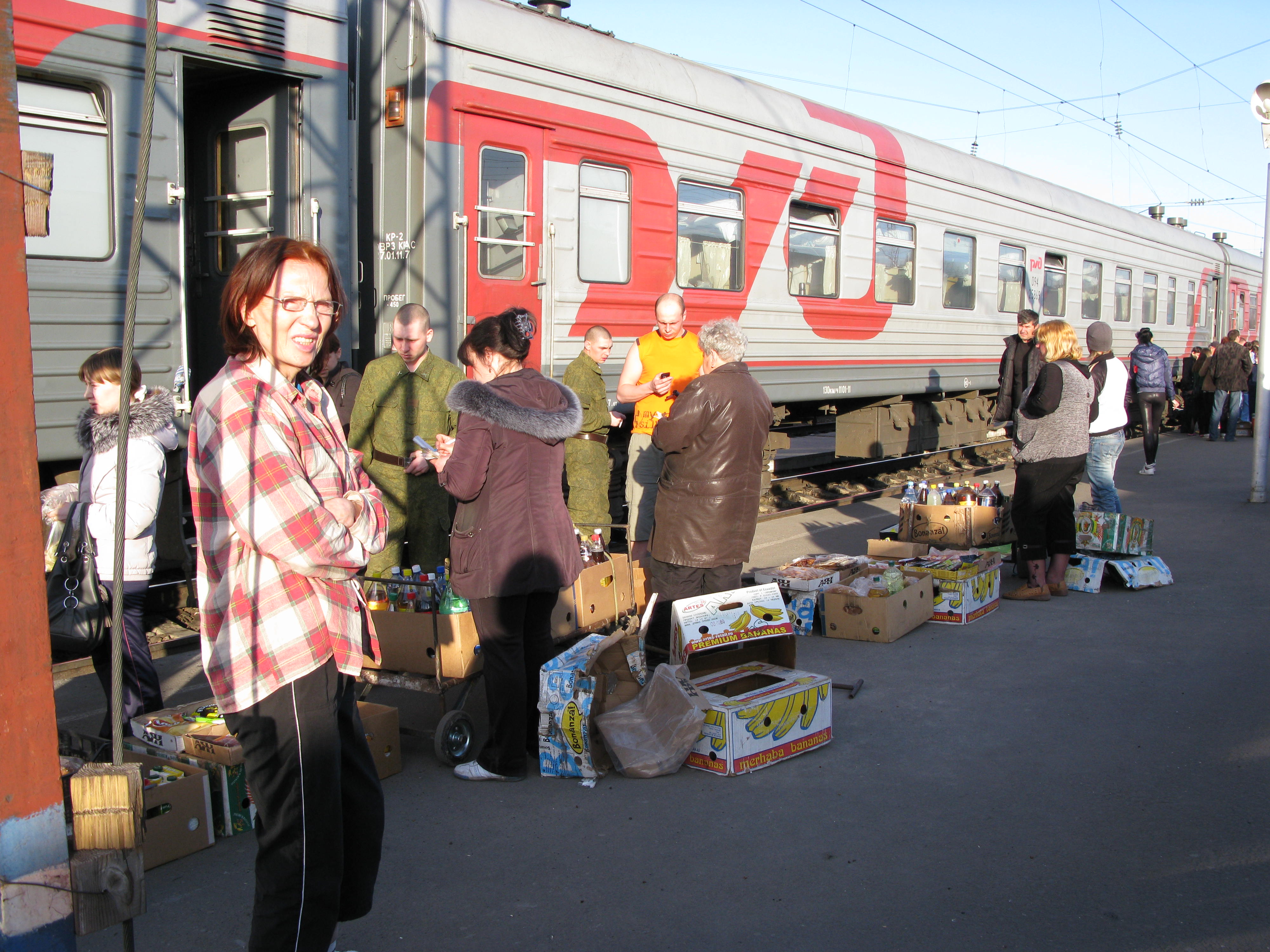
We got on the train a few days ago in Moscow, had 4 nights on board and were actually quite comfortable. Until the Provodnista (carriage attendant) and maybe other staff, decided to heat us up to about 29C. If you’ve ever been on a train with windows hermetically sealed with expanded foam, in groups of four in a compartment (luggage under the bottom seats/bunks and two more bunks suspended above, all this heated to 29C – but considerably more if you’re in a top bunk – then you understand exactly what our conditions were for 4 days. The train stops at intervals, sometimes for 2 minutes, sometimes for 25 or occasionally longer. At the longer stops the provodnista would open the doors, stand outside and we’d file past to freedom and cool air. And ice-creams. The platforms at the longer stops would fill with local men and women selling vodka and other bottled drinks, home-made pasties, or rolls filled with potato or meat. Also dried fish, borsch, blini, fruit, and a variety of dried foods that you’d get on supermarket shelves. I don’t know what we’d have done without them – I bought rolls, fruit juice, apples and oranges – and of course ice-cream. Anything to cool the throat that was now a problem.

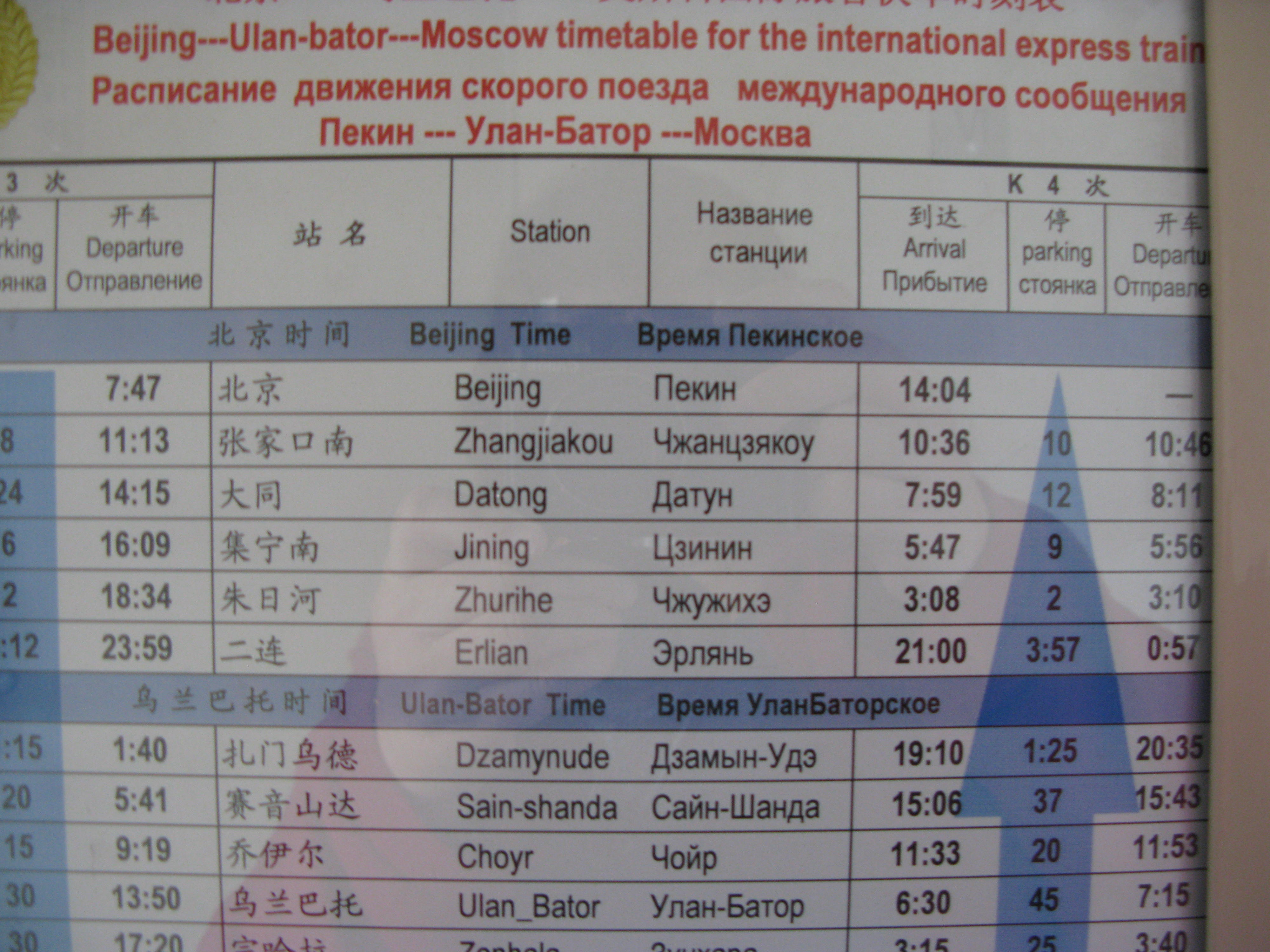
And the time differences – changing of time zones! Imagine a train travelling from Moscow to Beijing, travelling through a number of time zones, but the train times – and the time on every station platform clock on the way – are Moscow time! This would be just about manageable, but the dining car operates on local time. So by the time you get near Irkutsk, which is 5 hours ahead of Moscow, it could be e.g. 4am Moscow time but the sun is up and breakfast is on the table. Or not, depending on the mood of dining car staff. Worse still, if you have kept your watch to Moscow time so you can follow the timetable pinned to the wall and know which city you’re stopping at next, then at 8pm you won’t get dinner as the dining car is asleep and it’s 1am local time. The secret is to ask Tony which station we’re at and keep local time! The whole thing is obviously done solely to keep strangers out of the dining car.

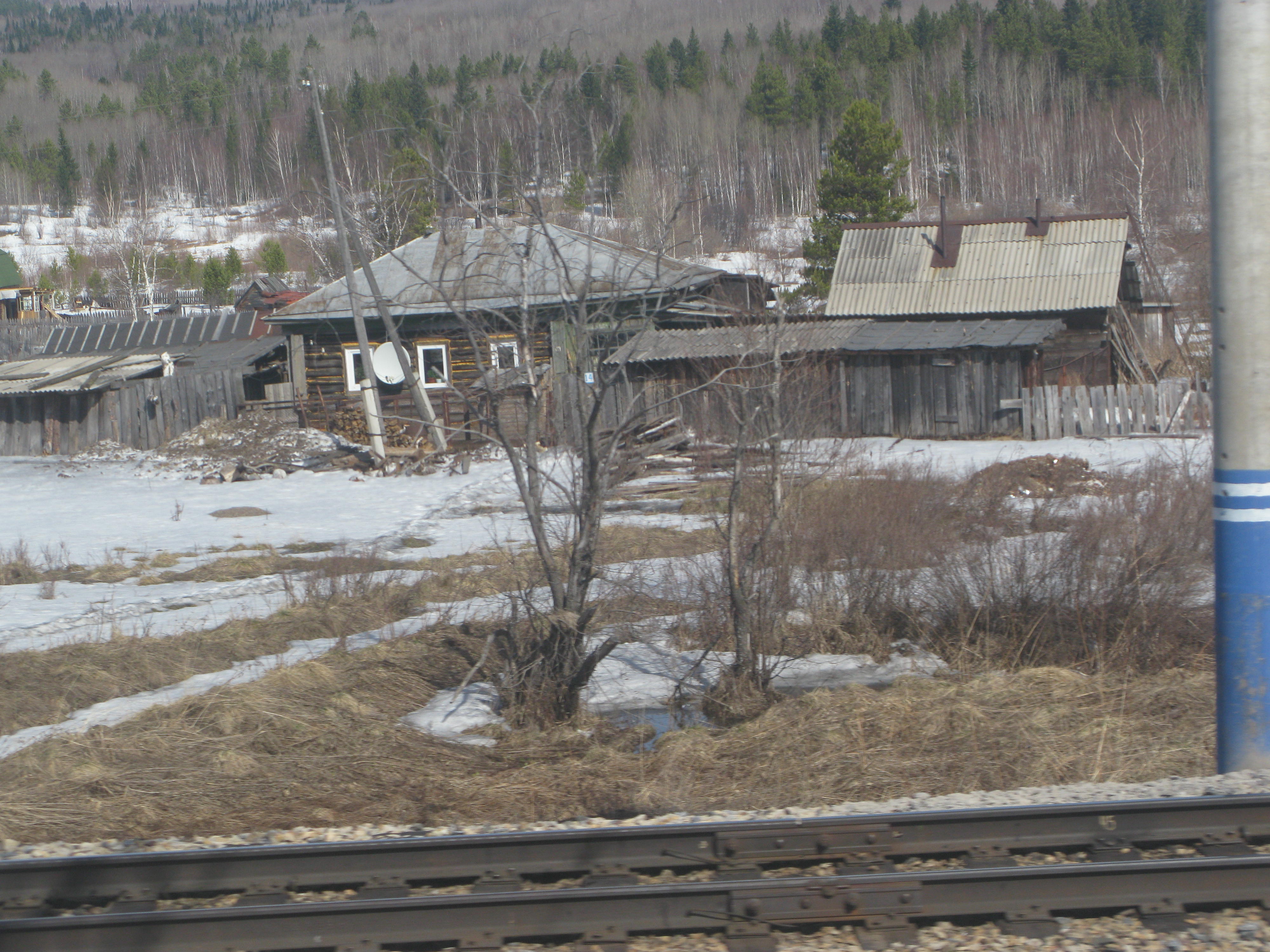
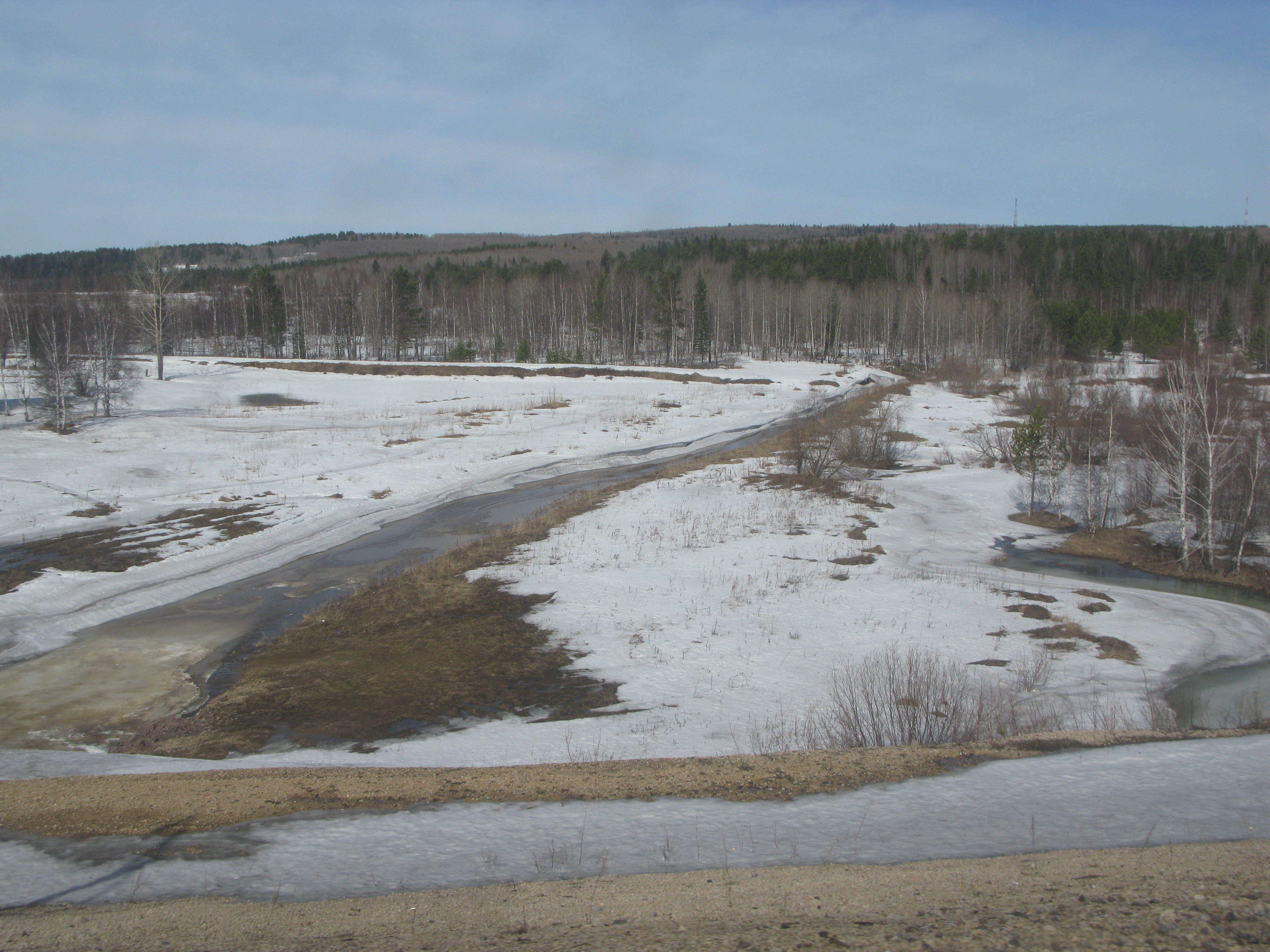
All the while, we were passing through the most stunning landscape. Strangely, it was colder, icier, snowier near Moscow than in Siberia! Is this climate change turning everything on its head? The silver birch from the Baltic states accompanied us across hundreds and hundreds of kilometers and towards Siberia became a little interspersed with firs instead of aspen. The houses – mainly of wood – were in various states of dilapidation or reconstruction. I think what struck me was how close some of it looked to the set from ‘Lark Rise to Candleford’….. right down to the vegetable patch and midden! rivers were frozen, snow patches evident here and there, until Siberia where the sun shone (and made our compartments even hotter!) and we could get out at stations without fleeces. Crazy.

A few days before all this, some of our group came down with sore throats, coughs etc, so when it reached me I made sure I took my inhaler and paracetamol, throat pastilles etc. It might have had a chance of clearing up if we hadn’t been breathing each other’s 29C heated carbon dioxide for 4 days on the train. Ah well.

But back to the provodnistas. Twenty minutes before each stop, they lock the toilets at either end of the carriage and open them again after. Often the one next door to their room would be locked – for their use only! I got up one night, crept along the corridor in my PJs to find the door locked. Just then we pulled into a station so I stayed near the door to get some air. It just had to be the longest stop – about 40 minutes, and think it might have been Tyumen, Siberia’s oldest town dating from 14th century and now becoming important on account of the oil and gas discovered in the oblast/region. Anyway, after leaving there, and hoping the toilets would be opened, we went a few minutes down the road and stopped again for ages, about 20 minutes. Finally, after sitting on the wooden lid of the rubbish container near the open door (I opened it) of the rattling space between carriages, for about one and a quarter hours, I finally got to the loo. One or two of the group were also prowling – all this was about 2.30 am onwards – and were trying to keep cool.

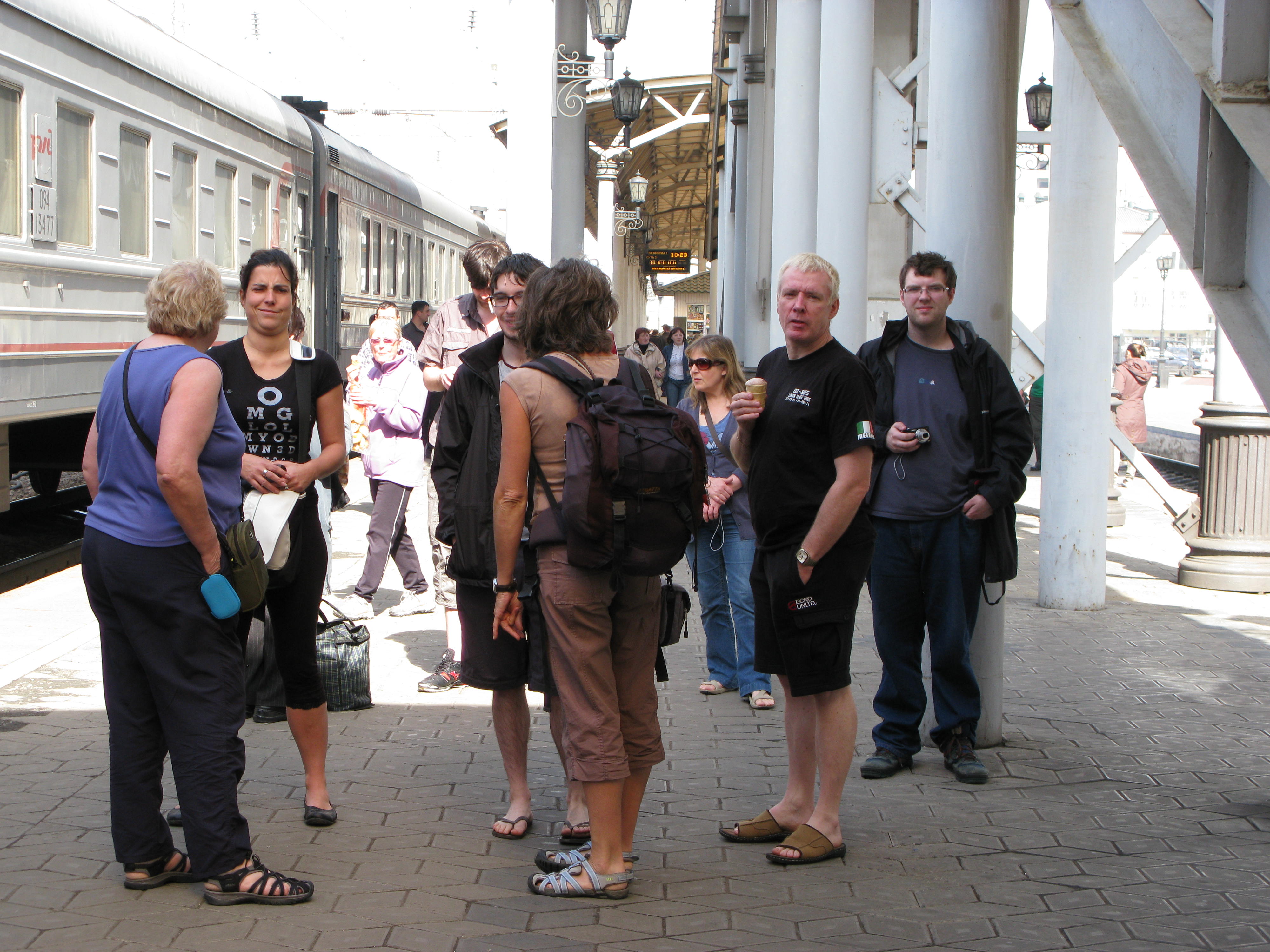
Other memories of the train that are forever burned into my mind? The camaraderie – playing cards/Uno in the dining car, visiting each other in our cells, partying and chatting about allsorts, falling out of the train everytime it stopped at a station, stopping at Yekaterinburg late at night – and still getting off for a bit of cool air, the staff in the dining car…(more of that later), lining up at windows to take photos, looking for the obelisks that mark the border with Siberia and the halfway point to Beijing… and finding neither, sharing food and drink and sometime meds, the sound of ‘Life of Brian’ from next door (Ciaran’s laptop?) which lulled us to sleep, sleeping with the door wide open to get any movement of carbon dioxide–laden air we could, sleeping on top of our valuables to safeguard them, buying water and jam blinis from the rattling trolley that trundled the length of the train several times a day – operated by the only smiling lady amongst the staff. Our efforts to get the provodnista to turn down the heat were unsuccessful until a Russian man also complained – then it happened! Things got hotter still in the dining car one afternoon and evening, where the staff tried to show their disapproval of our efforts to spend our roubles on their food and drink by turning up the heating to the mid-30Cs. I believe there was a stand off before the staff capitulated. They were wearing more clothing and nearly passing out, so turned it down.

Having said all that, it was really evident that the communist regime died 20 years ago (witness the killer heels on some station staff!) but those born into the regime and indoctrinated over decades are finding it so difficult to adjust. Old habits and work practices take a long time to change, and from the moment I entered Russia I’ve been aware of instances of resentment, distrust of foreigners, and unwillingness to cooperate or even provide a service. The negativity sits on you like a heavy blanket.

Which brings me again to the dining car staff! Four of them, supervised by a strict looking woman who occupied one of the tables with her laptop, her files, invoices and calculator. The cook was an unsmiling younger woman who had no difficulty breaking up a fight between two drunks from 3rd class (we were 2nd, way superior). A very thin man who appeared now and again, and the smiley lady from the trolley service. There were two menus in the whole dining carriage; when you entered, you would either be ignored (I sat and read a book for over an hour and wasn’t approached) or there’d be a sigh and defeated slump of shoulders: ‘Oh God, not people wanting to eat… what a pain..’ Other times it would be staff mealtime (lots of other times) and we’d not even get a menu. Russians always got served first. The menu was in Russian and English but sometimes you didn’t get what you ordered. Other times you’d be told it wasn’t available. Nyet. Apparently the service is a franchise, in which case some customer service training might help to make it more profitable.

On our last morning, the Madam appeared on and off in stripey nightdress, sleepy hair and no make up. She then eventually changed into her ‘don’t mess with me’ black suit and grim face. I managed to put together the words for fried eggs and bread and got that, but couldn’t make myself understood about milk in coffee. I said the words but they didn’t work.

Starting in St Petersburg we’ve been very aware of unfriendliness – even arrogance – from some people (but not all), and this continued till we got off in Irkutsk. By this time, I was almost resigned to never seeing a smile from most of the people we encounter, so it was lovely to step into another world in this far-flung outpost in Siberia!